
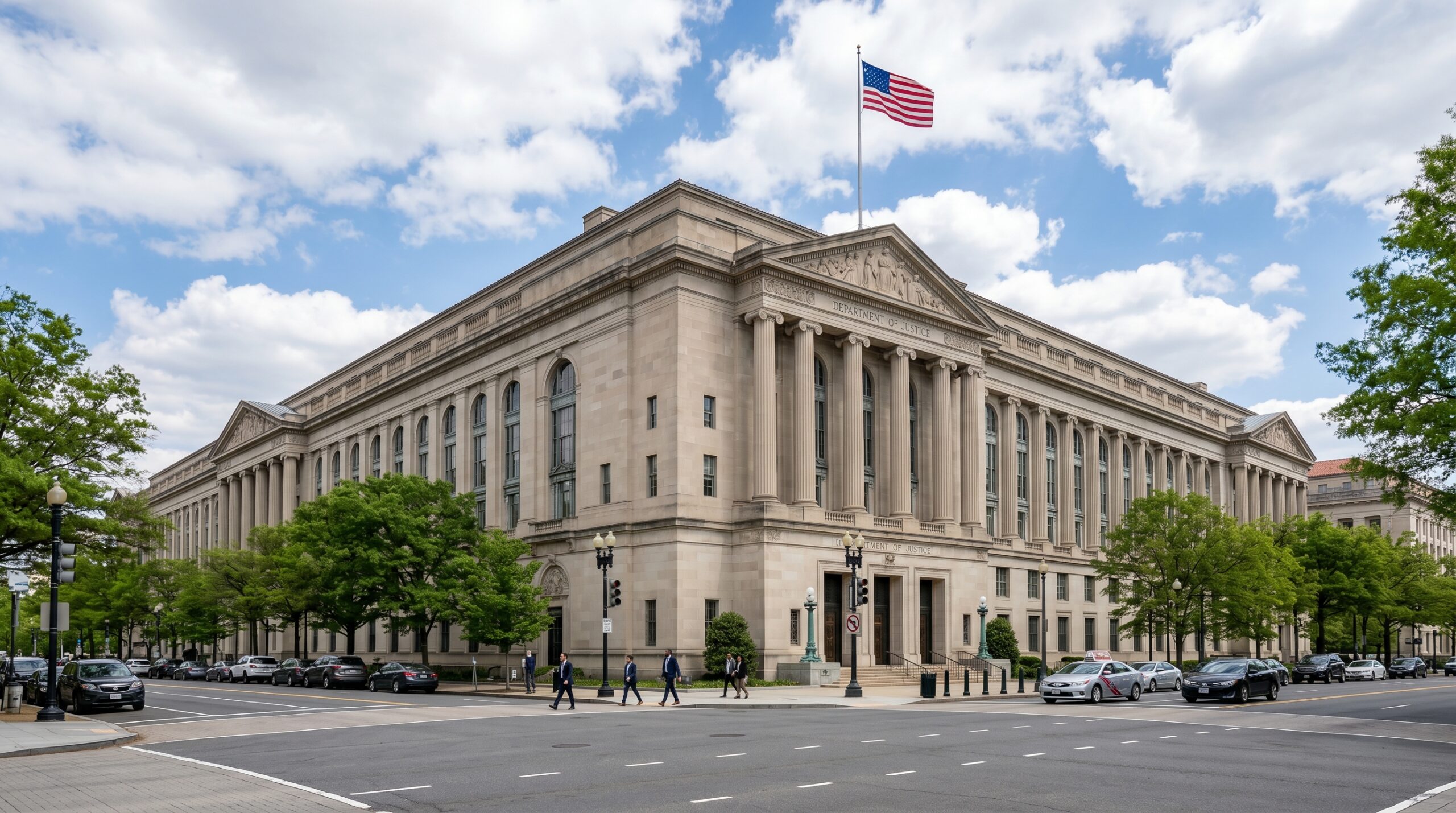
The Department of Justice’s Office of Legal Counsel has issued a significant opinion declaring unconstitutional the Equal Employment Opportunity Commission’s guidelines that prohibit employment policies causing unintentional harm to minority groups, a legal framework known as disparate impact liability.
The opinion, released on Tuesday, June 9, 2026, represents a fundamental shift in how employment discrimination cases may be pursued under Title VII of the Civil Rights Act of 1964. The Office of Legal Counsel concluded that the EEOC’s approach, which has been in place for decades, improperly extends beyond constitutional boundaries.
According to the legal opinion, the EEOC’s Title VII guidelines are unconstitutional because they establish liability based solely on disparate effects without requiring proof of an employer’s discriminatory intent. The office argued that this approach pressures employers to engage in race-based decision-making to avoid potential legal consequences.
The opinion emerged following the Supreme Court’s June 2 decision in Allen v. Milligan, where justices blocked a lower court order regarding Alabama’s 2023 electoral maps. The Office of Legal Counsel drew parallels between voting rights and employment law, suggesting that properly understood disparate-impact liability should only address practices reflecting a significant likelihood of intentional discrimination.
Under the previous framework, employment discrimination plaintiffs needed to demonstrate that specific policies caused significant statistical disparities affecting protected groups. Employers could defend against such claims by showing the policy served a legitimate business purpose, after which plaintiffs would need to prove that less discriminatory alternatives existed.
The Office of Legal Counsel has proposed three key corrections to align Title VII claims with constitutional principles. First, the business-necessity defense should not constitute a high bar, requiring employers only to demonstrate that a challenged practice is rational, convenient, or helpful for a valid business purpose. The opinion states that employment practices should be presumptively job-related, with only irrational or arbitrary practices creating potential liability.
Second, plaintiffs must now satisfy what the office calls a robust causality requirement, proving that the challenged practice itself, rather than external factors or other practices, caused the disparate impact. Third, plaintiffs must provide evidence of alternative practices that would be both less problematic and equally effective in serving the employer’s valid business purposes.
The opinion specifically addresses common workplace requirements such as background checks, aptitude tests, and SAT scores, declaring them presumptively job-related. Only practices deemed irrational or arbitrary with no plausible job-relatedness can now create disparate-impact liability under this new interpretation.
Acting Attorney General Todd Blanche, whom President Donald Trump formally nominated for the permanent attorney general position, criticized the EEOC’s longstanding approach in a statement accompanying the opinion. Blanche argued that despite attempting to promote equality, the EEOC’s interpretation of disparate impact liability under Title VII actually fostered the discrimination it sought to address.
This legal shift aligns with the Trump administration’s broader policy initiatives. On April 23, 2025, President Trump issued an executive order titled Restoring Equality of Opportunity and Meritocracy, which called for eliminating federal disparate-impact liability policies. The order characterized such policies as requiring individuals and businesses to consider race and engage in racial balancing to avoid potentially severe legal consequences.
EEOC Chair Andrea Lucas, a Trump appointee, expressed support for the conclusion, stating it would clarify the constitutional limits of disparate impact in employment discrimination matters. The opinion marks a significant departure from decades of civil rights enforcement and interpretation, potentially affecting how workplace discrimination cases are pursued and defended in the future.
Leave a Reply