
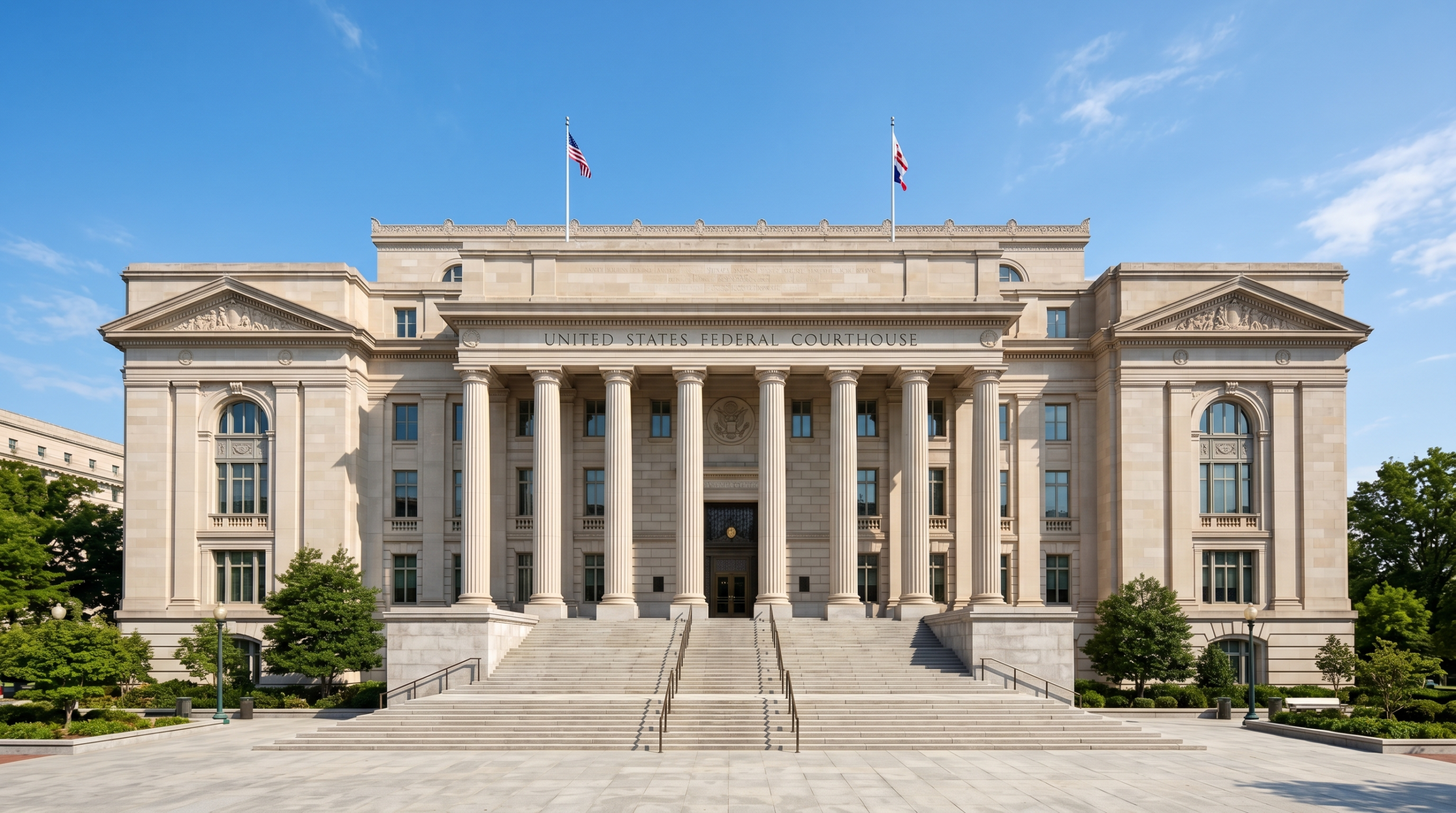
A three-judge federal appeals panel heard arguments Tuesday regarding South Dakota’s controversial deadline for submitting citizen-led ballot measure petitions, with judges appearing skeptical of claims that the earlier deadline violates constitutional rights.
The case centers on House Bill 1184, enacted in 2025, which moved the submission deadline from early May to early February, effectively reducing the signature-gathering period by three months. The advocacy organization Dakotans for Health filed suit against the law, arguing it restricts political expression without serving a legitimate government purpose.
During oral arguments in St. Paul, Minnesota, the Eighth Circuit panel questioned whether the nine-month window for gathering signatures truly creates an unconstitutional burden on political speech. The judges appeared more receptive to South Dakota’s position that the earlier deadline serves legitimate administrative purposes.
Attorney James D. Leach, representing Dakotans for Health, argued the law eliminates three crucial months of political engagement without justification. He emphasized that forcing signature collection during harsh winter months creates unnecessary obstacles for citizen initiatives.
Circuit Judge James Loken challenged this assertion, questioning why a nine-month period should be considered inadequate for properly organized campaigns. He suggested the timeline could be managed through appropriate planning and preparation rather than representing a constitutional violation.
South Dakota Solicitor General Paul Swedlund defended the law, arguing the state has valid reasons for implementing the earlier deadline. He maintained the February cutoff provides additional time to resolve legal challenges to ballot measures before elections occur, preventing situations where courts might invalidate voter-approved initiatives after the fact.
Swedlund emphasized that voters lose confidence in the electoral system when ballot measures they approved are later nullified by courts. He argued the state has a significant interest in completing litigation before elections rather than after.
Circuit Judge Raymond Gruender pressed the state on whether nine months truly provides sufficient time for litigation, noting that many legal challenges extend well beyond that timeframe. The state acknowledged this reality but maintained that many disputes could be resolved within the window, providing voters with important information about proposed initiatives.
The advocacy group’s attorney countered that South Dakota Supreme Court precedent already allows post-election challenges to ballot measures, making the state’s rationale insufficient to justify restricting political speech. However, Judge Loken dismissed this argument as insignificant to the constitutional question at hand.
Circuit Judge Jane Kelly raised practical concerns about judicial line-drawing, asking how courts should determine which election deadlines are constitutionally permissible. She questioned whether states must provide specific evidence about litigation timelines to justify their chosen deadlines.
South Dakota pioneered citizen-initiated ballot measures in 1898, becoming the first state to allow voters to petition for laws and constitutional amendments. Recent initiatives in the state have addressed healthcare rights, minimum wage increases, medical marijuana legalization, campaign finance reform, and Medicaid expansion.
Dakotans for Health characterizes the deadline change as part of a broader legislative effort to limit citizen political power. They argue the February deadline intentionally forces groups to collect tens of thousands of signatures during South Dakota’s harshest weather months.
This case follows a 2021 Eighth Circuit decision that struck down South Dakota’s previous one-year pre-election deadline for ballot measures. After that ruling, the state briefly implemented a six-month deadline before adopting the current nine-month restriction now under review.
A lower federal court sided with the advocacy group in August 2025, permanently blocking enforcement of the law. The state is now asking the appeals court to reverse that decision, arguing the lower court failed to give appropriate deference to state authority over electoral processes.
Leave a Reply