
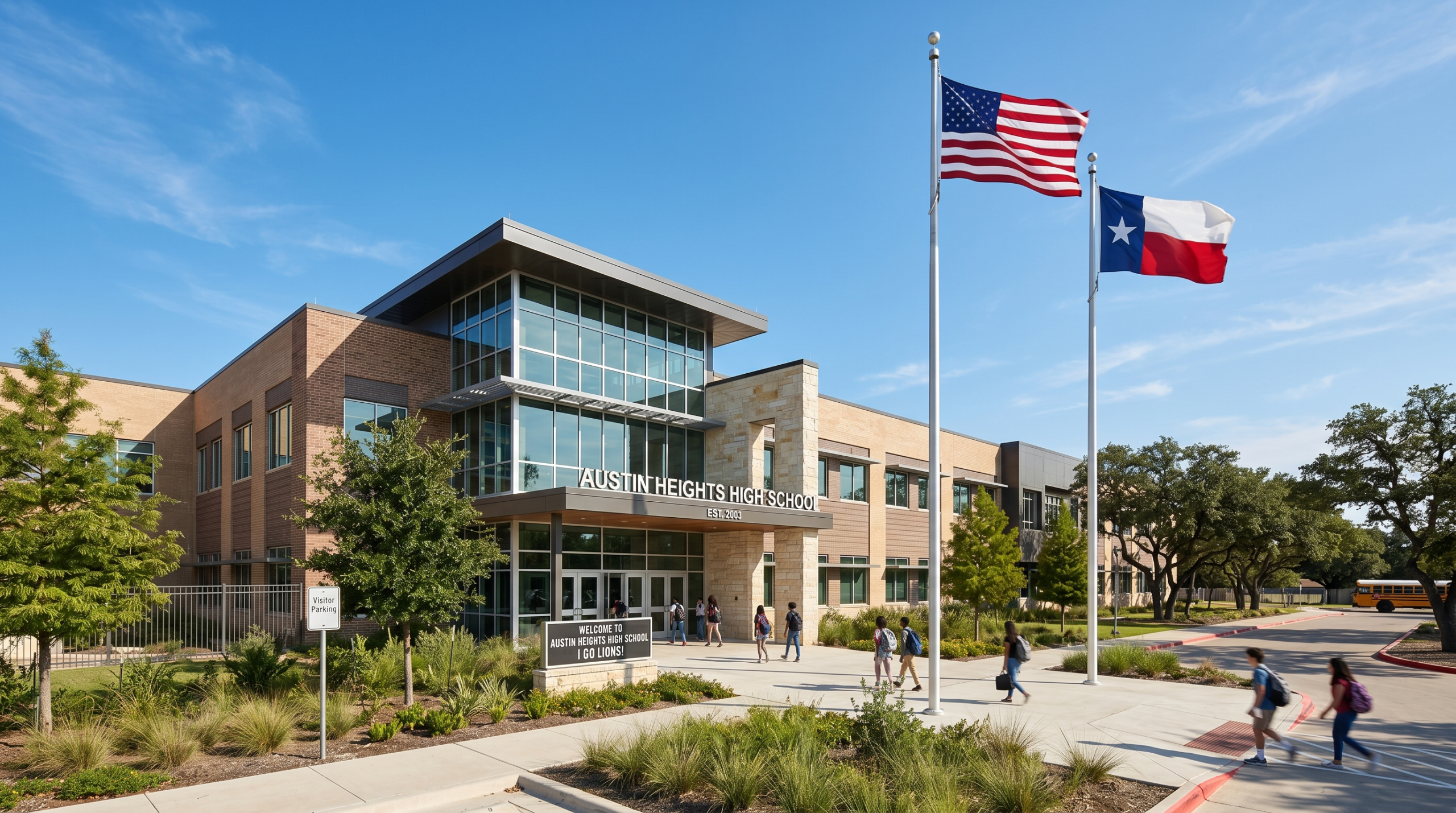
A federal appeals court panel has ruled in favor of a Texas law requiring the display of the Ten Commandments in all public school classrooms, dismissing a legal challenge brought by a coalition of multi-faith families who argued the mandate violated constitutional principles.
The Fifth Circuit Court of Appeals, based in New Orleans, delivered a 9-to-8 decision on Tuesday that clears the way for Senate Bill 10 to be enforced across Texas public schools. The law, which was passed by the Texas Legislature and signed by Governor Greg Abbott last year, mandates that the biblical text be prominently displayed in every classroom.
The ruling represents a significant development in the ongoing debate over religious displays in public educational settings. Texas Attorney General Ken Paxton characterized the decision as a major victory, stating that the Ten Commandments have had a profound impact on the nation and that students should learn from them daily.
The legal challenge was mounted by a group of parents and their school-age children, who were represented by several civil liberties organizations including the American Civil Liberties Union, ACLU of Texas, Americans United for Separation of Church and State, the Freedom From Religion Foundation, and Simpson Thacher & Bartlett. The plaintiffs argued that the mandatory display violated First Amendment protections by establishing a state religion and coercing children into recognizing religious doctrine.
Initially, a federal district judge sided with the families, finding the law likely violated constitutional principles and issuing an injunction that prevented school districts from implementing the requirement. However, the appeals court’s conservative majority overturned that decision.
Circuit Judge Stuart Kyle Duncan, writing for the majority in a 53-page opinion, determined that the law violates neither the establishment clause nor the free exercise clause of the Constitution. Duncan argued that merely exposing children to religious language does not constitute coercive indoctrination.
The judge’s reasoning relied heavily on recent Supreme Court precedents, particularly the 2022 Kennedy v. Bremerton School District decision, which altered how courts evaluate laws related to religious practices. Duncan noted that this ruling effectively ended the Lemon test, a previous standard for determining establishment clause violations, rendering earlier decisions like the 1980 Stone v. Graham case, which had struck down a similar law, no longer applicable.
Under the new framework, Duncan wrote that Senate Bill 10 must be examined based on whether it resembles what the Constitution’s framers considered religious establishment. He concluded that the Texas law does not meet that threshold, as it does not dictate religious beliefs, levy taxes to support clergy, or punish those who reject the Ten Commandments.
The majority also rejected arguments that the law violates parents’ rights to direct their children’s religious upbringing, noting that the statute does not require teachers to incorporate the Ten Commandments into lessons or have students recite them.
Circuit Judge Irma Carrillo Ramirez authored a 26-page dissent, joined by seven other judges, arguing that the court remains bound by the Stone v. Graham precedent despite changes in constitutional interpretation. She maintained that without explicit Supreme Court action overturning that decision, lower courts must continue to follow it.
The organizations representing the families have indicated they plan to appeal the decision to the Supreme Court, setting up a potential landmark case on religious displays in public schools. In a joint statement, they asserted that the ruling tramples on First Amendment protections and the freedom of families to determine their children’s religious instruction.
This decision arrives at a time of heightened debate over the role of religion in public education, with similar measures being considered or challenged in other states. The outcome of any Supreme Court review could have far-reaching implications for how religious content is handled in public school settings nationwide.
Leave a Reply