
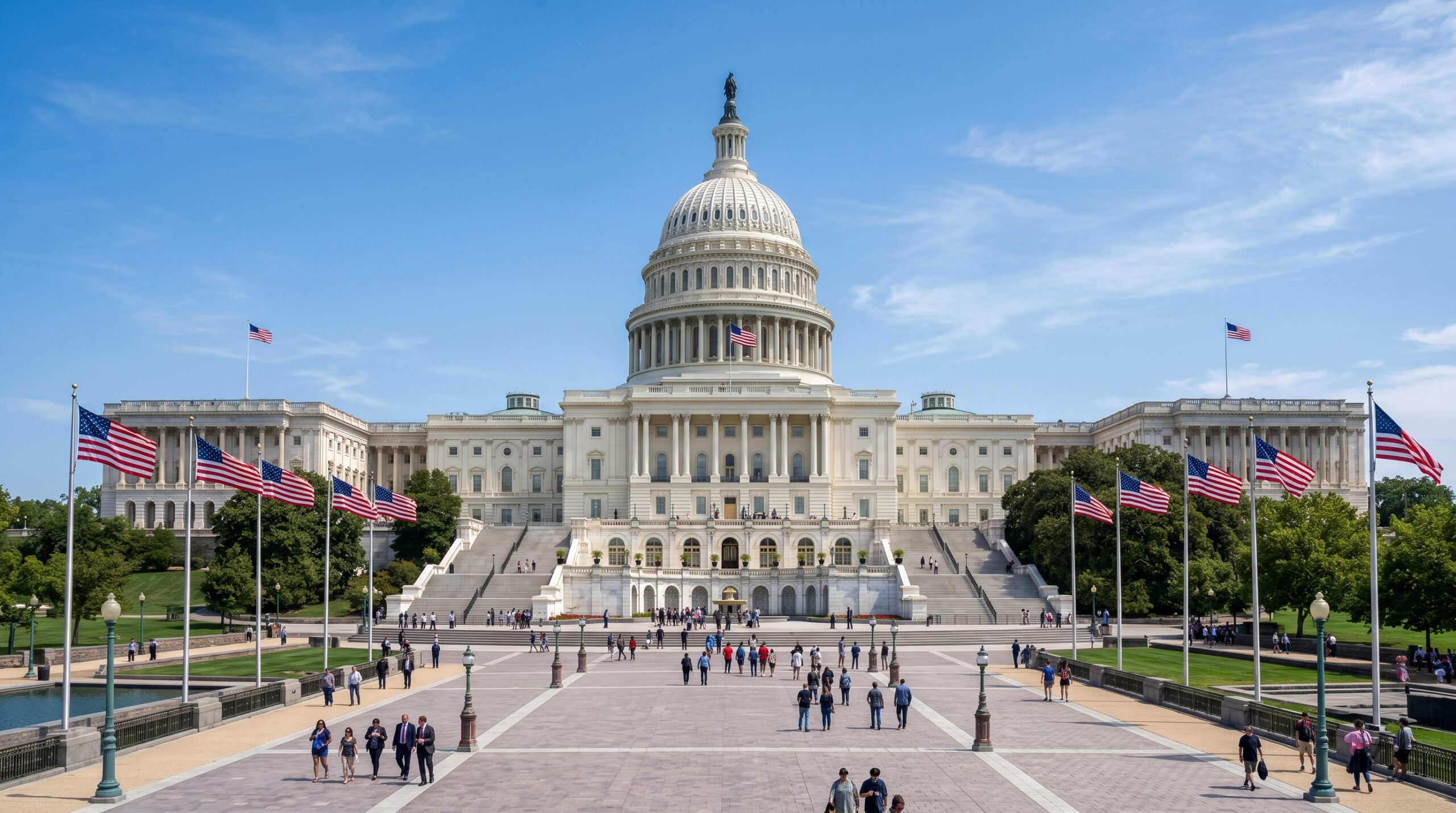
The U.S. House of Representatives approved a $70 billion budget reconciliation package on Tuesday evening that will fund immigration enforcement operations through the end of President Donald Trump’s second term. The legislation passed by a narrow 214-212 vote, overcoming initial resistance from Republican lawmakers who sought additional border security guarantees.
The spending bill allocates funds specifically for U.S. Immigration and Customs Enforcement and Border Patrol operations. The measure represents the second budget reconciliation package under the Trump administration and emerged from a two-part agreement that resolved a prolonged shutdown of the Homeland Security Department earlier this spring.
The reconciliation process allows the bill to pass with a simple majority rather than the typical 60-vote threshold in the Senate. Despite this procedural advantage, House Republicans faced challenges securing enough votes from their own party members.
Texas Representative Chip Roy, who initially opposed advancing the bill, engaged in extensive negotiations with House Speaker Mike Johnson before ultimately supporting the measure. Roy expressed concerns about the need to codify additional immigration policies to prevent future administrations from reversing current enforcement efforts.
“If you’re removing people and then they are ultimately going to come back under the failed policies of abusing parole and asylum that was under the previous administration — we clearly want to see that kind of movement,” Roy stated to reporters before the final vote.
The vote remained tied at 213-213 until Michigan Representative Tim Walberg changed his position to support the bill. Walberg ended up being the sole Republican to vote against the measure. California Representative Kevin Kiley, who recently changed his party affiliation from Republican to Independent, joined all Democrats in opposing the legislation.
The House approval came after the Senate faced its own complications with the bill. The upper chamber had initially set a June 1 deadline but encountered delays over concerns about a proposed $1.8 billion fund that would compensate victims of alleged government weaponization.
The controversial fund, which originated from a settlement between Trump and the Internal Revenue Service, drew criticism from lawmakers in both parties. Some Republicans worried that payments might go to individuals convicted of assaulting police officers during the January 6, 2021, Capitol riot.
Acting Attorney General Todd Blanche met with Senate Republicans but failed to address their concerns adequately. Though Blanche later withdrew support for the weaponization fund, uncertainty remained about whether the administration would pursue alternative compensation methods for Capitol rioters or others claiming government persecution.
Senators Thom Tillis of North Carolina and Bill Cassidy of Louisiana, both Republicans, attempted to pass amendments blocking the $1.8 billion fund permanently. Their efforts failed when the Senate refused to approve any modifications to the reconciliation bill.
In a letter to colleagues, Tillis criticized the missed opportunity to eliminate what he called a “political albatross” that could harm Republicans in upcoming elections. He expressed frustration that a majority of his party colleagues voted against his amendment, which would have transferred the fund’s resources to the Justice Department’s antifraud division.
“I cannot understand why a supermajority of our conference voted against the side-by-side I offered,” Tillis wrote. “In my opinion, last week’s vote was a net loss for in-cycle members. I am not diminishing the importance of funding DHS, but the ‘gain’ from that will not offset the ‘pain’ we’ve created in key races.”
The reconciliation package now moves forward as a critical component of the Trump administration’s immigration enforcement agenda, providing sustained funding for border security and immigration operations through 2029.
Leave a Reply