
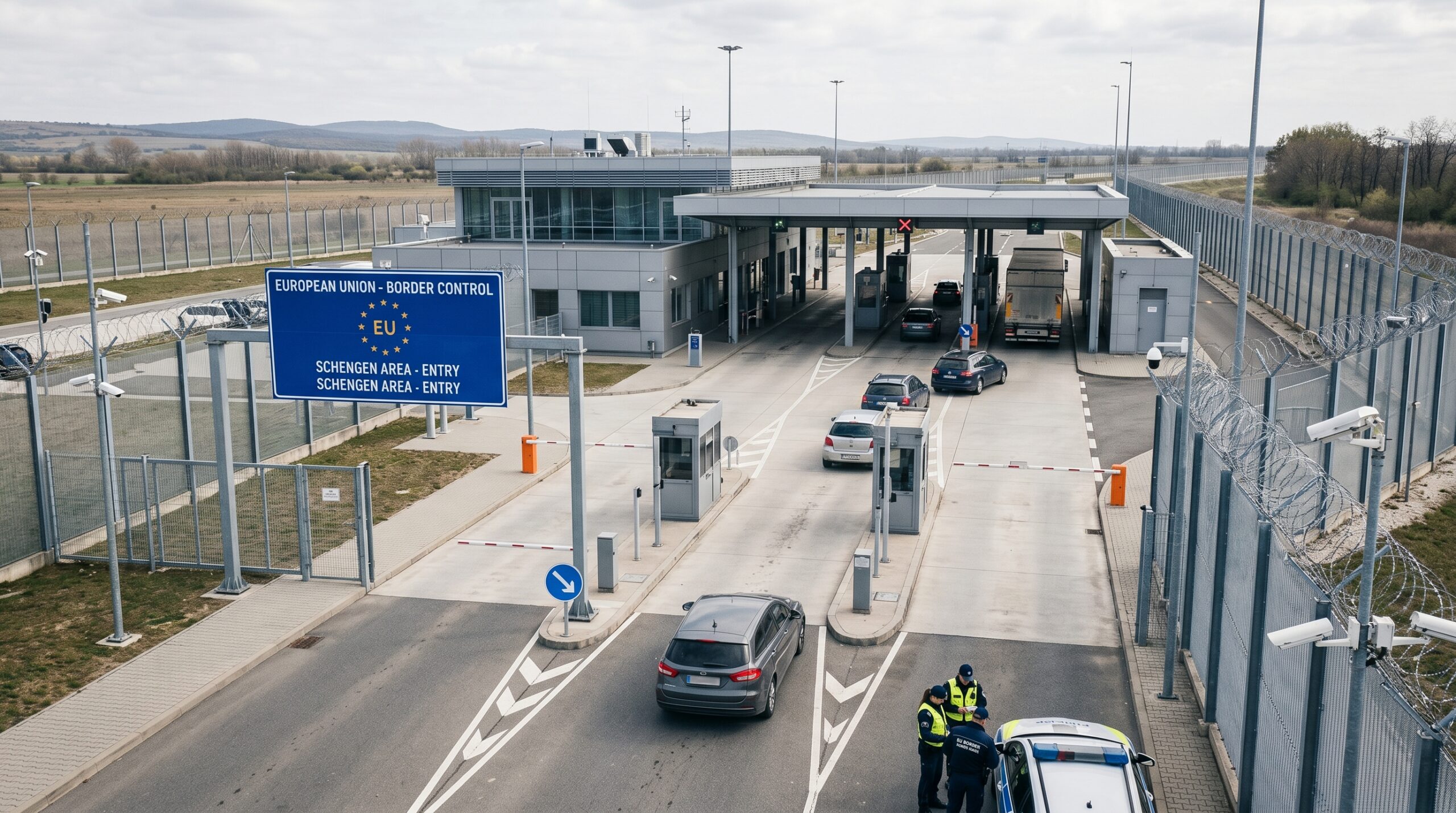
The European Union’s comprehensive migration reform package officially took effect on Friday, introducing sweeping changes to how asylum seekers are processed at borders across the bloc. The new Pact on Migration and Asylum, approved in 2024, establishes advanced screening facilities at entry points where migrants undergo expedited assessment procedures.
Under the new system, asylum seekers are held at designated processing centers, commonly referred to as “hot spots,” while authorities evaluate their eligibility for protection. Statistics indicate that approximately 800,000 asylum applications are filed annually in Europe, with the majority ultimately facing rejection.
Legal scholars and advocacy organizations express concern that the regulations fundamentally alter Europe’s approach to refugee protection. The framework represents a departure from humanitarian-centered policies that emerged following World War II and were reinforced during the Yugoslav conflicts of the 1990s.
Salvatore Nicolosi, a migration law specialist at Utrecht University in the Netherlands, notes that Europe has aligned itself with nations prioritizing border security over refugee protection. He describes the new system as an “architecture of rejection” designed to minimize migrant arrivals to EU territory.
The legislative package passed through the European Parliament in April 2024 with support from centrist parties seeking to address public concerns about immigration while countering the influence of far-right political movements. Eda Gemi, a migration law expert at the University of New York in Tirana, Albania, characterizes the pact as a response to identity politics and security concerns that have dominated European discourse over the past decade.
The reforms come after years of debate following 2015’s mass displacement caused by the Syrian civil war, which exposed weaknesses in Europe’s asylum infrastructure. European Commission President Ursula von der Leyen praised the new regulations as “effective, fair and firm,” citing a 55 percent reduction in unauthorized border crossings compared to two years prior.
Originally conceived to distribute responsibility for asylum seekers among all EU member states through a quota system, the pact’s solidarity mechanisms faced resistance from Central and Eastern European nations. The final version allows countries to provide financial contributions, equipment, or resources to frontline states instead of accepting asylum seekers directly.
The regulations impose stricter requirements on approved asylum seekers within EU territory. Missing appointments, insufficient cooperation with authorities, or failure to participate in integration programs can result in reduced access to accommodation, financial assistance, and other support services.
Additionally, the pact endorses cooperation with non-EU nations including Libya, Morocco, Tunisia, and Turkey to prevent migrants from reaching European borders. Plans include establishing processing centers outside EU territory where migrants can be transferred.
Andreina De Leo, a researcher at Maastricht University specializing in EU migration law, describes these changes as a “paradigm shift” toward border control and externalization of responsibilities. She warns that accelerated procedures may result in deportations before individuals receive proper legal review of their cases.
Particular concerns arise regarding migrants from countries designated as safe by the EU, including Egypt, Morocco, Bangladesh, and Turkey. These individuals may face expedited removal with limited opportunity for individual assessment or legal representation.
The establishment of “return hubs” in non-EU countries raises additional legal questions about where rejected asylum seekers can be sent, potentially to nations with which they have no genuine connection.
Steve Peers, a human rights and asylum law expert at Royal Holloway, University of London, anticipates that while the regulations contain human rights safeguards, implementation may encourage member states to lower protection standards.
Legal challenges to the new framework are expected in national courts across Europe, with eventual review by EU judicial bodies anticipated. As Nicolosi observes, numerous aspects of the regulations remain untested and will likely face scrutiny in coming months as implementation proceeds across the bloc.
Leave a Reply