
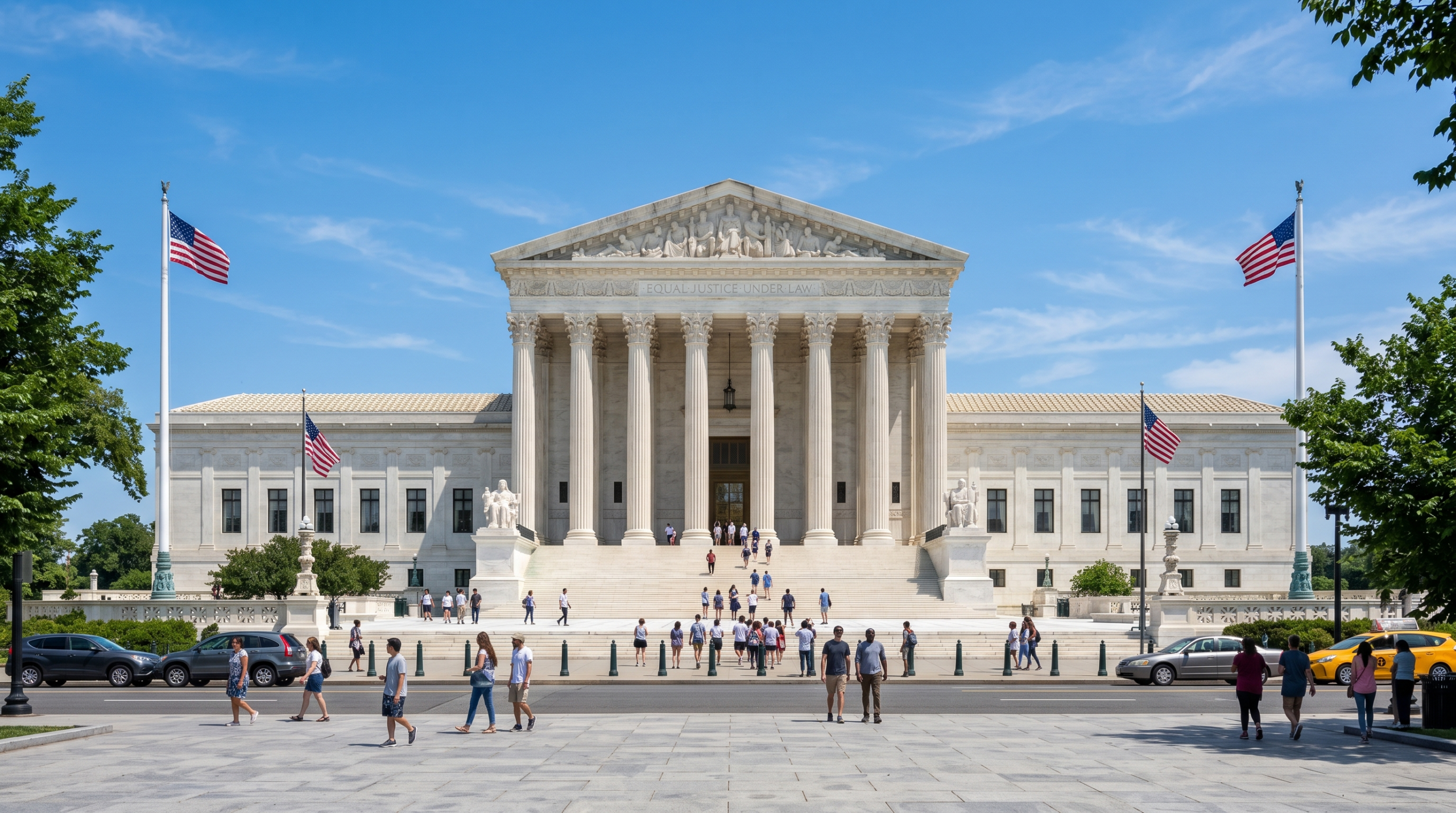
The Supreme Court stands poised to deliver several consequential rulings in the coming weeks as justices race toward their traditional summer recess at the end of June. With approximately two dozen appeals still pending on the merits docket, the court faces pivotal decisions on presidential authority, election procedures, and immigration policies that could reshape federal governance.
Among the most significant cases awaiting decision is Trump v. Slaughter, which challenges nearly a century of established precedent regarding the independence of federal regulatory agencies. The case centers on whether President Donald Trump possessed the authority to terminate Federal Trade Commissioner Rebecca Slaughter, though its implications extend far beyond this individual dispute. The outcome could fundamentally alter the relationship between the executive branch and independent agencies.
During oral arguments in December, the court’s liberal justices expressed concerns about disrupting the structure of American democratic institutions, while conservative members questioned whether limiting presidential oversight would inappropriately restrict executive branch authority.
A related case, Trump v. Cook, examines whether the president held emergency powers to remove Federal Reserve Board Governor Lisa Cook from her position. The court appeared to distinguish the Federal Reserve’s unique role in managing domestic and international economic matters, showing skepticism about granting unrestricted removal authority over its leadership.
The court must also address Trump v. Barbara, a closely monitored appeal concerning executive attempts to restrict birthright citizenship. Despite the conservative majority’s traditional support for expansive executive power, the president’s executive order seeking to reinterpret the 14th Amendment more than 150 years after its ratification appeared to test the limits of judicial acceptance.
Immigration matters feature prominently in the pending decisions. In Mullin v. Al Otro Lado, the justices showed receptiveness to permitting reinstatement of a border turnback policy that would allow agents to physically prevent migrants from seeking asylum by blocking their entry into the United States. The administration has not indicated whether it would implement such a policy if the court rules favorably.
Additional immigration cases include Blanche v. Lau, examining federal authority to place certain green card holders on parole, and decisions in Mullin v. Doe and Trump v. Miot regarding the termination of temporary protected status for Haitian and Syrian migrants.
Election law represents another critical area awaiting resolution. Watson v. RNC presents a challenge to Mississippi legislation allowing absentee ballots postmarked by election day to be counted if received within five business days. The case could significantly impact mail-in voting procedures nationwide.
Campaign finance regulations face scrutiny in NRSC v. FEC, which questions whether limits on coordinated spending between political parties and candidates violate First Amendment protections.
The court will also rule on several cases involving firearms regulations, including United States v. Hemani, concerning federal authority to disarm illegal drug users, and Wolford v. Lopez, examining default prohibitions requiring gun owners to obtain permission for carrying weapons on private property.
Transgender rights in sports remain under consideration in West Virginia v. BPJ and Little v. Hecox, where states seek clarification on whether laws restricting girls’ sports teams based on biological sex constitute discrimination against transgender athletes.
Beyond these prominent cases, twelve lower-profile appeals await resolution, addressing issues ranging from personal injury lawsuits and geofence warrant constitutionality to religious rights violations and foreclosure practices.
The Supreme Court maintains its traditional practice of not announcing specific ruling dates in advance. Justices reveal decisions by reading opinion summaries from the bench during scheduled sessions. Following their typical schedule, the justices will enter summer recess from July through September, though they retain authority to act on emergency applications during this period. The current term officially concludes on the first Monday in October when the new term commences.
Leave a Reply