
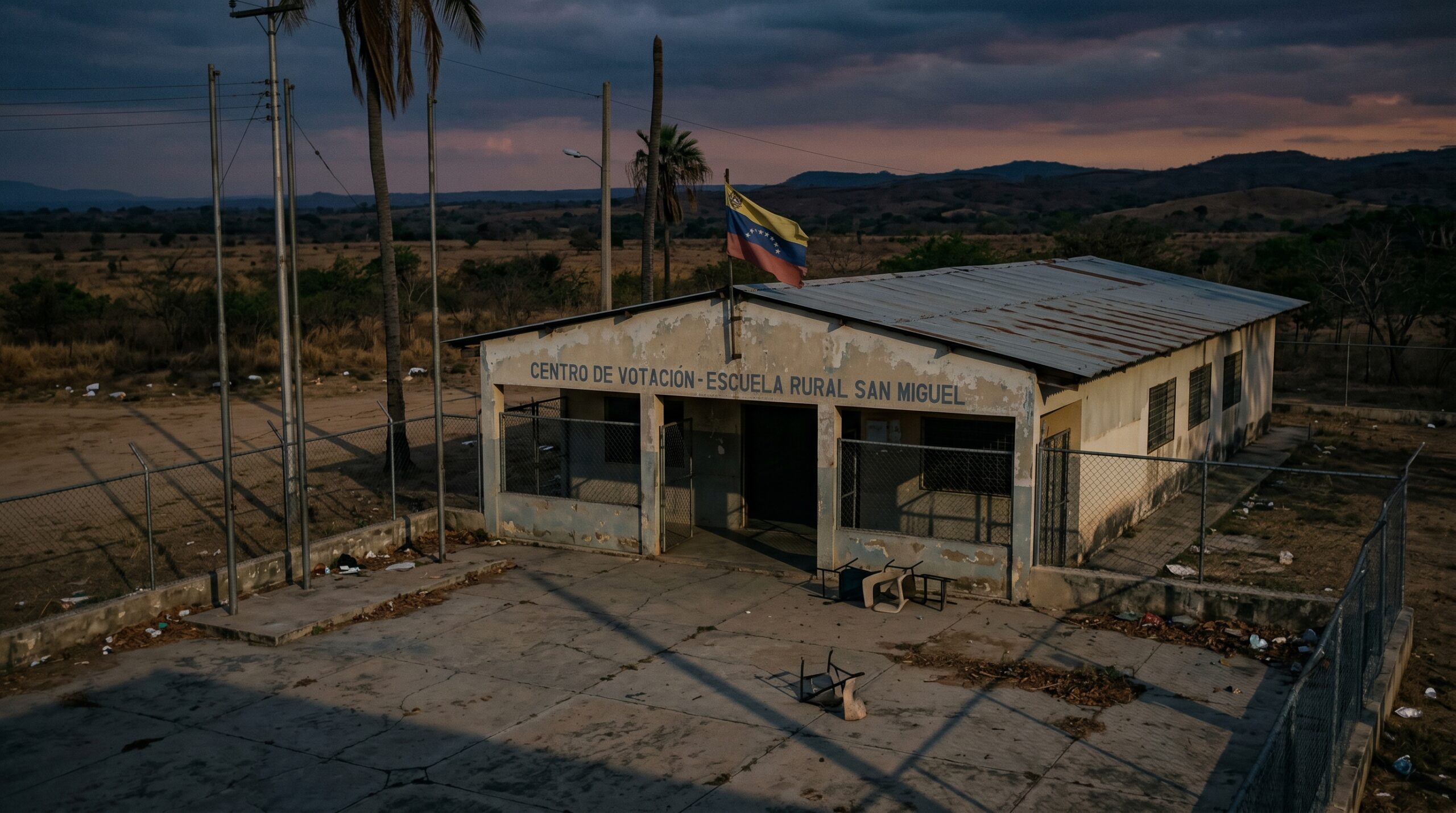
A grainy video circulated in late July 2024 showing a man dressed entirely in black, armed with multiple weapons and surrounded by shadowy figures carrying rifles. The speaker, Óscar de Jesús Noguera Hernández, known by aliases including “El Pipi” and “El Diente,” delivered a threatening message to Venezuelan security forces while leading an armed takeover of a voting center in San Francisco de Macaira.
The incident occurred days after President Nicolás Maduro declared victory in an election widely disputed by opposition groups, independent observers, and Venezuelan citizens. As protests erupted against the contested results, government forces responded with harsh crackdowns, detaining demonstrators and political opponents.
Noguera Hernández leads the Tren del Llano criminal organization, which emerged in the late 2000s from corrupt labor unions in Guarico state, a region of central Venezuela characterized by plains, hills, and small towns. The group’s transformation into what Venezuelans call a megabanda began under José Antonio Tovar Colina, known as “El Picure,” who led the organization into robbery, cattle rustling, and extortion operations.
After Tovar Colina died in a 2016 shootout with security forces, leadership passed to Gilberto Malony Hernández. Under Malony’s direction, the organization shifted focus toward extortion and territorial governance. He established himself as a community patriarch, implementing social control measures that included banning robberies, punishing domestic violence, funding local services, and organizing community events.
Malony brought family members into his inner circle, including his younger cousin Noguera Hernández. While Malony attempted to balance predatory criminal activities with community benefaction, his cousin represented the organization’s more violent enforcement arm. Business owners described being forced to provide specific quantities of gifts during holidays or face severe consequences, including property destruction and theft.
The gang operated from a rural compound called the “Casablanca,” which served as both a community hub for festivals and a meeting place for businesspeople, officials, and local politicians seeking electoral support. Malony’s influence extended into political spheres, with sources indicating he decided which candidates to support for various offices.
By 2020, Malony had expanded operations to Sucre state on Venezuela’s northern coast, targeting the Paria Peninsula, a strategic location for smuggling cocaine, marijuana, weapons, and migrants through the Caribbean. The area’s existing criminal groups, including elements of the Tren de Aragua organization, were given ultimatums to join, leave, or face elimination.
Malony’s expansion proved fatal. On November 8, following an assembly of over 500 security officials supported by helicopters and armored vehicles, authorities launched a targeted operation against him and his organization. His death created a power vacuum and set the stage for his cousin’s later actions.
The voting center takeover in Macaira represented a convergence of criminal interests and political crisis. Noguera Hernández’s video message demanding security forces respect citizens’ electoral decisions demonstrated how organized crime groups were positioning themselves within Venezuela’s broader political turmoil.
The incident highlights the complex relationships between criminal organizations, local communities, and political structures in Venezuela. These groups provide services and impose order in areas where government presence is weak, while simultaneously engaging in violent criminal enterprises that terrorize residents.
The evolution of Tren del Llano from labor union corruption to transnational drug trafficking illustrates the trajectory of Venezuelan organized crime groups that have filled governance vacuums across the country. Their involvement in electoral disputes adds another dimension to Venezuela’s ongoing challenges with democratic institutions and rule of law.
Leave a Reply