
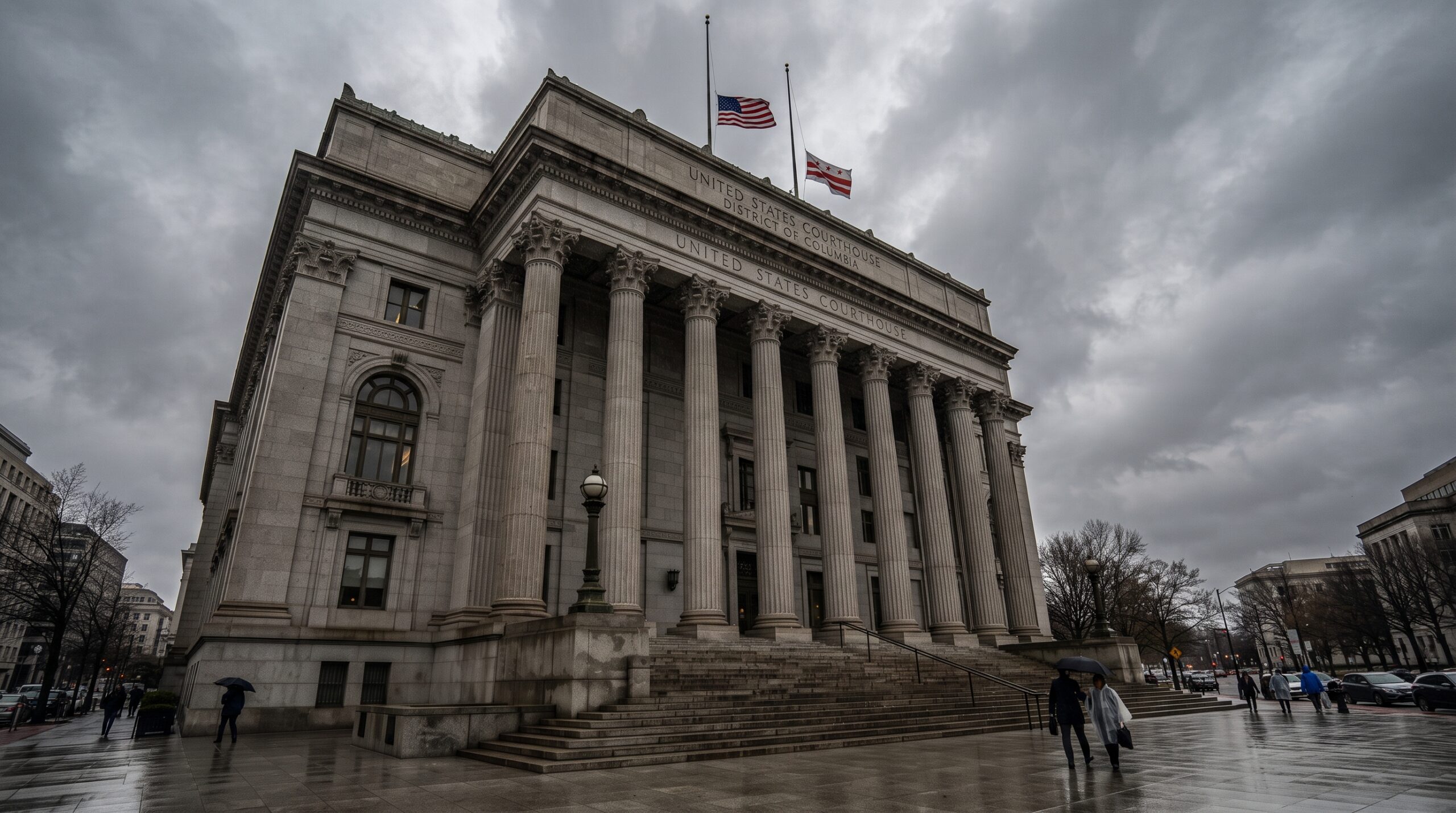
A federal appeals court has affirmed the conviction of a Massachusetts man sentenced to ten years in prison for possession of child exploitation material, rejecting his arguments that investigators violated his constitutional rights during their investigation.
The First Circuit Court of Appeals ruled that Eric Robert Johnson’s Fourth Amendment rights were not violated when federal investigators monitored his activities on Freenet, an anonymous peer-to-peer file-sharing platform. Johnson had challenged the legality of the investigation methods that led to his 2024 guilty plea.
Johnson’s defense team argued that federal agents engaged in unconstitutional surveillance by using modified software called Freenet Roundup to monitor platform activity. His attorney contended that authorities were conducting broad surveillance operations over multiple years, collecting substantial data about users while circumventing the platform’s privacy protections.
The three-judge panel disagreed with this characterization in their 29-page decision. They determined that the government’s investigation methods were lawful and did not constitute the broad surveillance Johnson alleged. According to the court, investigators were operating within legal boundaries by functioning as regular platform users, receiving voluntary data requests from other users through their network node.
The investigation led to a physical search of Johnson’s residence in 2022, where authorities discovered hard drives and electronic devices containing more than 5,000 files depicting abuse of minors, including infants and toddlers. Investigators also found children’s backpacks containing clothing, costumes, damaged dolls, and diapers beneath his bed.
The appeals court rejected Johnson’s comparison between the platform monitoring and unauthorized cellphone searches. The judges noted that unlike mobile devices, which can reveal comprehensive personal information and physical movements, Freenet is specialized file-sharing software containing limited personal information that users voluntarily choose to share.
Crucially, the court emphasized that Johnson had received multiple warnings about his IP address vulnerability while using the platform. Despite seeking illicit content, he chose not to activate the platform’s enhanced privacy mode, known as Darknet, which offers greater anonymity than the default settings.
The panel concluded that Johnson voluntarily connected his computer to unknown users on the network and was adequately warned about the exposure of his transmissions to external parties, including law enforcement.
Johnson entered his guilty plea in 2024 to one count of possession of child exploitation material after his motion to suppress evidence based on constitutional grounds was denied. Court records indicate he was already registered as a lifetime Level 2 sex offender following a 1992 conviction in New Hampshire for offenses involving two children aged seven and eight.
Federal prosecutors indicated that Johnson’s case was part of a larger enforcement effort targeting individuals sharing and downloading illegal content on the platform. They referenced research suggesting that approximately 30 percent of the platform’s request traffic involves child exploitation material.
The appeals panel included Circuit Judges Gustavo Gelpí and Lara Montecalvo, both appointed by President Biden, and Circuit Judge O. Rogeriee Thompson, appointed by President Obama.
The ruling reinforces law enforcement’s ability to investigate illegal activity on anonymous file-sharing platforms while establishing boundaries for when users can claim privacy protections for their online activities.
Leave a Reply