
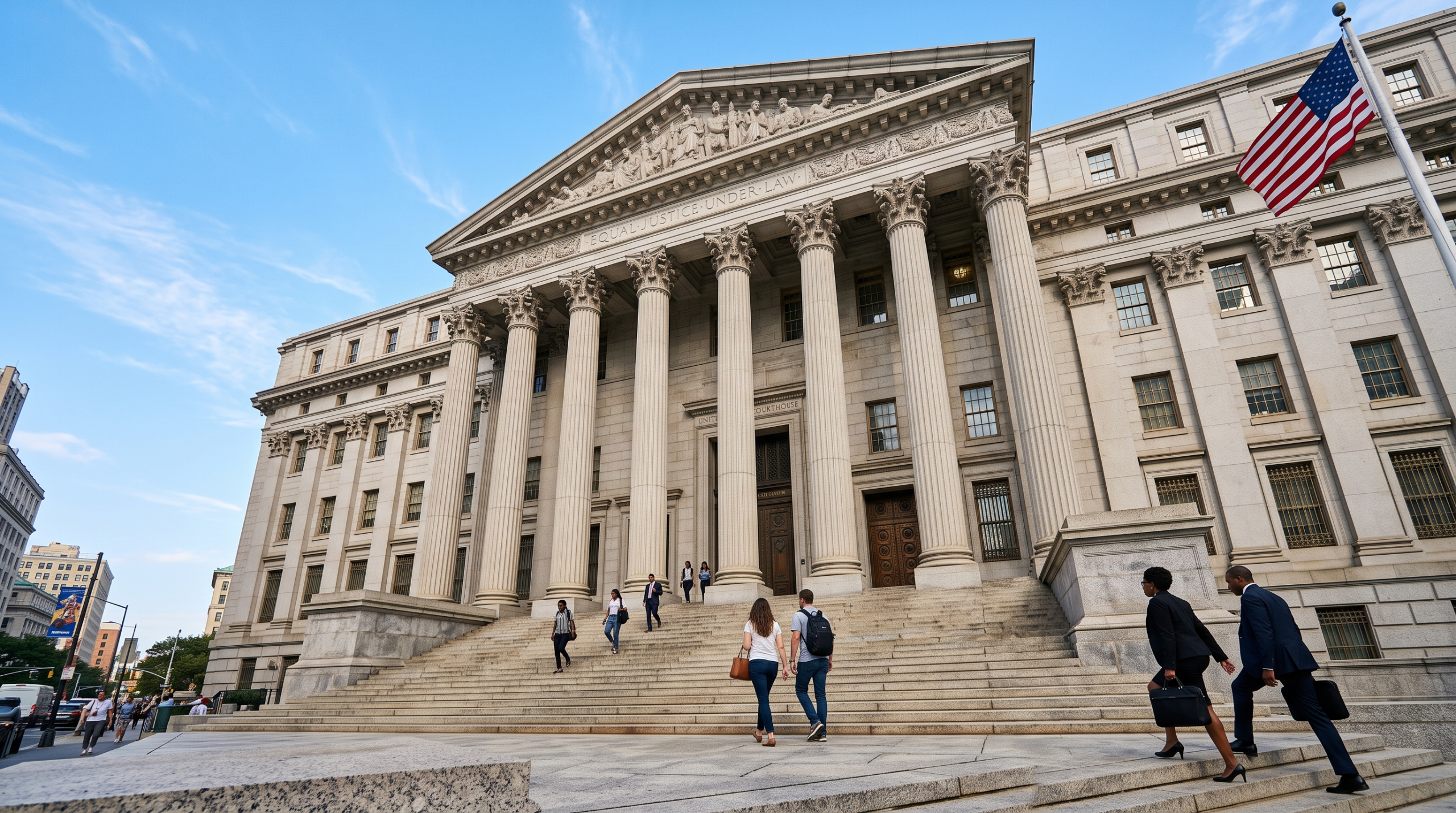
Virginia state officials appeared in federal court Tuesday to defend legislation that permits immigrant students to qualify for reduced in-state tuition rates at public universities, as educational institutions prepare for the upcoming fall semester.
The legal dispute centers on whether federal immigration law supersedes Virginia’s 2020 legislation, commonly referred to as the Virginia Dream Act. Both the state government and federal prosecutors presented arguments for summary judgment before Senior U.S. District Judge Robert Payne, who was appointed during the George H.W. Bush administration.
The contested Virginia law establishes specific criteria for students to qualify for in-state tuition rates regardless of their immigration status. To be eligible, students must complete at least two years at a Virginia high school and either graduate from a state high school or pass an equivalent examination. Additionally, their parents or guardians must have filed Virginia state income tax returns for a minimum of two years before the student’s enrollment date.
Federal prosecutors contend that this state legislation conflicts with a provision in the 1996 Illegal Immigration Reform and Immigrant Responsibility Act. This federal statute prohibits states from providing tuition benefits to immigrant students based on state residency unless the same benefits are extended to out-of-state citizens.
During the proceedings, federal attorney Sean Skedzielewski argued that the combined requirements of the Virginia law would make it virtually impossible for out-of-state citizens to qualify for the same benefits. Judge Payne expressed interest in obtaining specific data about the number of students who qualify under the Virginia Dream Act and their immigration statuses, noting that such information would be crucial for his decision.
State attorney Robert Claiborne Jr. presented several scenarios where out-of-state citizens could potentially benefit from the tuition equity pathway. He cited examples including students from other states attending Virginia boarding schools or those crossing state borders from Maryland and West Virginia to attend Virginia public high schools. Claiborne referenced institutions like Woodberry Forest School in Madison County, which enrolls students from 27 different states.
Virginia’s legal team maintains that the state law does not conflict with federal regulations because eligibility is determined by high school attendance and tax payment history rather than residency status. They also highlighted that Virginia offers multiple pathways for nonresident students to access in-state tuition rates, including the academic common market pathway available to students from the 14 states participating in the Southern Regional Education Compact.
The state further argued that if the federal law were interpreted to override Virginia’s tuition assistance statutes, it would constitute unconstitutional commandeering under the Tenth Amendment. Virginia’s position is that Congress cannot directly dictate what state legislatures may or may not do, citing established Supreme Court precedent.
The case reflects broader national tensions over state-level tuition assistance programs for immigrant students. The current administration has initiated similar legal challenges against comparable programs in New Jersey, Minnesota, California, and Illinois.
The legal battle in Virginia has also highlighted political divisions within the state. Former Attorney General Jason Miyares, a Republican, had requested the court invalidate the Virginia Dream Act shortly before leaving office. His successor, Jay Jones, a Democrat, reversed this position upon taking office.
The federal government is seeking a permanent injunction to prevent implementation of the tuition statutes. Judge Payne did not indicate when he would issue his ruling on the summary judgment motions.
Leave a Reply