
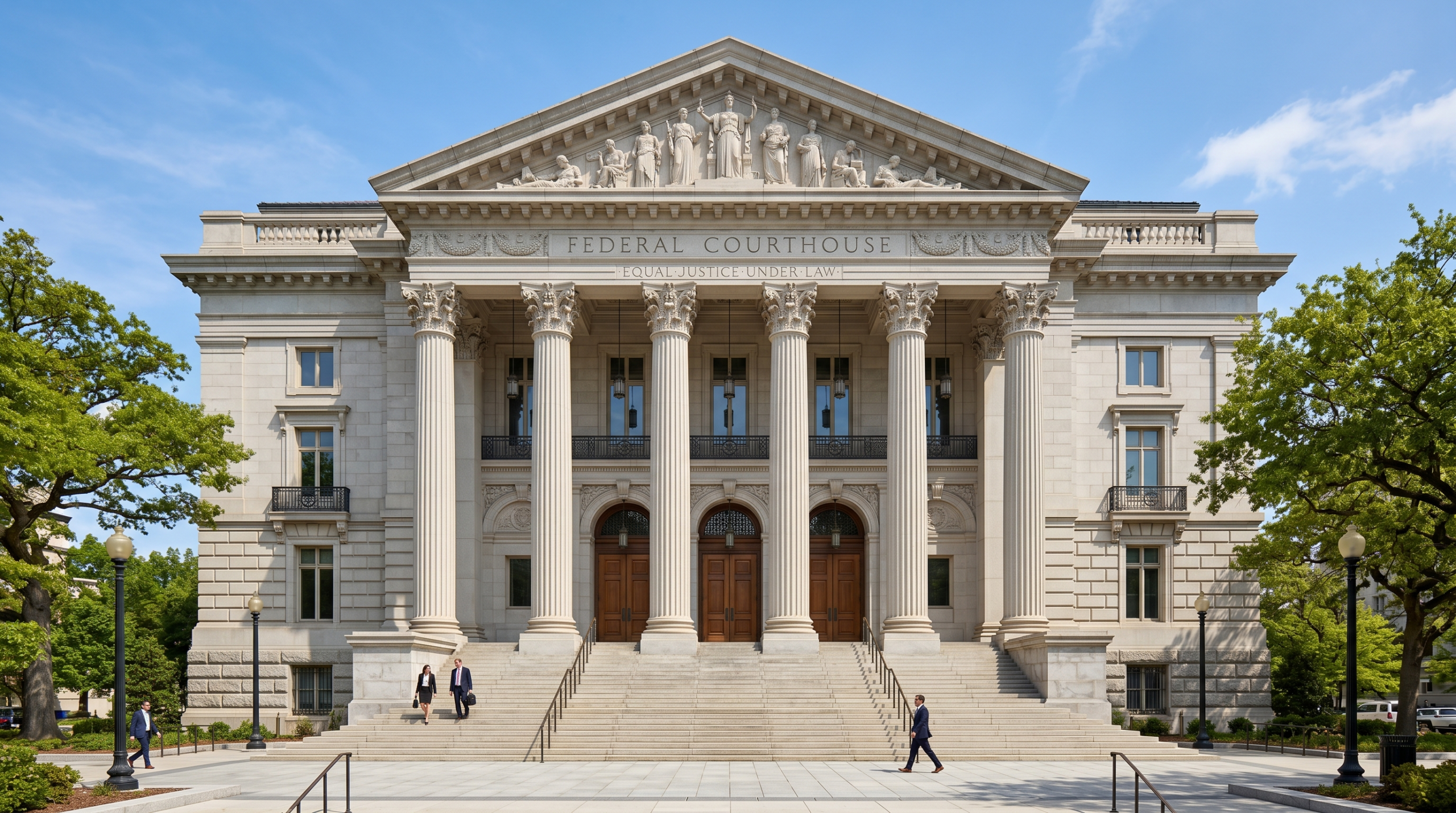
A federal judge has dismissed a defamation lawsuit filed by FBI Director Kash Patel against a national security commentator, ruling that the disputed statements constituted rhetorical hyperbole rather than actionable defamation.
U.S. District Judge George Hanks Jr. of the Southern District of Texas issued a 10-page decision on Tuesday dismissing the case. The ruling came just one day after Patel had referenced the lawsuit as pending in a separate $250 million legal action against The Atlantic.
The lawsuit stemmed from comments made by Frank Figliuzzi, a former FBI counterintelligence assistant director, during a May 2025 television appearance on Morning Joe. During the segment, Figliuzzi stated that Patel had reportedly been visible at nightclubs far more than he had been on the seventh floor of the Hoover Building, referring to FBI headquarters.
The network later characterized the statement as a misstatement and noted it was unverified. Despite this clarification, Patel’s legal team, consisting of attorneys Jesse Binnall and Jason Greaves, filed a complaint in Texas in June 2025. The complaint alleged that Figliuzzi had crossed legal boundaries by fabricating a specific lie about the FBI Director.
In his ruling, Judge Hanks determined that when taken in context, Figliuzzi’s statements could not have been perceived by a person of ordinary intelligence as stating actual facts about Patel. The judge found that a reasonable person would not have interpreted the statement literally to mean that Patel had actually spent more hours physically in nightclubs than in his office building.
The court characterized Figliuzzi’s comments as being delivered in an exaggerated, provocative, and amusing way, employing rhetorical hyperbole. The judge concluded that such rhetorical hyperbole cannot constitute defamation under the law.
The dismissal of this case has potential implications for Patel’s other legal action against The Atlantic. In that lawsuit filed on Monday, Patel’s attorneys alleged that The Atlantic published anonymously sourced claims about excessive drinking, instances of being unreachable behind locked doors, and other behavior. The complaint specifically referenced the Figliuzzi case as an example of similar fabrications that had been retracted.
Patel’s legal team has indicated they plan to appeal the decision to the 5th U.S. Circuit Court of Appeals. Binnall stated that while the court ruled Figliuzzi’s statements were rhetorical hyperbole, he believes this holding effectively undermines anyone’s ability to treat such statements as reliable facts.
The attorney added that Figliuzzi was successful because he convinced the judge that he was not a serious person, though the legal team disagrees with the court’s assessment and will pursue an appeal.
The timing of this ruling is particularly notable given that Patel had just cited the Figliuzzi lawsuit as pending litigation in his action against The Atlantic. The dismissal may impact the strength of arguments in that separate case, particularly regarding claims that The Atlantic ignored relevant legal proceedings when publishing its article.
The Atlantic article that prompted Patel’s $250 million lawsuit did not specifically mention Figliuzzi or his statements. However, Patel’s attorneys have argued that the publication willfully avoided receiving information that would refute their narrative and published what they characterized as pure fantasy about the FBI Director.
Leave a Reply