
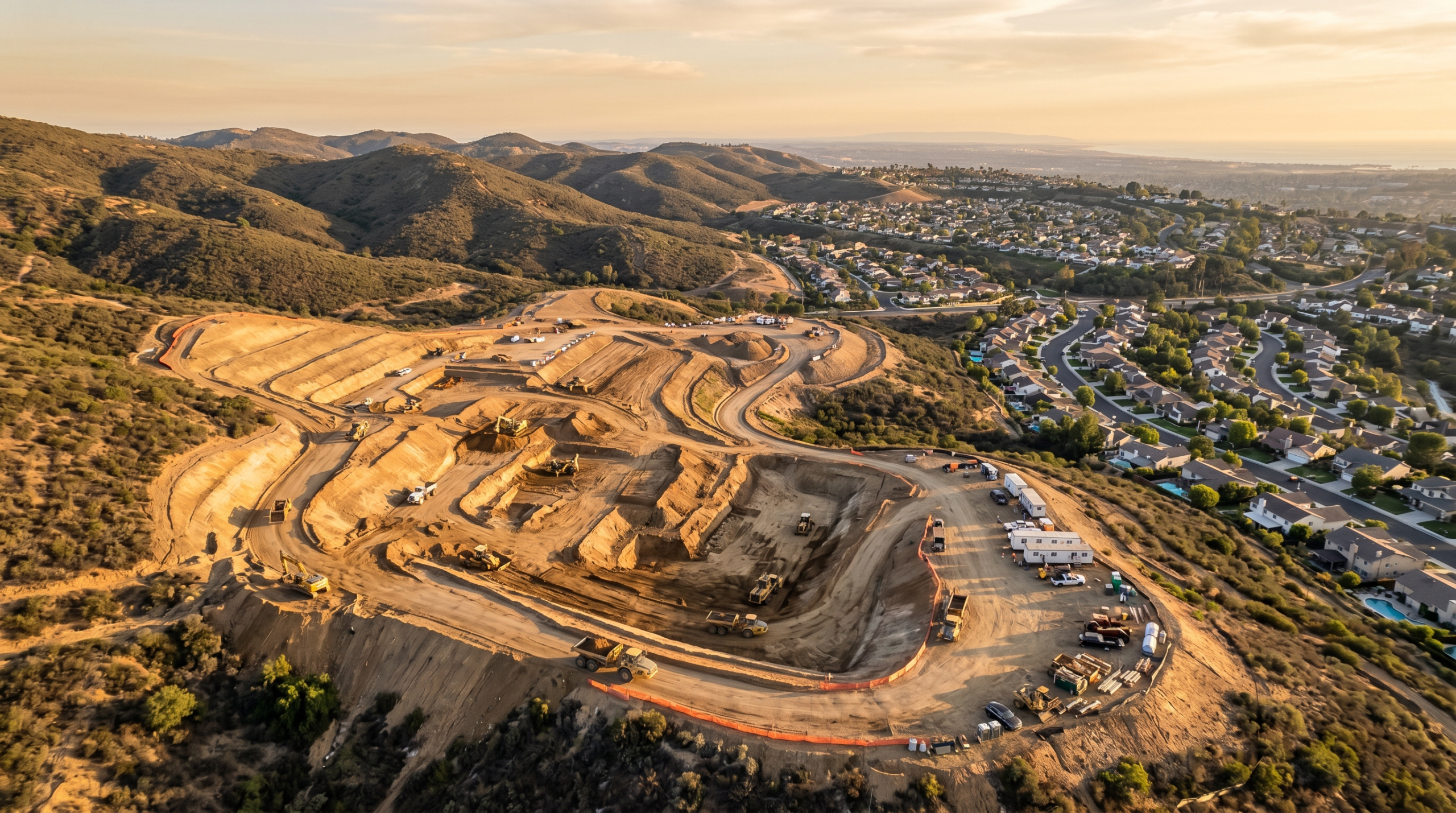
A Southern California municipality finds itself at the center of a legal dispute following the discovery of Native American human remains and cultural artifacts at a residential construction site. The California Department of Justice initiated legal proceedings against the city of Poway in San Diego Superior Court on Tuesday, alleging violations of state environmental review standards.
The controversy centers on the Hidden Valley Ranch development, a 420-acre luxury housing project in north San Diego County where construction began in October 2025. During initial development work, contractors uncovered cremated remains of a child at what investigators have identified as a tribal cemetery and sacred site belonging to the San Pasqual Band of Mission Indians.
According to court documents, more than 8,000 cultural artifacts have been discovered at the location over the past two decades. These findings include hundreds of pottery fragments, dozens of specialized tools such as hammers, semi-precious stones, carved bone items, and arrowheads. Archaeological analysis of one area within the development site concluded it had functioned as a village.
California Attorney General Rob Bonta stated that the discovery of an apparent burial site serving as a final resting place for some of California’s earliest inhabitants warranted appropriate caution and respect. The lawsuit alleges that Poway violated the California Environmental Quality Act by continuing construction despite the discoveries, failing to implement required mitigation measures, and not adhering to its own policies regarding the handling of ancestral human remains.
The environmental impact report for the project received approval in 2003 under a previous landowner. However, state officials maintain that California Environmental Quality Act requirements mandate additional steps when circumstances change or new information becomes available. The act includes specific provisions for situations where Native American remains are discovered within project boundaries, including mandatory consultation with tribal representatives.
Two additional sets of ancestral human remains were discovered at the site last month, including a human jaw bone and cremated rib bones. Despite these ongoing discoveries, state officials claim no tribal consultation was initiated by the city.
The San Pasqual Band of Mission Indians, one of twelve federally recognized tribes within the Kumeyaay Nation, has filed its own separate lawsuit against the city. The tribe’s ancestral lands extend across Baja California, San Diego County, and Imperial County. Chairman Steve Cope emphasized that San Pasqual Valley represents a cultural heritage resource containing tribal ceremonial and funerary sites, forming part of an interdependent ecosystem connecting the tribe through ancestral practices.
City officials expressed surprise at the legal action, stating they had not yet been formally served with the lawsuit. A municipal spokesperson maintained that Poway has complied with all applicable laws within its jurisdiction, including environmental quality requirements. The city reports that a tribal monitor has been present at the project site daily and disputes claims that it failed to engage with tribal representatives or state officials.
According to city representatives, officials immediately met with San Pasqual Band attorneys upon request and have maintained ongoing communication with both the attorney general’s office and the U.S. Army Corps of Engineers. A stop-work order has been issued for the construction site.
Both lawsuits seek to ensure full consideration and remediation of the project’s impacts rather than halting development entirely. The legal actions aim to address concerns regarding heritage preservation, protection of ancestral remains and funerary items, environmental integrity, and culturally significant resources throughout the area.
The case highlights ongoing tensions between development interests and the preservation of Native American cultural sites in California, where rapid growth often intersects with lands containing archaeological and spiritual significance to indigenous communities.
Leave a Reply