
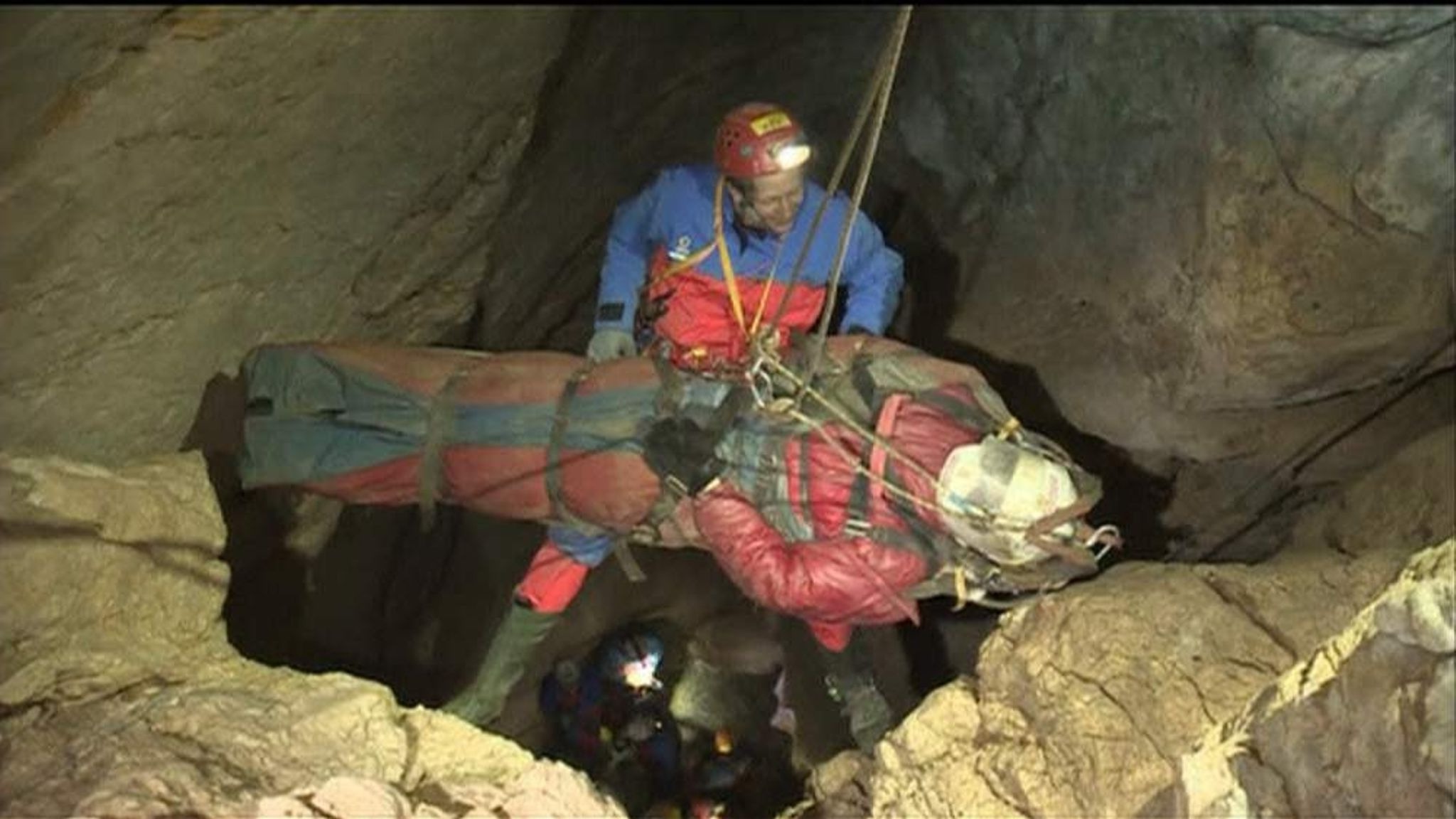
In June 2014, Johann Westhauser, a 52-year-old German cave researcher, became the center of one of the most remarkable rescue operations in European history. The incident took place inside the Riesending cave system in Bavaria, known for its extreme depth and challenging terrain.
Westhauser was exploring a narrow passage nearly 1,000 meters below the surface when a sudden rockfall caused serious injuries, leaving him unable to continue on his own. The remote location made the situation especially critical.
His companions provided immediate assistance, stabilizing him in the freezing environment before beginning the difficult journey back to the surface to alert authorities.
Once the alarm was raised, an international rescue effort was launched. More than 700 specialists from several European countries joined the operation, bringing advanced training and equipment.
Rescuers worked in shifts, navigating tight tunnels, vertical shafts, and unstable rock formations. Conditions inside the cave included low temperatures and extremely limited space, making every movement challenging.
To extract Westhauser, teams had to carefully widen passages and use a specially designed stretcher that could fit through narrow sections of the cave. Each step required precise coordination.
Progress was slow, often measured in small increments, as safety remained the top priority. Rescuers ensured that the route was secure to prevent further risks during the ascent.
On June 19, 2014, after nearly 11 days underground, Johann Westhauser was successfully brought to the surface alive. His recovery marked a successful outcome to a highly complex operation.
The rescue remains a notable example of international cooperation, technical skill, and determination in the face of extreme conditions.
Leave a Reply