
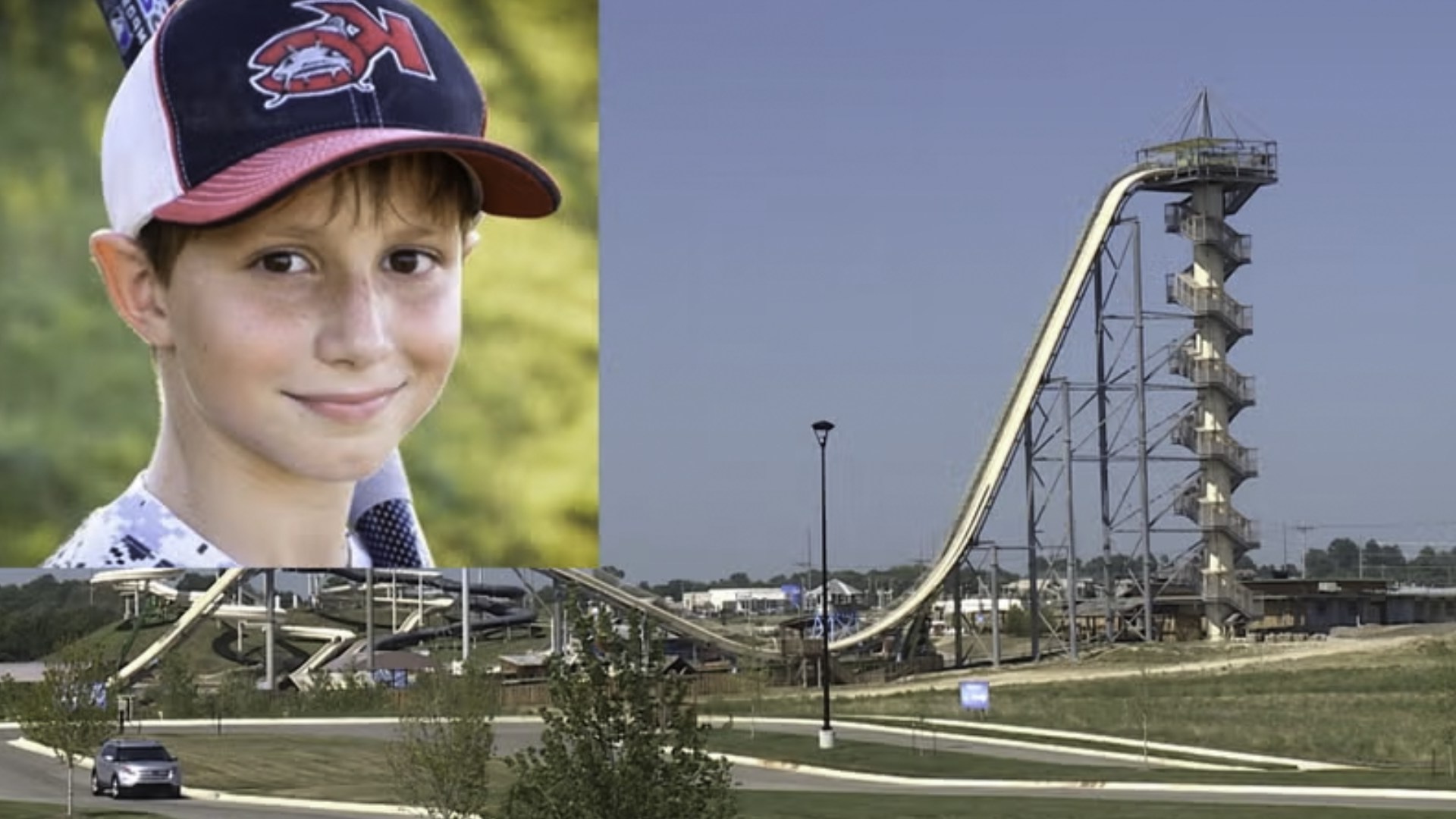
In August 2016, a tragic incident at Schlitterbahn Waterpark in Kansas City, Kansas, drew national attention and raised serious concerns about amusement ride safety. The case involved 10-year-old Caleb Schwab and the Verrückt water slide.
The Verrückt slide, whose name means “insane” in German, was promoted as the tallest water slide in the world. Standing approximately 168 feet high, it was designed to deliver high speeds and extreme drops.
During the ride, passengers were placed in rafts designed to travel down a steep slope and over a large uphill section. The attraction was intended to create a high-speed experience unlike any other.
According to investigators, the raft Caleb was riding in encountered a critical issue as it moved over the second hill. The raft became airborne, leading to a catastrophic sequence of events.
The incident resulted in Caleb Schwab losing his life and led to the immediate closure of the ride. Emergency response teams and authorities quickly began an investigation into what had occurred.
Further findings revealed concerns related to the ride’s design and safety measures. Reports indicated that there had been prior issues during testing, including instances where rafts did not behave as expected.
The Verrückt slide was permanently closed and later demolished. The case led to multiple legal actions and increased scrutiny of amusement park regulations and engineering practices.
In the aftermath, the tragedy prompted broader discussions about safety oversight in the industry, emphasizing the importance of thorough testing and risk management.
Caleb Schwab’s story remains one of the most significant amusement park incidents in recent history, remembered for its impact on safety standards and public awareness.
Leave a Reply