
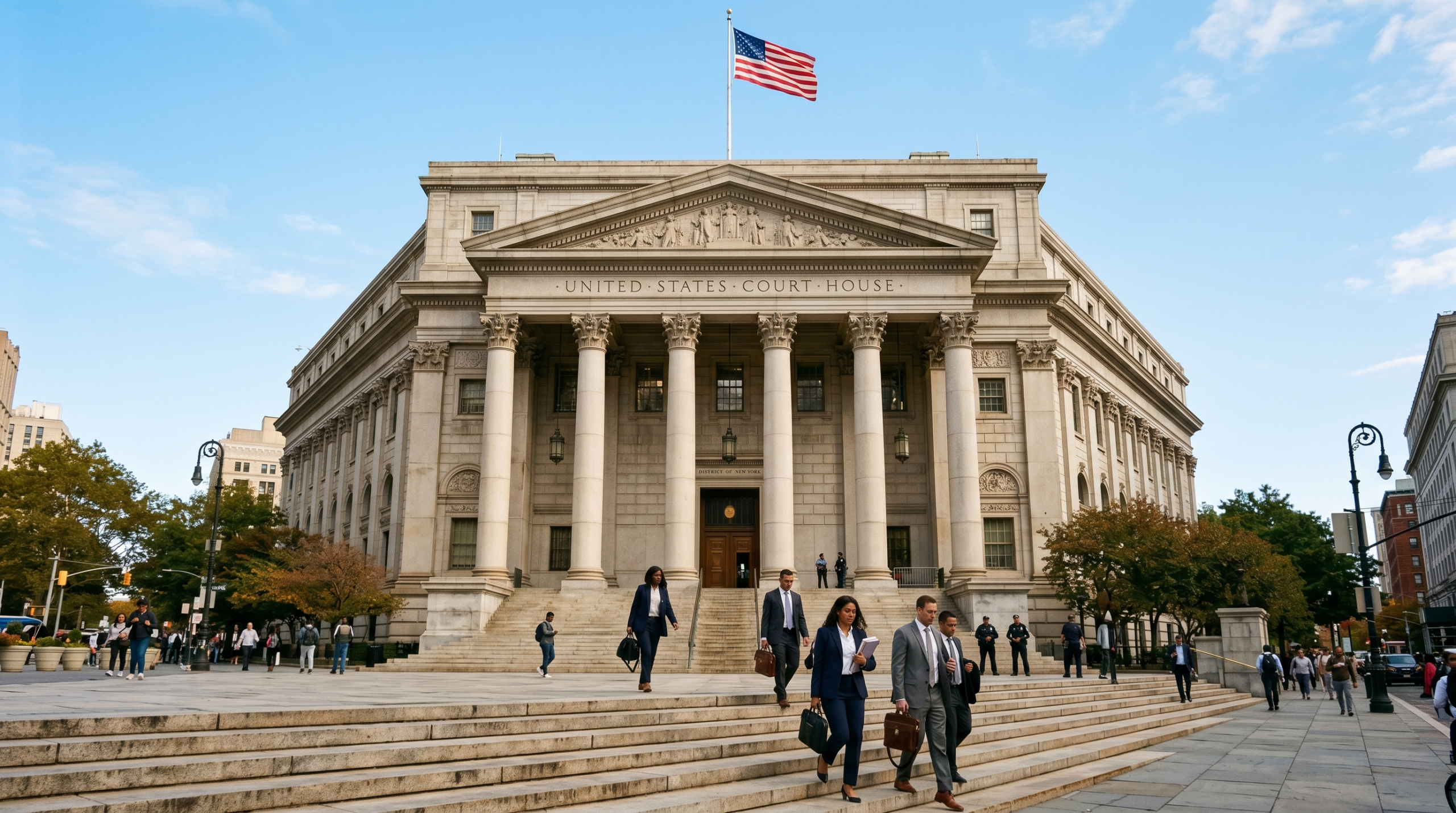
A panel of federal judges heard arguments on Wednesday regarding a contentious immigration policy that denies bond hearings to all immigration detainees who entered the United States unlawfully, regardless of how long they have resided in the country.
The Fifth Circuit Court of Appeals had previously ruled in February that the mandatory detention policy, announced through an Immigration and Customs Enforcement memorandum last year, complies with the Immigration and Nationality Act. However, this statutory ruling has not prevented some federal judges within the circuit from finding the policy unconstitutional on due process grounds, particularly when applied to individuals who have lived in the United States for extended periods.
The three-judge panel reviewed government appeals in three cases where lower courts had granted habeas petitions based on constitutional concerns. Deputy Assistant Attorney General Drew Ensign argued before the panel that the lower courts had erred in their decisions.
Ensign contended that petitioners were not challenging the constitutionality of mandatory detention for those apprehended at the border, including those who lawfully presented themselves at ports of entry. Instead, he argued that the petitioners claimed they had acquired constitutional protections simply by successfully entering the country illegally.
Rebecca Cassler, representing the petitioners through the American Immigration Council, countered that the government must demonstrate a permissible civil purpose for detention. She argued that detention without justification begins to resemble impermissible punishment.
During the proceedings, Circuit Judge Cory Wilson questioned how courts should determine when someone has been in the country long enough to acquire due process protections and what criteria should be used to make such determinations. Wilson expressed concern about the administrative challenges, noting various sliding scales and weighing factors that seemed detached from the statute.
Circuit Judge James Graves suggested that perhaps the determination should be individualized, while Circuit Judge Leslie Southwick rounded out the three-judge panel.
The legal dispute centers on two sections of the Immigration and Nationality Act that govern deportation proceedings. Section 1225 applies to applicants for admission, defined as aliens present in the United States who have not been admitted or who arrive in the United States. This section mandates detention pending removal proceedings for those not clearly entitled to admission.
Section 1226 governs deportation proceedings more broadly and allows for discretionary detention, permitting the government to release detainees on bond during removal proceedings. Federal regulations provide individuals detained under this section the right to request bond hearings before immigration judges.
For nearly three decades, the government applied Section 1225 to people detained at or shortly after crossing the border, while Section 1226 applied to those detained within the country. The policy shift announced last year changed this approach, treating all individuals who entered without lawful admission as applicants for admission under Section 1225, regardless of their time in the country.
This policy change has triggered numerous federal habeas petitions from detainees challenging the denial of bond hearings. Hundreds of federal judges have ruled against the administration’s policy on either statutory or constitutional grounds.
The circuit courts remain divided on the issue. While the Eighth Circuit agreed with the Fifth Circuit’s determination that the policy complies with the Immigration and Nationality Act in March, the Second Circuit reached a different conclusion on Wednesday, finding the policy incompatible with the statute.
The ongoing legal battle highlights fundamental questions about due process rights and the extent of government authority in immigration detention cases, particularly for individuals who have established ties to communities after years of residence in the United States.
Leave a Reply