
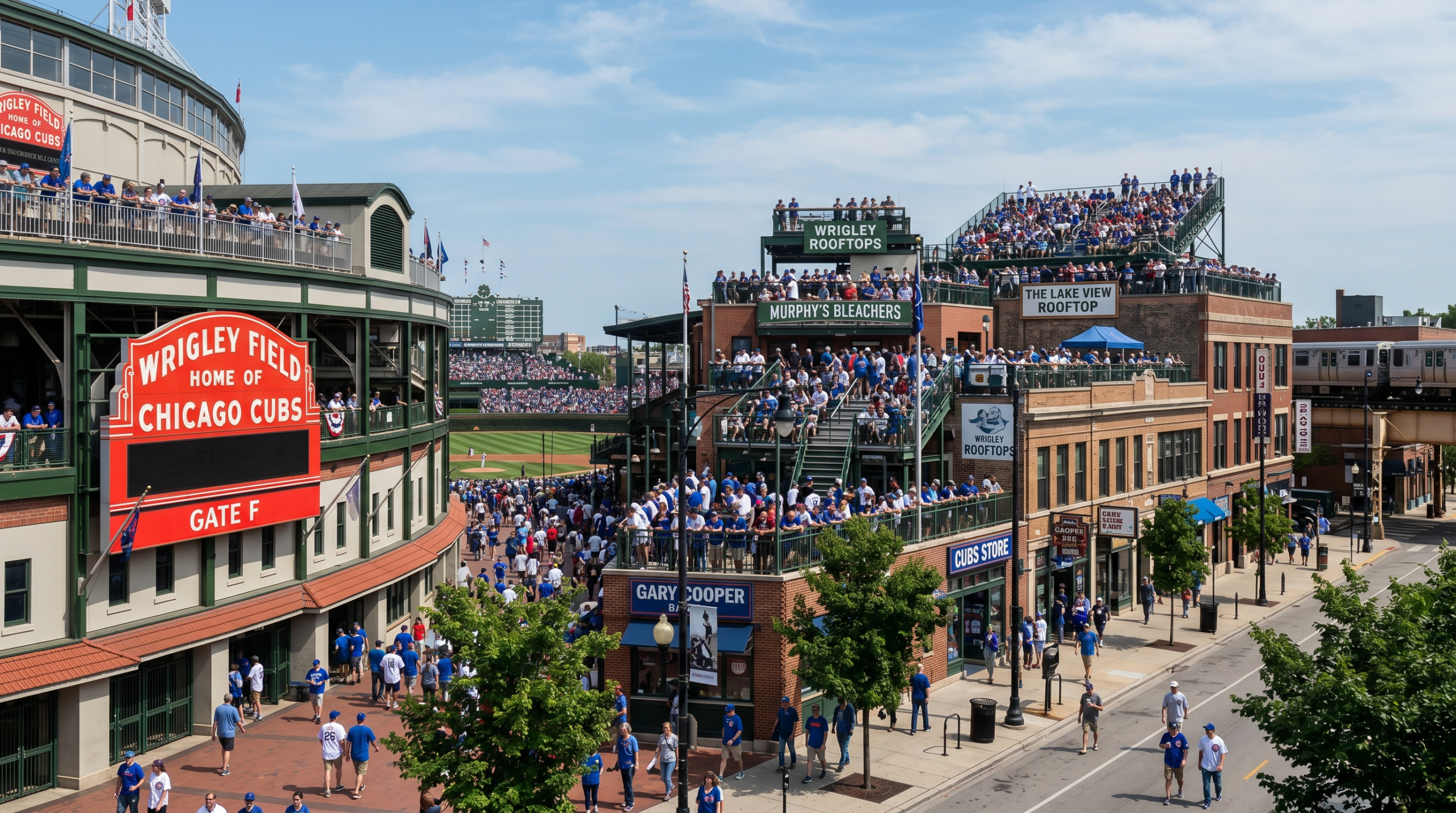
A legal dispute between the Chicago Cubs Baseball Club and a rooftop business adjacent to Wrigley Field has advanced after a court declined to grant judgment on the pleadings in favor of the rooftop operator. The case centers on allegations that the business continued selling tickets to its skydeck and bleacher areas, which offer views into the iconic baseball stadium, after its licensing agreement with the Cubs expired in 2024.
The rooftop business owner had sought an early judgment in the case but was unsuccessful in their attempt to resolve the matter without proceeding to trial. The dispute highlights ongoing tensions between the Cubs organization and neighboring businesses that have historically capitalized on their proximity to the ballpark.
For decades, rooftop venues surrounding Wrigley Field have operated as unique entertainment spaces, offering patrons the opportunity to watch Cubs games from elevated vantage points outside the stadium. These businesses typically entered into licensing agreements with the Cubs organization, establishing terms for their operations and revenue sharing arrangements.
According to court documents, the specific rooftop business in question had maintained a license with the Cubs that permitted them to sell access to their viewing areas. However, that agreement reached its expiration date in 2024. The Cubs subsequently filed legal action, alleging that the business continued to market and sell tickets for game-day viewing experiences without proper authorization.
The rooftop operator’s attempt to secure judgment on the pleadings represents a legal strategy aimed at resolving the case based on the initial court filings alone, without proceeding through the discovery process or trial. Such motions are typically granted only when the moving party can demonstrate that no genuine issues of material fact exist and that they are entitled to judgment as a matter of law.
The court’s decision to deny this motion suggests that factual disputes remain to be resolved regarding the terms of the expired agreement, the rooftop business’s continued operations, and potentially the extent of any damages or appropriate remedies.
This case reflects broader changes in the relationship between Wrigley Field and its surrounding neighborhood businesses. Over the years, the Cubs organization has taken various approaches to managing these rooftop venues, ranging from adversarial legal battles to negotiated partnership agreements. The expiration of licenses and subsequent disputes over continued operations represent an ongoing challenge in balancing property rights, business interests, and the unique culture that has developed around the historic ballpark.
The outcome of this case could have implications for other rooftop businesses operating near Wrigley Field, particularly those with expiring or expired agreements with the Cubs. It may also influence how similar arrangements are structured at other major league ballparks where comparable viewing opportunities exist.
As the case moves forward, both parties will likely engage in the discovery process, potentially revealing more details about the specific terms of the expired license, the rooftop business’s post-expiration activities, and the Cubs’ claimed damages. The matter may ultimately proceed to trial unless the parties reach a settlement agreement.
Leave a Reply