
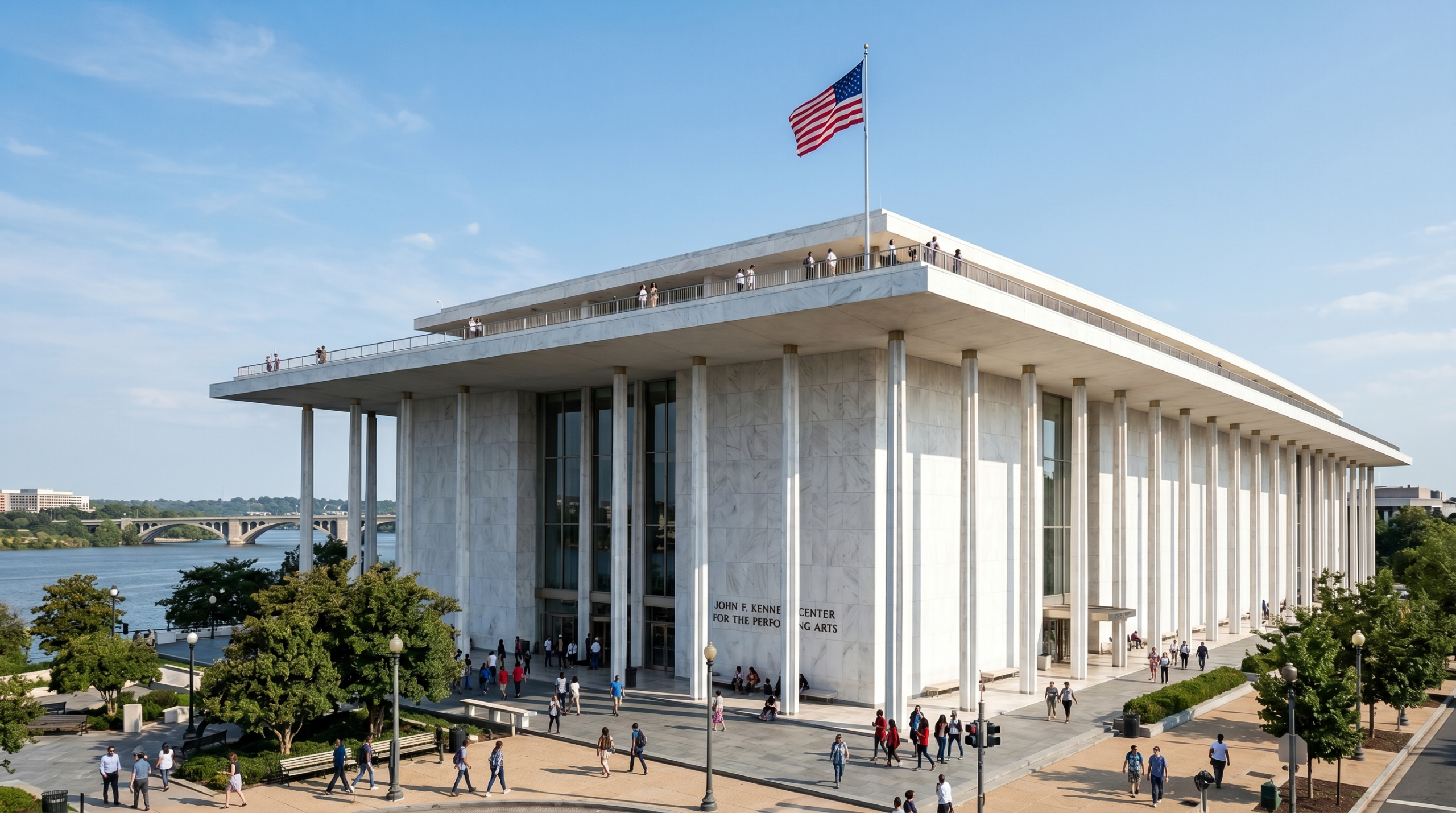
The executive director of the Kennedy Center warned a federal court on Wednesday that the iconic performing arts venue faces severe structural problems requiring urgent repairs, testifying in a case that has raised concerns about potential demolition of the historic building.
Matthew Floca, who assumed the role of chief operating officer on March 24 following the departure of former acting director Richard Grenell, appeared before U.S. District Judge Christopher Cooper to detail extensive damage to the national cultural landmark. His testimony came as part of ongoing litigation filed by the National Trust for Historic Preservation seeking to block a proposed $250 million renovation project scheduled to begin July 6.
The lawsuit centers on fears that President Donald Trump, who serves as chairman of the Kennedy Center Board of Trustees, might order complete demolition of the building rather than restoration. The board approved the renovation plan during a March 16 meeting led by Trump.
Floca, who brings extensive construction management experience in the Washington area, painted a troubling picture of the center’s current condition. He described decades of water intrusion from storms and the nearby Potomac River that have compromised the building’s roof, electrical systems, and support columns.
The most alarming issues involve electrical vaults located beneath the center’s reflecting pool. These critical systems have sustained such extensive water damage that stalactites have formed inside them, Floca testified. The deterioration has created a serious risk of electrical shorts that could trigger fires or explosions.
The building’s iconic overhanging terrace faces its own crisis. Failed drainage systems in the center’s layers have created dangerous conditions where 22,000-pound roof sections risk collapse. The water damage extends throughout the facility, with one stagehand office having been nicknamed ‘the swamp’ for as long as anyone can remember, according to Floca’s testimony.
During cross-examination by attorney Abbe Lowell of Lowell Associates, representing the National Trust, Floca faced pointed questions about whether the court could trust assurances that renovation rather than demolition was planned. Lowell highlighted conflicting public statements from the president and referenced the sudden demolition of the White House East Wing after initial indications suggested different plans.
Floca acknowledged the seriousness of the situation, stating that while current leadership had no demolition plans, he could not control presidential statements or intentions. He described the current moment as a unique opportunity to address structural issues comprehensively with available congressional funding.
The proposed changes have raised additional concerns about alterations to the building’s symbolic elements. The Kennedy Center was created by Congress as a living memorial to President John F. Kennedy, and potential modifications include replacing weeping willow trees that symbolize national grief with cherry or maple trees, changing the white Carrara marble gifted by Italy, and altering the red carpet in the Hall of States and Nations to black and gold. The building’s gold columns have already been repainted white, and the president’s name has been placed before Kennedy’s.
Attorney Thaddeus Heuer of Foley Hoag urged Judge Cooper to issue an injunction preventing demolition and requiring submission of renovation plans to the National Capital Planning Commission and Commission of Fine Arts for review. This would ensure compliance with the National Historic Preservation Act and National Environmental Policy Act.
Principal Deputy Assistant Attorney General Yaakov Roth argued that the project represents a vital opportunity to preserve the center’s future as a performing arts venue. He contended that the Kennedy Center, as an independent body similar to the National Gallery of Art, does not require approval from advisory boards.
Judge Cooper expressed skepticism about this interpretation, questioning how the Kennedy Center could be treated differently from every other federal public museum in Washington. The judge ordered both parties to submit briefs responding to Wednesday’s testimony within two weeks and indicated a ruling would follow shortly after.
Leave a Reply