
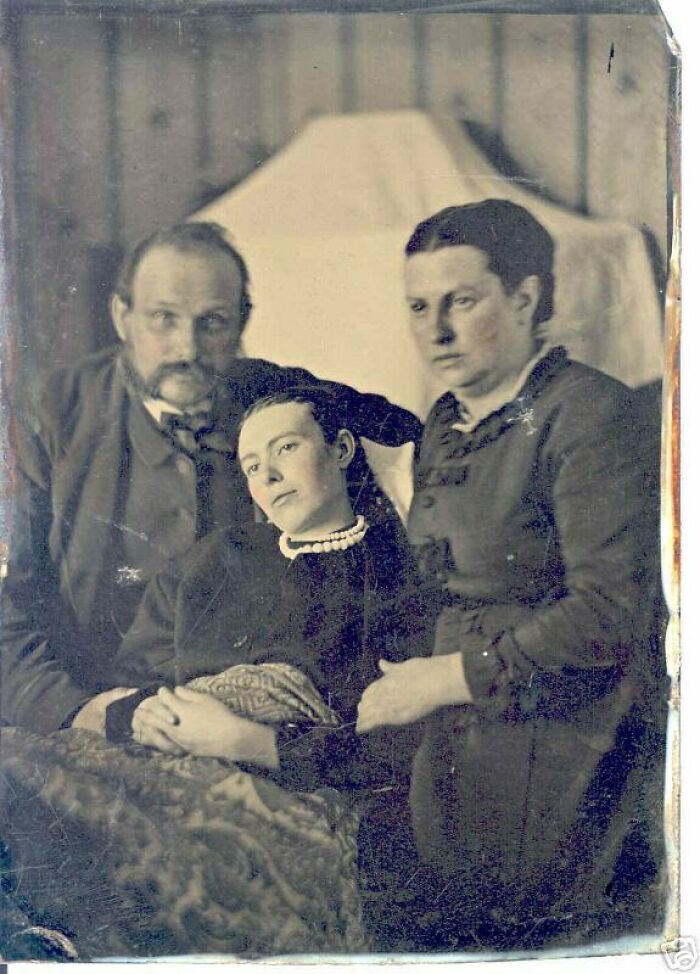
This image, taken during the Victorian era, shows a family posed beside their deceased child — a practice that may seem unusual today, but once held deep meaning.
In the 19th century, photography was not widely accessible. It was expensive, and many families could only afford to take a single photograph in their lifetime. For some, that moment came only after a loved one had passed away.
High infant and child mortality rates meant that loss was a common part of life. Rather than being hidden, death was openly acknowledged and woven into daily and cultural practices.
Post-mortem photography became a way for families to preserve a final memory. These portraits were often carefully staged. The deceased might be dressed in their best clothing, placed in a natural position, or even supported upright to resemble life. In some cases, artists would enhance the image by adding details to create a more lifelike appearance.
The intention was not to create something unsettling, but to honor the individual and keep their memory alive.
This practice was also part of a broader mourning culture. Victorians often observed long periods of grief, wore mourning attire, and kept personal mementos such as hair or jewelry from the deceased.
Today, these images can feel unfamiliar or even unsettling. But in their time, they were acts of love — a way for families to hold onto someone they had lost in a world where death was far more present and often came without warning.
Leave a Reply