
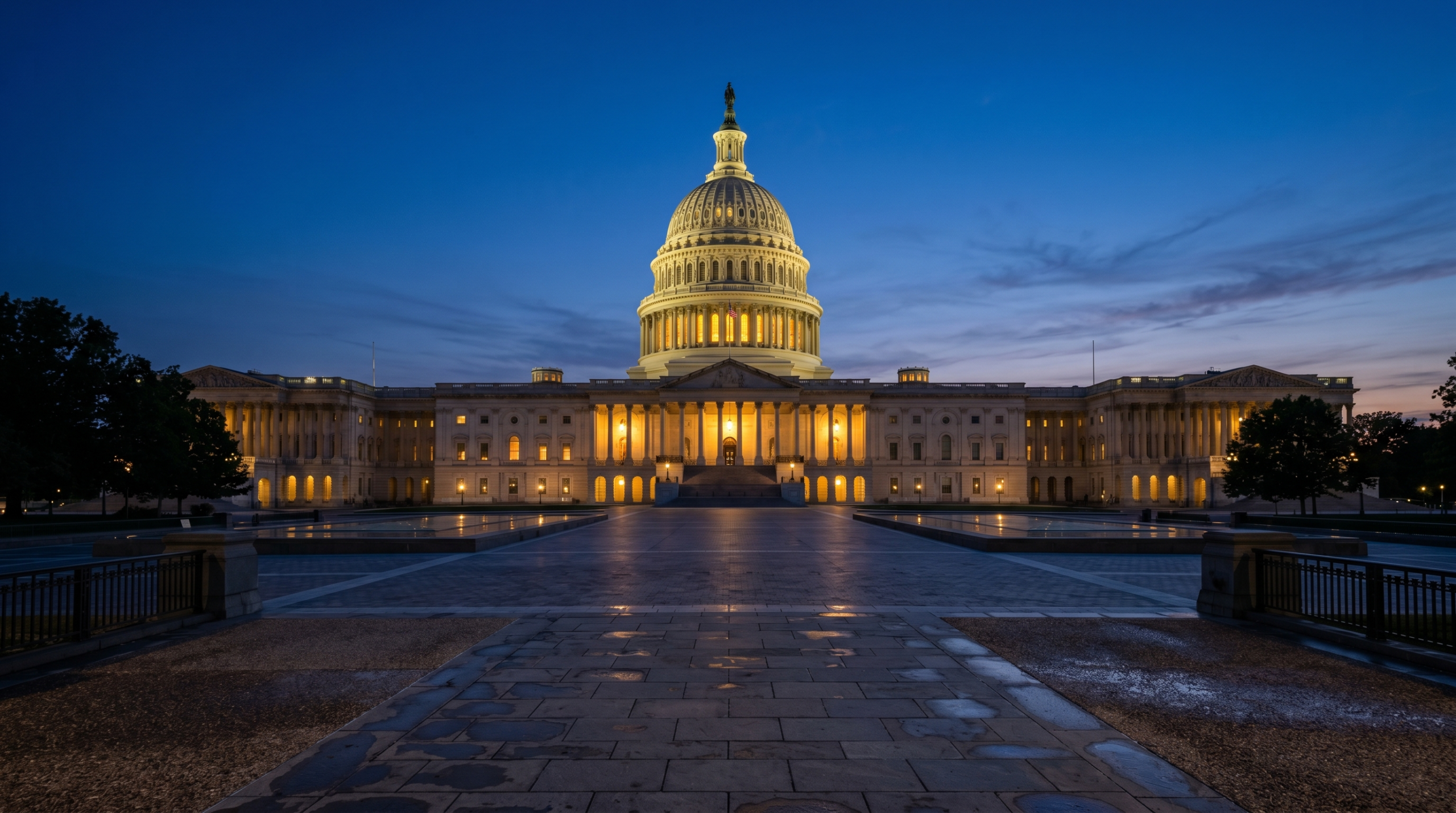
A comprehensive national survey has revealed that American voters would prefer to see Democrats gain control of the United States House of Representatives in the upcoming midterm elections, despite expressing significant dissatisfaction with the current performance of Democratic lawmakers in Congress.
The survey, conducted among 1,106 registered voters nationwide, found that 50 percent of respondents would choose Democrats to control the House if elections were held today, compared to 39 percent who would prefer Republican control. Eleven percent of those surveyed did not express a preference either way.
These findings emerge during a challenging period for Democrats in the ongoing redistricting process across the country. The party has encountered several obstacles in recent weeks, including a decision by the U.S. Supreme Court not to overturn a Virginia Supreme Court ruling that invalidated a voter-approved congressional district map that would have favored Democrats in all but one of the state’s House seats.
Additionally, a recent Supreme Court decision limiting how racial discrimination can be addressed in redistricting cases has provided several Republican-controlled states with legal grounds to pursue redrawn electoral maps.
Despite the preference for Democratic control, the survey revealed deep dissatisfaction with current Democratic lawmakers. Only 20 percent of voters approved of how congressional Democrats are handling their responsibilities, while 72 percent expressed disapproval. Even among Democratic voters themselves, the approval rating stood at just 41 percent, with 50 percent disapproving of their party’s congressional performance.
The survey also highlighted tensions within the Democratic base regarding strategy toward President Donald Trump. Half of all voters believe Democrats in Congress should increase their opposition to the president, while 42 percent think they should pursue more collaboration. Among Democratic voters specifically, an overwhelming 93 percent want their representatives to take a stronger stance against Trump.
Polling analyst Tim Malloy noted the apparent contradiction in voter sentiment, observing that while Democrats are polling as the preferred party to control the House, their base is demanding more aggressive opposition to the president.
The survey also measured presidential approval ratings, finding that 34 percent of voters approve of Trump’s job performance while 58 percent disapprove, marking the lowest approval rating of his second term. Economic concerns appear to be driving much of this dissatisfaction.
More than two months into military conflict with Iran, which has resulted in increased oil prices, 64 percent of voters disapprove of Trump’s economic management, with only 33 percent expressing approval. This represents the lowest economic approval rating Trump has received across both presidential terms.
Republican support for Trump’s economic policies has also shown signs of erosion. While 73 percent of Republicans still approve of his economic handling, this represents a significant decline from the previous month when Republican approval stood at 88 percent with only 9 percent disapproving.
The shift in economic sentiment is particularly notable given that economic performance has historically been considered one of Trump’s strongest political assets, having played a crucial role in his electoral victories.
These polling results suggest a complex political landscape heading into the midterm elections, with voters expressing preference for Democratic control while simultaneously showing dissatisfaction with current Democratic leadership and demanding more confrontational tactics against the administration.
Leave a Reply