
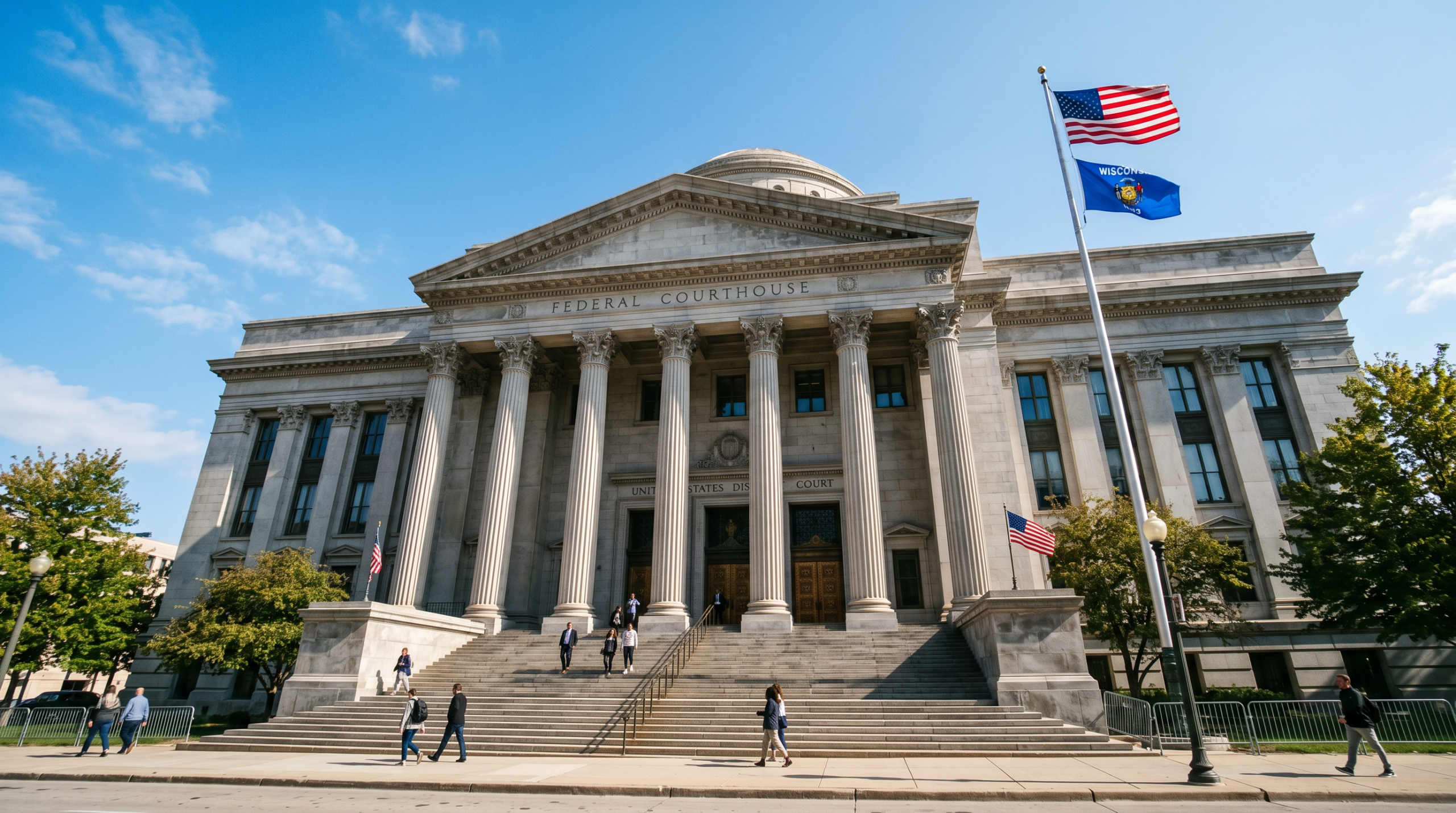
A federal district court has rejected the Department of Justice’s legal effort to obtain Wisconsin’s unredacted voter registration list, which includes sensitive personal identification numbers of registered voters. The ruling represents the latest development in a nationwide campaign involving similar lawsuits filed against dozens of states.
The legal dispute originated in June 2025 when the Justice Department contacted the Wisconsin Elections Commission, asserting that it had received multiple reports suggesting potential non-compliance with the Help America Vote Act. Federal officials demanded access to an unredacted version of the state’s voter registration database, citing authority under Title III of the Civil Rights Act of 1960, along with detailed information about the state’s list maintenance procedures.
Wisconsin officials provided a redacted version of the requested data, but the federal government deemed this insufficient and initiated legal proceedings. The unredacted version sought by federal authorities would have included voters’ Social Security numbers or driver’s license numbers.
U.S. District Judge James Peterson ruled on Thursday that the federal government lacks the legal authority to compel Wisconsin to produce the unredacted voter information. The judge’s analysis focused primarily on the statutory interpretation of Title III of the Civil Rights Act.
In his ruling, Peterson determined that the relevant statute requires election officials to retain only records that “come into his possession,” which he interpreted as documents that are received or acquired rather than created by the state itself. The judge emphasized that this phrase naturally refers to external documents, not those generated internally by state agencies.
Peterson further noted that accepting the government’s interpretation would create an untenable requirement for states to preserve every election-related document they produce, including continuously updated databases like voter registration lists. Such an interpretation would conflict with other federal voting legislation, including the Help America Vote Act and the National Voter Registration Act, both of which mandate regular updates to voter rolls.
The judge highlighted the contradictory nature of the government’s position, stating that their interpretation would create circumstances where state election officials could face fines or imprisonment for performing duties required by federal law.
This Wisconsin case forms part of a broader pattern of at least 30 similar lawsuits filed across 48 states. According to the State Democracy Research Initiative, eight federal courts have already dismissed comparable Justice Department suits on their merits. Oklahoma stands as the sole exception, having reached a settlement agreement in which it provided unredacted data in exchange for the dismissal of legal proceedings.
Doug Poland, director of litigation at Law Forward, characterized the potential disclosure of unredacted voter information as a significant threat to personal privacy. He suggested that these legal actions, particularly given the documented rarity of noncitizen voting, represent attempts to manipulate future electoral processes through data gathering.
The Wisconsin Elections Commission had argued in court filings that the federal government failed to demonstrate why it required the unredacted version when a publicly available redacted copy already existed. This argument, combined with the statutory interpretation issues, contributed to the court’s decision.
The ruling underscores ongoing tensions between federal oversight of elections and state administration of voting systems, particularly regarding the balance between investigatory powers and privacy protections for registered voters.
Leave a Reply