
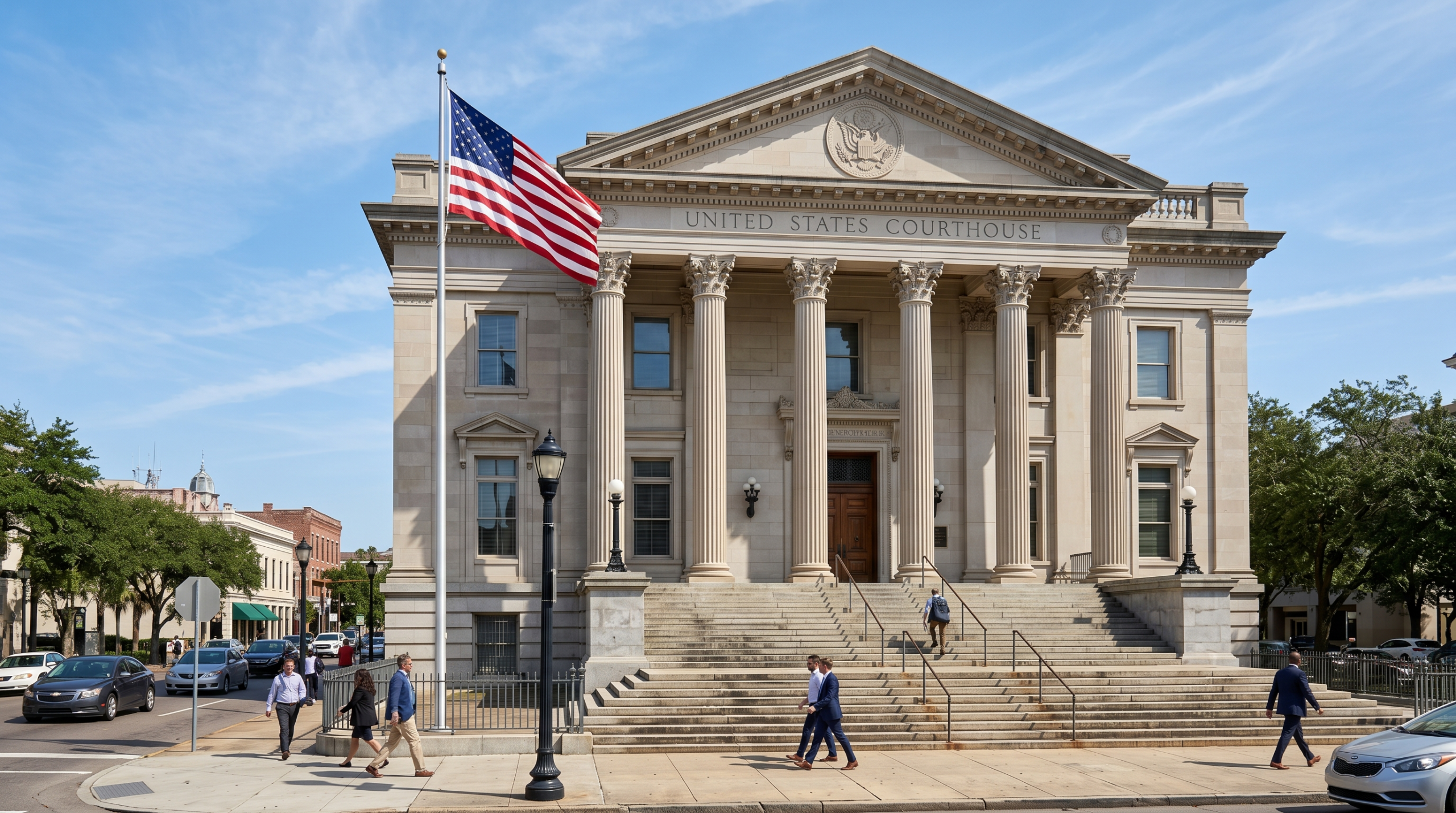
Leonardo Garcia Venegas, a United States citizen born in Florida, has faced repeated detention by federal immigration enforcement officers despite possessing valid citizenship documentation. The 12-year Alabama resident testified in federal court on Wednesday about three separate incidents within the past year where officers detained him, questioning his legal status even after he presented his birth certificate, Social Security card, and Alabama REAL ID.
Venegas, who is of Hispanic descent and speaks limited English, filed a lawsuit in September 2025 seeking to prevent immigration officers in the Southern District of Alabama from conducting warrantless entries at construction sites and detaining workers who provide evidence of citizenship or lawful status.
During his testimony through an interpreter at the federal courthouse in Mobile, Alabama, Venegas described the fear and uncertainty these encounters have created in his daily life. The incidents began after the Trump administration initiated enhanced deportation efforts in January 2025.
The first two detentions occurred at residential construction sites where Venegas worked on concrete foundations for homebuilders D.R. Horton and Lennar. Officers conducted what Venegas described as raids, during which they tackled him, bound his hands and feet, and accused him of lying about his residency status. He was released without charges on both occasions.
The third detention took place on May 2 in Venegas’s own front yard. Immigration officers had pulled over a vehicle belonging to his brother, who was in the country illegally and has since been deported, when they also detained Venegas.
Another witness, Gehovani Alvirde-Ruiz, testified about similar treatment despite holding permanent residency status with a green card and Social Security number. Officers told Alvirde-Ruiz that his documents were the best forgeries they had encountered and demanded to know where he had purchased them. Speaking through an interpreter, Alvirde-Ruiz expressed his fear of deportation and having his green card revoked.
Philip Lavoie, special agent in charge of immigration enforcement in the district, testified that officers targeted construction sites based on tips from the public or informants. He acknowledged that officers had no warrants and were not seeking specific individuals during the operations that resulted in Venegas’s detention. Lavoie stated that officers detained Venegas to verify his residency status and for officer safety during the operations. No white or Black workers were detained during these incidents.
Lavoie recognized that the Department of Homeland Security is responsible for verifying REAL IDs before states issue them but noted that standards vary between states. He added that numerous individuals with REAL IDs have been arrested while in the country illegally.
Assistant U.S. Attorney Sam Ladd Jr., representing the government, argued that Venegas lacks standing to bring trespass claims for property he does not own and that no Fourth Amendment violation occurred. He maintained that brief detention periods under these circumstances are reasonable.
Jared McClain of the Institute for Justice, representing Venegas, countered that his client has suffered a redressable injury. He questioned the purpose of proper documentation if government agencies refuse to recognize it, noting that REAL IDs contain barcodes that can be easily scanned for verification at airports, pawn shops, and bars. McClain urged the court to grant an injunction and for Homeland Security to implement consistent policies nationwide.
Chief U.S. District Judge Jeffrey U. Beaverstock, a Donald Trump appointee, presided over the hearing but did not indicate when he would issue a ruling on the requested injunction.
Leave a Reply