
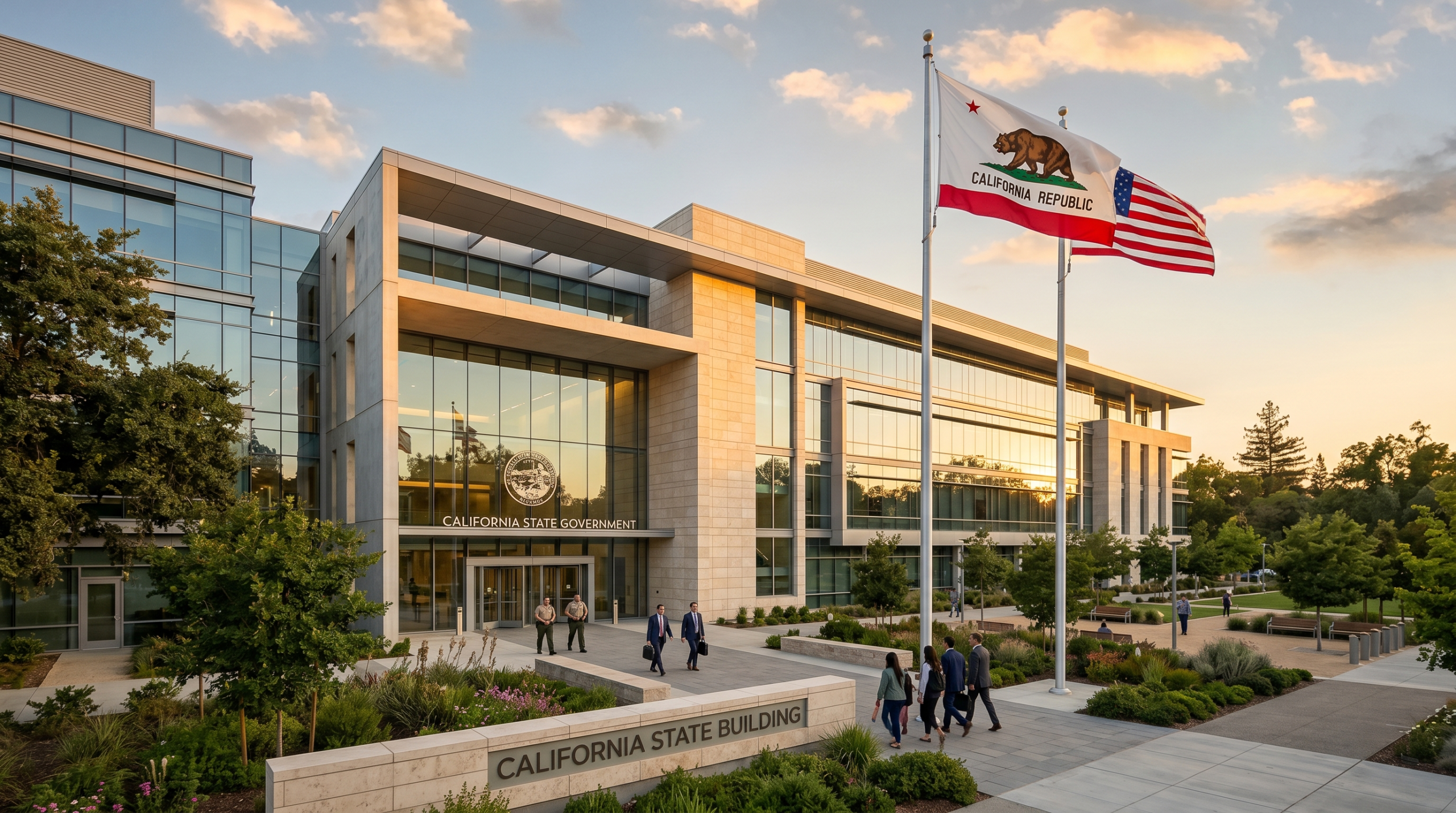
California Governor Gavin Newsom signed emergency legislation on Wednesday designed to strengthen protections against election interference, with the new law taking immediate effect just days before the state’s Tuesday primary elections.
Senate Bill 73 introduces strict new limitations on law enforcement’s ability to access voting equipment and materials. Under the legislation, officers cannot take possession of voting equipment unless specifically authorized by court order under limited circumstances. The law also grants the state attorney general and secretary of state authority to challenge local election officials’ decisions regarding law enforcement presence at voting locations.
Violations of the new regulations carry criminal penalties, marking a significant escalation in the state’s efforts to protect electoral processes from unauthorized interference.
The legislation emerged following several controversial incidents involving law enforcement and election materials. A pivotal case occurred in Riverside County, where Sheriff Chad Bianco, a Republican gubernatorial candidate, obtained search warrants and seized approximately 650,000 ballots following November’s election on Proposition 50. That proposition had redrawn congressional district maps in a way that provided Democrats with electoral advantages.
A citizens’ group had alleged that their audit revealed 46,000 more ballots were counted than cast in the Southern California county. However, the state Supreme Court ordered Bianco to halt his investigation last month.
Assemblymember Gail Pellerin, a Santa Cruz Democrat who co-authored the bill and previously served as an elections official, expressed alarm over the ballot seizure incident. She emphasized that election workers should be able to perform their duties without fear of intimidation or interference.
State Senator Sabrina Cervantes, a Riverside Democrat who introduced the bill alongside Santa Ana Democratic Senator Tom Umberg, stated that Bianco’s actions had broken the chain of custody for the affected ballots, which she characterized as illegal.
The Riverside County incident was not isolated. The governor referenced FBI agents raiding Fulton County, Georgia election offices in January, where they removed over 600 ballot boxes and other materials related to the 2020 election. The governor also cited former President Donald Trump’s documented phone call to Georgia Secretary of State Brad Raffensperger, during which Trump requested the Republican official to locate additional votes for him. President Joe Biden ultimately won Georgia in the 2020 election.
Within California, the U.S. Justice Department deployed election monitors to five counties, including Riverside, in November. A subsequent bill analysis noted that an assistant U.S. attorney general reported no significant issues emerged from that monitoring effort.
The Justice Department also pursued voter records from Orange County earlier this year in response to a complaint about a noncitizen receiving a vote-by-mail ballot. While the county provided records with sensitive information like driver’s license and Social Security numbers redacted, federal officials sought complete records through court proceedings.
The governor connected these incidents to broader concerns about electoral integrity, including Trump’s communication with Texas Governor Greg Abbott regarding congressional district redraws aimed at securing five additional Republican seats. This action influenced California’s Proposition 50 and its subsequent passage.
Newsom also highlighted Louisiana’s temporary suspension of its primary election following a U.S. Supreme Court decision that allowed the state to redraw maps and eliminate a Black-majority district.
The emergency legislation represents California’s immediate response to what state officials characterize as escalating threats to election integrity, positioning the state as actively defending its electoral processes against interference as primary elections approach.
Leave a Reply