
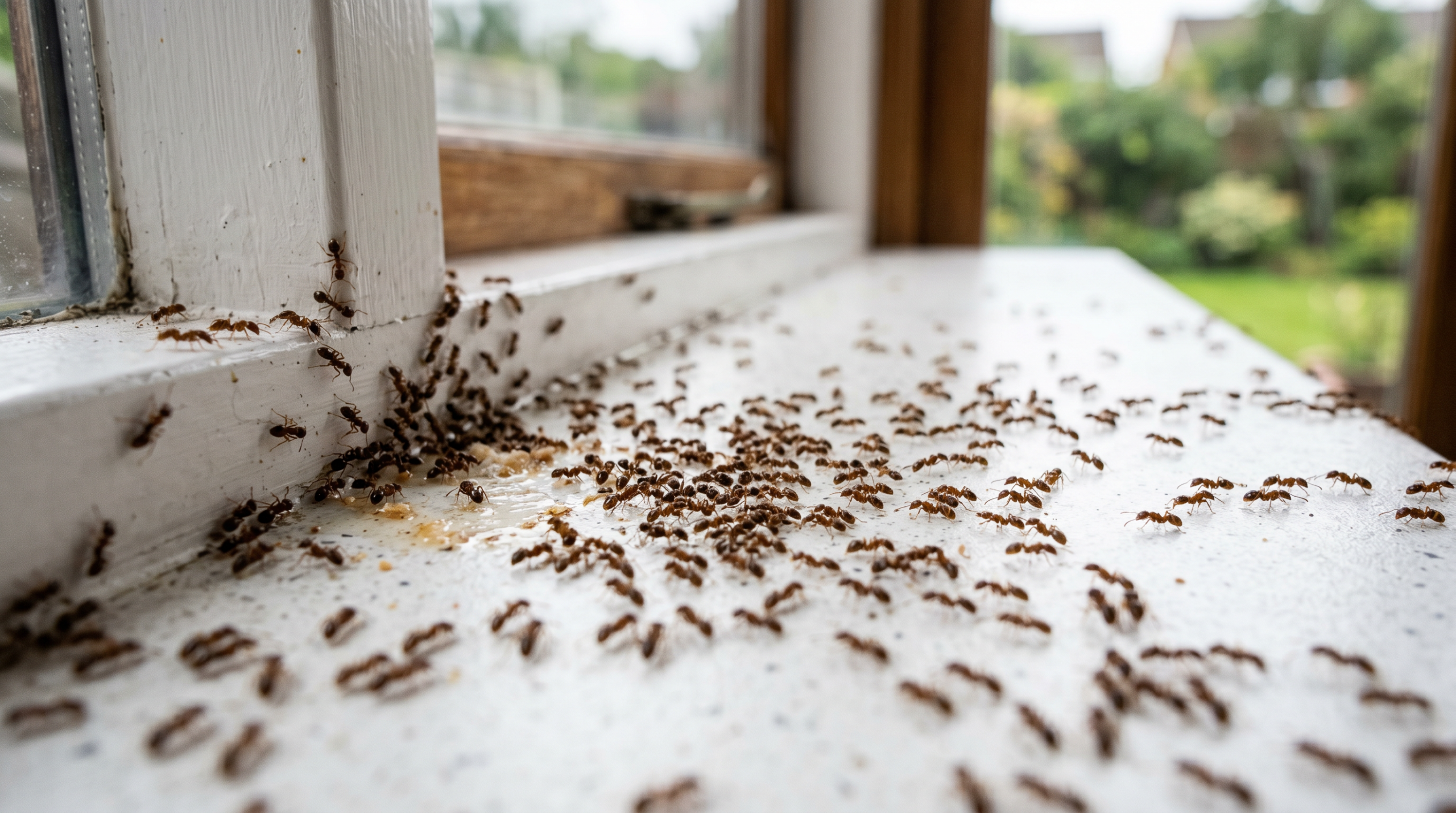
A severe ant infestation has gripped an unnamed coastal community, leaving residents desperate for solutions as the insects infiltrate every aspect of daily life. The situation, which has persisted despite government intervention, highlights the challenges faced by local authorities in managing the widespread pest problem.
The crisis came to light when a family relocated to the seaside town with their infant child, having been warned by a relative named Uncle Augusto about the unusual ant problem in the area. The warning proved to be an understatement, as the family discovered that the entire community was overrun with aggressive ants that had invaded homes, gardens, and public spaces.
According to reports from affected residents, the ants have contaminated food supplies, infested children’s bedding and toys, and even entered the ears and noses of sleeping infants. The insects appear on kitchen counters, in cupboards, and throughout living spaces, making normal daily activities increasingly difficult for families in the area.
Local residents have adopted various strategies to cope with the infestation, though none have proven entirely effective. Some homeowners have resorted to denial, refusing to acknowledge the severity of the problem even as ants crawl across their belongings. Others have taken a more proactive approach, with one resident developing mechanical traps designed to crush the insects into paste. However, this method has proven both expensive and counterproductive, as the deceased ants attract more of their kind to feed on the remains.
The government has deployed an official response team, sending representatives known locally as ‘Ant Men’ to treat affected properties. These officials enter homes and apply a molasses-like substance containing formicides to baseboards, corners, cupboards, and other areas where ants congregate. The treatment is mandatory, with government personnel showing badges to gain entry to private residences.
Despite the official intervention, many residents report that the government’s solution has been ineffective. The sweet-smelling substance is supposed to be carried back to ant nests where it would eliminate entire colonies, but locals claim the ants continue to thrive. Some frustrated homeowners have resorted to primitive methods, using shovels to crush the insects in their yards.
The scale of the infestation has been estimated at approximately 77,302,580 ants, according to an informal count conducted by community members. This staggering number underscores the magnitude of the problem facing the town.
The situation has created divisions within the community, with some residents accepting the government’s approach despite its apparent ineffectiveness, while others openly criticize the mandatory treatment program. The presence of government vehicles, described as large, armor-plated ‘Antmobiles,’ has become a common sight on residential streets as officials continue their pest control efforts.
For newcomers to the area, the ant problem presents an immediate and shocking reality. Families with young children face particular challenges, as the insects pose health risks by contaminating food and potentially harming infants. The persistent nature of the infestation has forced residents to adapt their daily routines and accept a reduced quality of life.
The coastal town’s ant crisis raises questions about pest management strategies and the effectiveness of government-mandated solutions when dealing with severe infestations. As residents continue to battle the relentless insects with varying degrees of success, the community remains divided on the best path forward.
Leave a Reply