
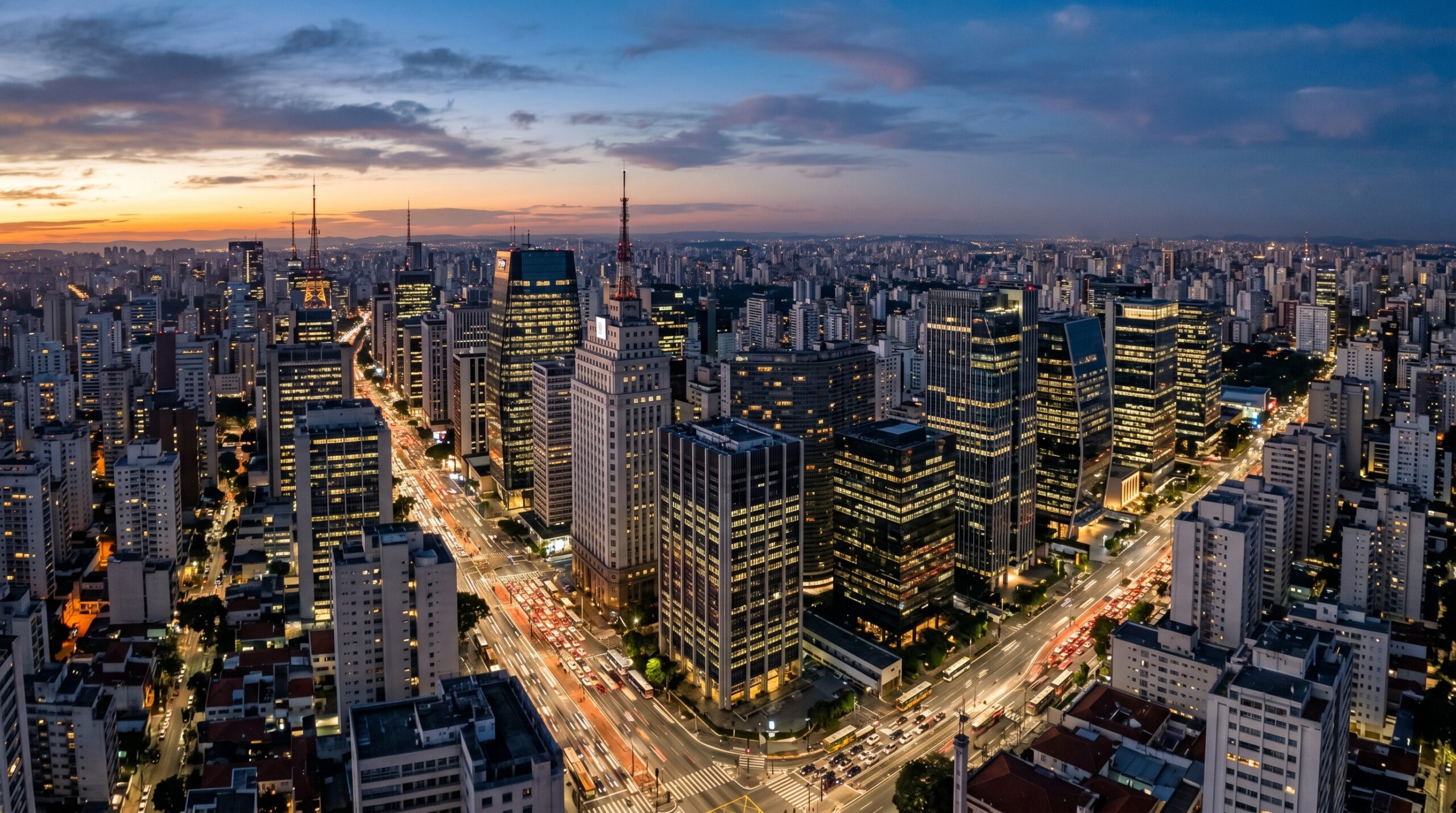
The United States State Department’s decision to classify two major Brazilian criminal organizations as foreign terrorist entities has sent shockwaves through South America’s largest economy, raising concerns about widespread financial disruption and unintended consequences for legitimate businesses.
The May 28 designation targeted the First Capital Command (Primeiro Comando da Capital – PCC) and the Red Command (Comando Vermelho – CV), marking a significant escalation in international efforts to combat organized crime in Brazil. The move has sparked immediate controversy, with Brazilian President Luiz Inácio Lula da Silva expressing strong criticism of the decision.
The president warned that the designation could create a setback in crime-fighting efforts while potentially threatening lives and causing economic losses for the country. His concerns reflect the complex political landscape, as his Worker’s Party faces a competitive reelection campaign against presumed opposition candidate Flávio Bolsonaro, son of former President Jair Bolsonaro.
The younger Bolsonaro, who visited the United States shortly before the announcement, claimed credit for the designation through social media posts, asserting that his single trip accomplished more for Brazilian security than sixteen years of Worker’s Party governance.
The economic implications are substantial. Brazil maintains a robust trading relationship with the United States, exchanging over eight billion dollars in goods monthly. Major American corporations across technology, energy, food, and automotive sectors maintain significant operations in Brazil, the world’s tenth-largest economy.
Under the new designations, any individual, business, or financial institution that conducts transactions with these criminal groups, even unknowingly, faces potential asset freezes and terrorism-related charges. This creates an unprecedented compliance challenge for Brazil’s financial sector.
The PCC’s extensive infiltration of legitimate business sectors particularly complicates matters. Prosecutor Lincoln Gakiya, who has investigated the organization for over two decades, estimates the PCC generates approximately two billion dollars annually, with funds laundered throughout the financial system often without banks’ knowledge.
A recent investigation called Operation Hidden Carbon revealed the depth of PCC involvement in Brazil’s fuel sector. The operation exposed how the criminal organization controlled gas stations and fuel import businesses that appeared entirely legitimate. In its second phase, launched in 2025, authorities identified an estimated five billion dollars laundered over four years through financial technology companies and investment funds operating in Faria Lima, Brazil’s financial hub.
The sophistication of these operations became evident when investigations revealed that even Brazilian government entities, including police forces and the military, had unknowingly purchased fuel from PCC-operated companies. The documentation appeared so legitimate that government agencies had no reason to suspect criminal involvement.
Bruna Santos from the Inter-American Dialogue emphasized that businesses operating in Brazil or connected to Brazilian supply chains must rapidly recalibrate their compliance frameworks. The new legal environment significantly raises concerns around sanctions exposure, illicit finance, third-party risk, and reputational damage.
Traditional banks like Bradesco, despite facing stringent regulations, processed transactions for PCC-operated businesses alongside less-regulated fintech companies. The criminal organization’s sophisticated structure distributed profits across various banks and businesses, effectively hiding direct connections to illegal activities.
Ricardo Zuñiga, a former US diplomat now consulting at Dinamica Americas, predicts that Brazilian financial institutions will inevitably face scrutiny from US prosecutors and potential lawsuits. The ripple effects could extend far beyond the fuel sector, affecting mining, agriculture, logging, and other industries operating in territories where these criminal groups maintain presence.
The PCC has demonstrated remarkable adaptability throughout its three-decade existence, consistently evolving despite law enforcement efforts. Even with top leaders imprisoned in maximum-security facilities and repeated dismantling of criminal schemes, the organization has continued expanding and diversifying operations.
The group’s activities now extend into public transportation, with municipal bus operation contracts in São Paulo, as well as cleaning services and waste management. Both organizations have also established presence in Amazon gold mining operations, capitalizing on record-high gold prices.
Melina Risso from the Igarapé Institute notes that the banking system faces immediate impacts, requiring reassessment of exposure and anti-money laundering controls, leading to higher compliance costs for internationally-operating companies.
As Brazil grapples with these designations, the challenge remains balancing effective crime-fighting measures with protecting legitimate economic activity in one of the world’s major economies.
Leave a Reply