
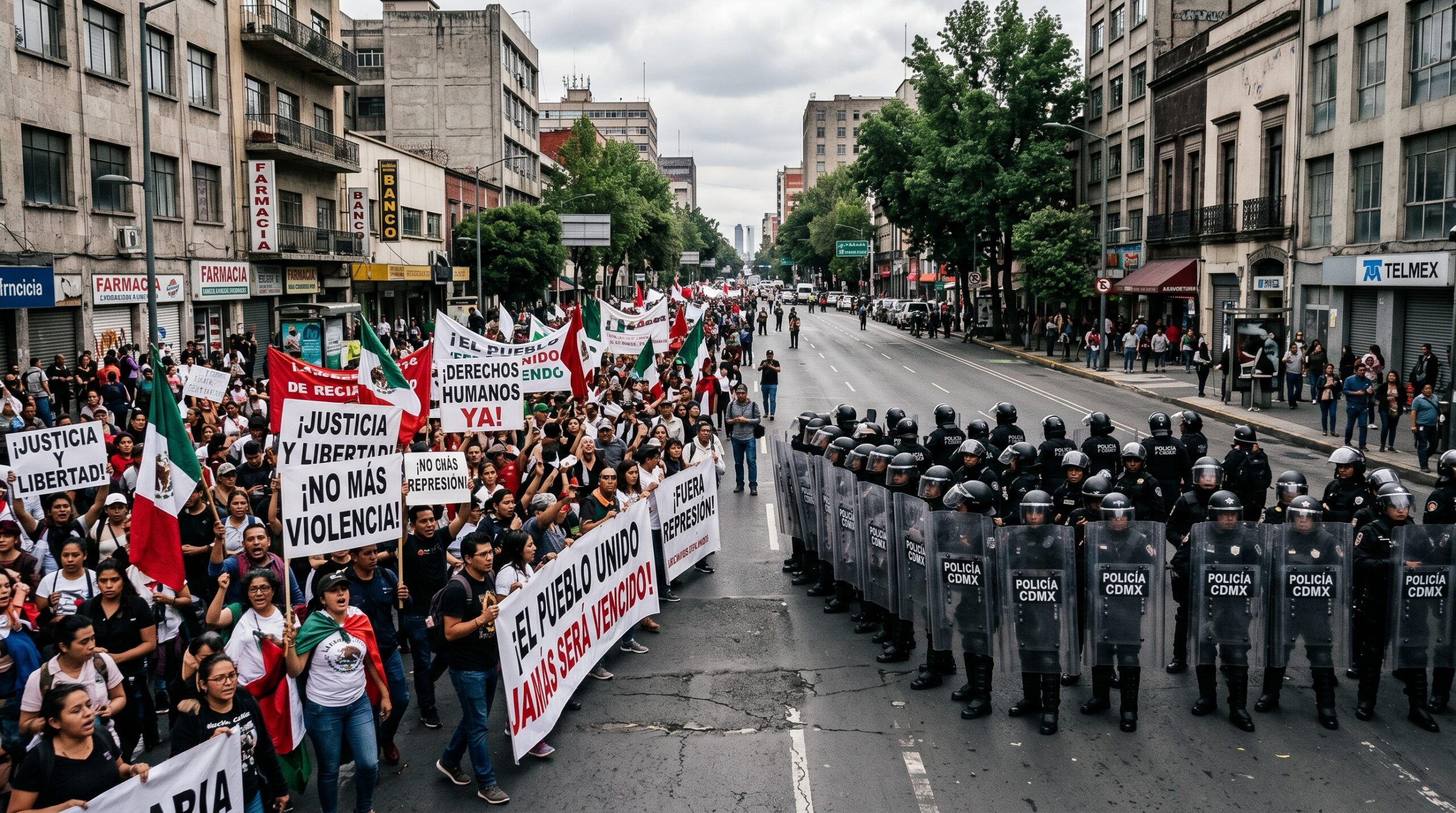
Mexico City marked the opening of its third World Cup hosting duties on Thursday with a complex mix of celebration and protest that highlighted deep social tensions across the nation. The festivities took place against a backdrop of demonstrations over mass disappearances, labor disputes, and ongoing security concerns.
Thousands of teachers from the National Educational Workers Coordination blocked Tlalpan Avenue, the main route to Estadio Azteca, during the tournament’s inauguration. The educators were protesting pension reforms implemented in 2007 that shifted state workers from collective-based retirement systems to individual accounts managed by private fund administrators. These changes have resulted in reduced pensions and increased retirement age requirements for state employees.
Simultaneously, hundreds of mothers from search collectives marched through the city demanding government action on Mexico’s disappearance crisis. The country currently faces the challenge of at least 133,000 missing persons and over 72,000 unidentified individuals. María de Los Angeles García, whose son José Alberto Gómez García disappeared in 2024 after leaving to play soccer, joined the march to pressure authorities for answers.
The demonstrations encountered significant police presence, with hundreds of officers establishing barriers using horse trailers and riot shields to control protest routes. The heavy security reflected concerns dating back to the 1968 Tlatelolco incident, when student protesters were violently suppressed during the Olympics, resulting in an estimated 400 deaths.
While protests dominated areas near the stadium, Plaza Garibaldi in the city center transformed into a celebration zone. The historic square, known for its mariachi culture and cantinas, hosted an official fan festival where hundreds gathered to watch Mexico face South Africa in the opening match.
The atmosphere in the plaza contrasted sharply with the tensions elsewhere. Fans in green jerseys filled the square from morning, with many enjoying beverages and festivities. International visitors mixed with locals, including Selwyn Hocaey and Haidee Williams from Cape Town, who expressed their appreciation for Mexican culture while supporting their home team.
Technical difficulties briefly interrupted the viewing experience when the main screen disconnected after Mexico scored their second goal. The malfunction prompted mixed reactions from the crowd, with some directing humorous complaints toward Mayor Clara Brugada before celebrations resumed.
Mexico secured a 2-0 victory over South Africa as rain began falling across the city. Despite the weather, fans continued celebrating under gazebos, sharing drinks and embraces with supporters from various nations including Germany, England, and the United States.
Maggie Herrera, who attended the 1986 World Cup in Mexico City famous for Diego Maradona’s controversial goal, reflected on the evolution of the tournament experience over four decades. Her presence connected the current event to its historical precedent.
The day’s events illustrated Mexico’s complex relationship with international sporting events. While the World Cup brings economic opportunities and global attention, it also provides a platform for citizens to voice concerns about pressing social issues. The teacher protests, which had continued for over a week in downtown Mexico City, had already prompted counter-demonstrations from affected business owners earlier in the week.
As the tournament progresses, Mexico City faces the challenge of balancing celebration with acknowledgment of serious national concerns, including the ongoing disappearance crisis that international organizations have urged the government to address more effectively.
Leave a Reply