
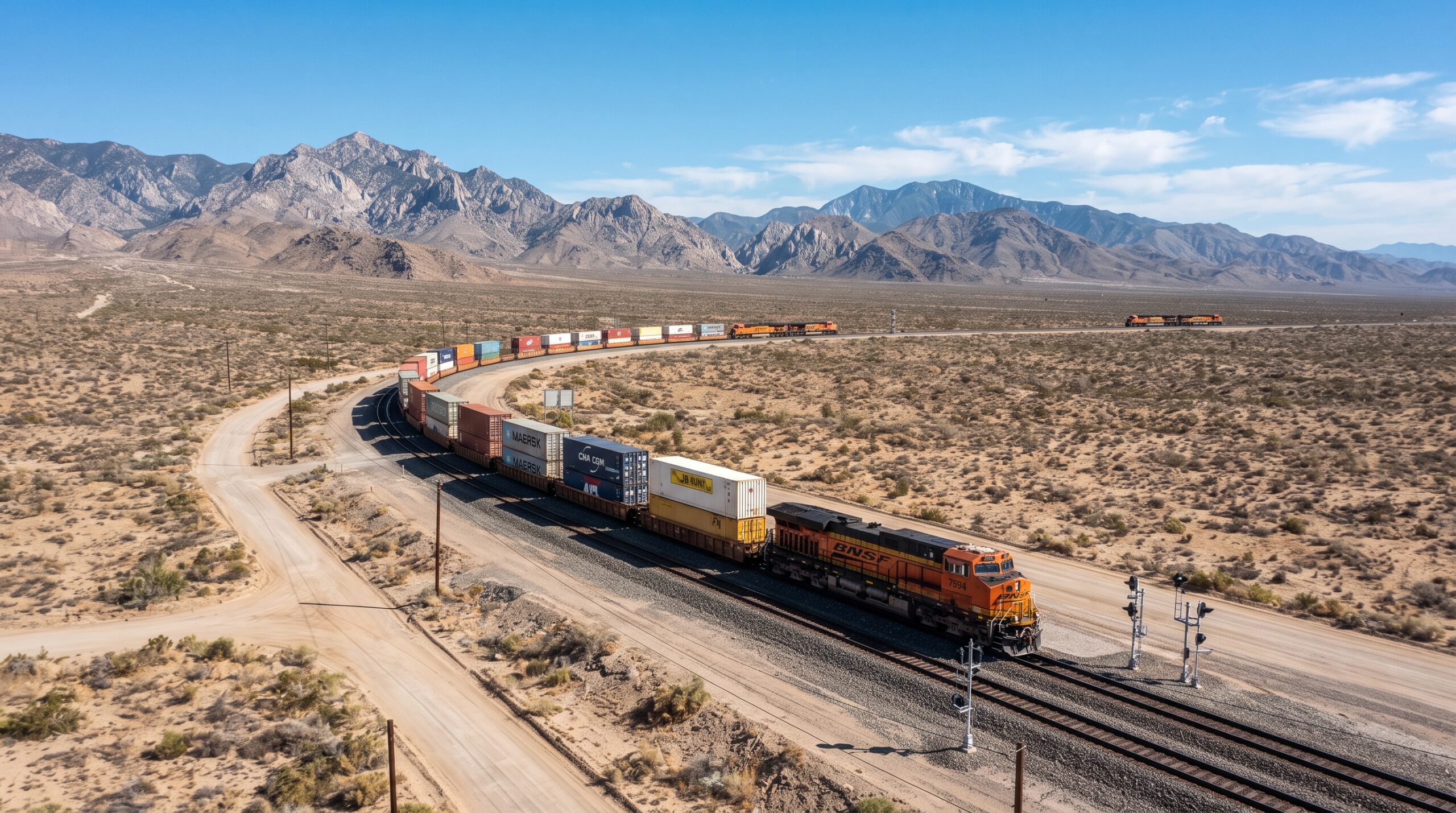
Environmental advocacy organizations have initiated legal proceedings against the city of Barstow, California, seeking to overturn approval for a massive rail transportation hub planned for the Mojave Desert region northeast of Los Angeles.
The Sierra Club, along with three additional nonprofit groups, submitted a writ petition to San Bernardino County Superior Court on Wednesday, challenging the city’s authorization of the Barstow International Gateway project. The organizations contend that the approval relies on insufficient environmental impact assessments that fail to meet required standards.
The proposed 4,500-acre facility represents a $4 billion investment by BNSF Railway and would become the largest rail yard in the United States upon completion. The development aims to enhance the efficiency of inland cargo transportation for millions of containers arriving annually from Asia through the ports of Los Angeles and Long Beach.
According to the environmental groups, the project would generate approximately 550 tons of nitrogen oxide annually and consume more than 18 million gallons of diesel fuel each year. The organizations also project that greenhouse gas emissions would increase by 134,471 metric tons of carbon dioxide equivalent annually, representing a 41 percent rise above current emission levels in the area.
Seth Alston, an attorney representing the Center for Biological Diversity, criticized the city’s decision to approve a project that would significantly increase diesel pollution harmful to both human health and the environment. Yasmine Agelidis, a senior attorney with Earthjustice, emphasized concerns about continuous diesel emissions affecting air quality from the San Pedro Bay Ports to Barstow’s High Desert region.
The legal challenge highlights alleged deficiencies in analyzing the project’s impact on local wildlife, including the Mojave fringe-toed lizard, Mojave desert tortoise, and western burrowing owl. The plaintiffs also assert that the city inadequately evaluated effects on energy consumption, water resources, noise levels, and potential growth-inducing consequences.
Barstow officials approved the project on June 17, with City Manager Rochelle Clayton describing it as the result of extensive planning, environmental review, and public engagement. The city emphasized BNSF’s commitments to incorporating sustainable technologies, including zero-emission rail-mounted gantry cranes, hybrid rubber-tired gantry cranes, zero-emission forklifts and hostlers, electric connections for refrigerated units, and a solar energy installation.
Lena Kent, general director of public affairs for BNSF Railway, defended the project as a vital infrastructure investment with substantial support across local, regional, and state levels. Kent noted that California Governor Gavin Newsom had certified the project under SB 149, legislation designed to expedite infrastructure development in the state. The project also appears in California’s 2024 State Rail Plan as an essential element for improving goods movement and supply chain operations.
Kent expressed disappointment with the legal challenge while maintaining confidence in the environmental review process conducted by Barstow. She emphasized that the environmental quality documentation reflects comprehensive analysis, public participation, and adherence to applicable legal standards.
The environmental organizations claim the approval violates the California Environmental Quality Act and are seeking a court order to invalidate the city’s authorization. Legal representation for the groups includes attorneys from Earthjustice, the Natural Resources Defense Council, and the Center for Biological Diversity.
The dispute underscores ongoing tensions between economic development initiatives and environmental protection concerns in California, particularly regarding projects that could affect air quality and wildlife habitats in desert ecosystems.
Leave a Reply