
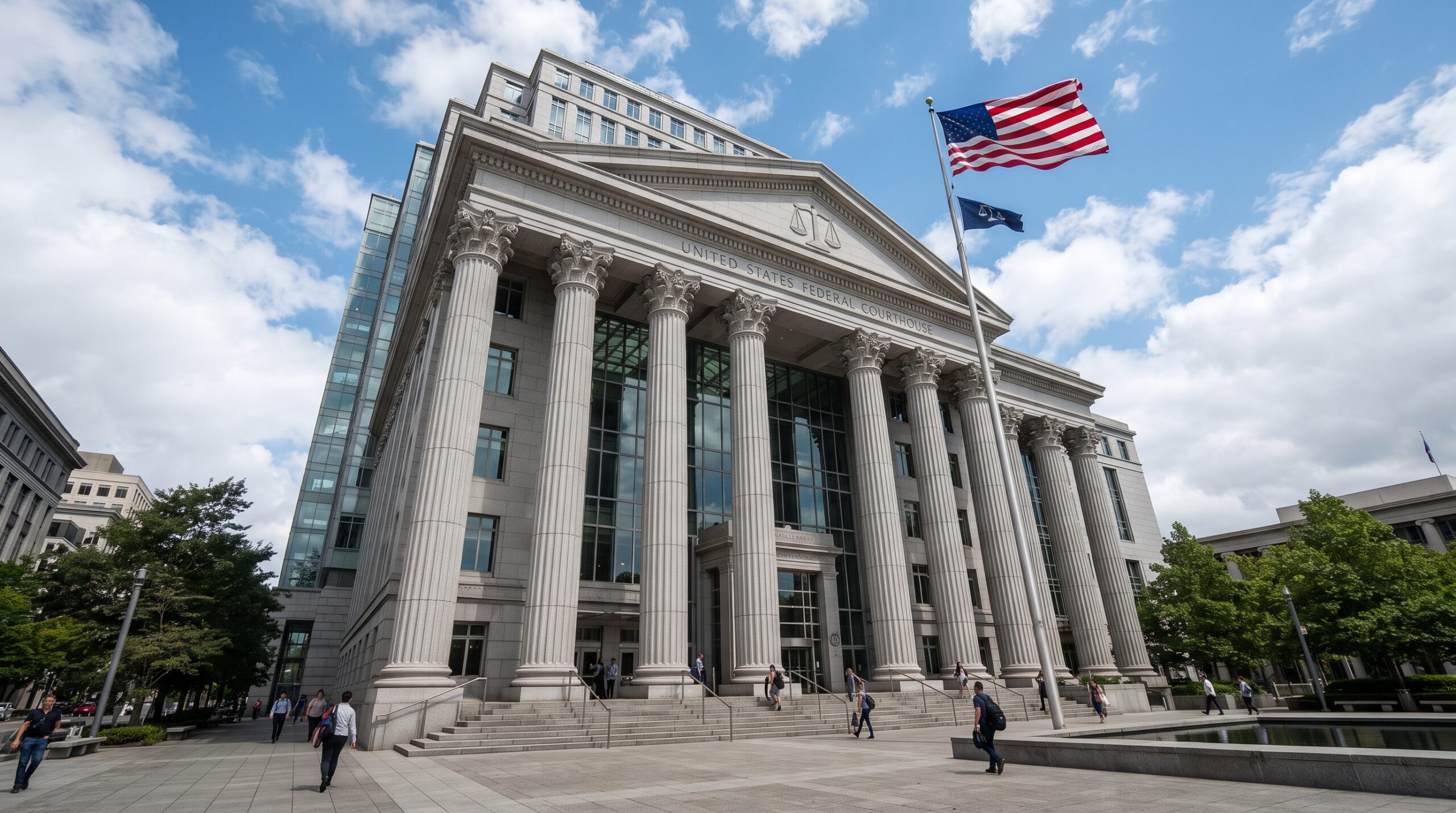
A federal appeals court panel expressed skepticism Tuesday as California defended a 2024 law that restricts how employers can conduct mandatory workplace meetings involving political or religious content.
The Ninth Circuit Court of Appeals heard arguments in the state’s appeal of a September preliminary injunction that halted enforcement of Senate Bill 399. The California Chamber of Commerce successfully challenged the law in a lower court, which determined the statute improperly regulated speech content.
The disputed legislation prohibits employers from requiring workers to attend meetings where religious or political matters are discussed, or from threatening punishment for employees who choose not to participate in such gatherings.
Attorney Kristin Liska, representing California, argued that the law does not prevent employers from holding meetings or discussing any topics they choose. According to Liska, employers remain free to organize meetings and send communications about political or religious subjects. The restriction applies only when attendance becomes mandatory or when employees face potential sanctions for not participating.
“All of those are completely permissible under the law,” Liska stated, referring to voluntary meetings and communications. She emphasized that the legislation targets coercion rather than speech itself, maintaining that “this is not about silencing employers.”
The three-judge panel appeared unconvinced by the state’s position. Circuit Judge Richard Tallman, appointed by President Bill Clinton, challenged Liska to cite any Supreme Court precedent applying captive audience doctrine to private employment settings. “I looked and we couldn’t find one,” Tallman noted, suggesting the state was asking the court to expand existing legal principles beyond established boundaries.
Tallman drew an unexpected literary comparison, referencing the Harry Potter series to illustrate his concern about content-based speech restrictions. “It’s kind of like Lord Voldemort, he whose name you cannot speak,” the judge remarked, highlighting the difficulty employers would face in determining which speech topics might trigger legal liability.
Lonnie Giamela, representing the Chamber of Commerce, argued that the law discriminates based on speech content and creates an unconstitutional chilling effect. He contended that the statute specifically targets meetings with particular subject matter, making it impermissible under First Amendment protections.
Circuit Judge Mark Bennett, appointed by President Donald Trump, questioned whether the Chamber had adequately demonstrated standing to challenge the law. Bennett noted that the plaintiffs’ affidavits did not clearly state intentions to hold future meetings that would violate the statute. “How hard is that to allege?” Bennett asked, pressing Giamela on the specificity of his clients’ claims.
Giamela responded that his clients had previously conducted meetings that would now violate the law and that the state had not disavowed enforcement. He argued that organizations seeking preliminary injunctions should not be required to violate a statute before challenging its constitutionality.
Circuit Judge Richard Paez, another Clinton appointee, scrutinized whether the plaintiffs had specifically alleged they would terminate employees for non-attendance at mandatory meetings. Paez characterized the Chamber’s arguments as speculative, stating, “In my book, they just don’t cut mustard for constitutional standing.”
Giamela countered that the law’s scope extends beyond termination to include various forms of workplace discipline. He maintained that the statute unconstitutionally restricts specific meetings based on their content. “It bans specific meetings under specific content which is impermissible under the First Amendment,” he argued.
Liska also challenged the Chamber’s standing on procedural grounds, noting that three companies included in the litigation had not explicitly stated in their affidavits that they planned to hold meetings violating the statute. This absence, she argued, failed to meet the requirements for pre-enforcement preliminary relief.
The case highlights ongoing tensions between employee rights and employer speech freedoms in workplace settings. The panel’s decision could establish important precedents regarding how states may regulate mandatory workplace meetings and whether content-based restrictions on employer communications can withstand constitutional scrutiny.
Leave a Reply