
In February 2016, Daallo Airlines Flight 159 departed from Mogadishu, Somalia, carrying passengers on what was expected to be a routine journey. Shortly after takeoff, however, the flight became the center of a shocking aviation incident.
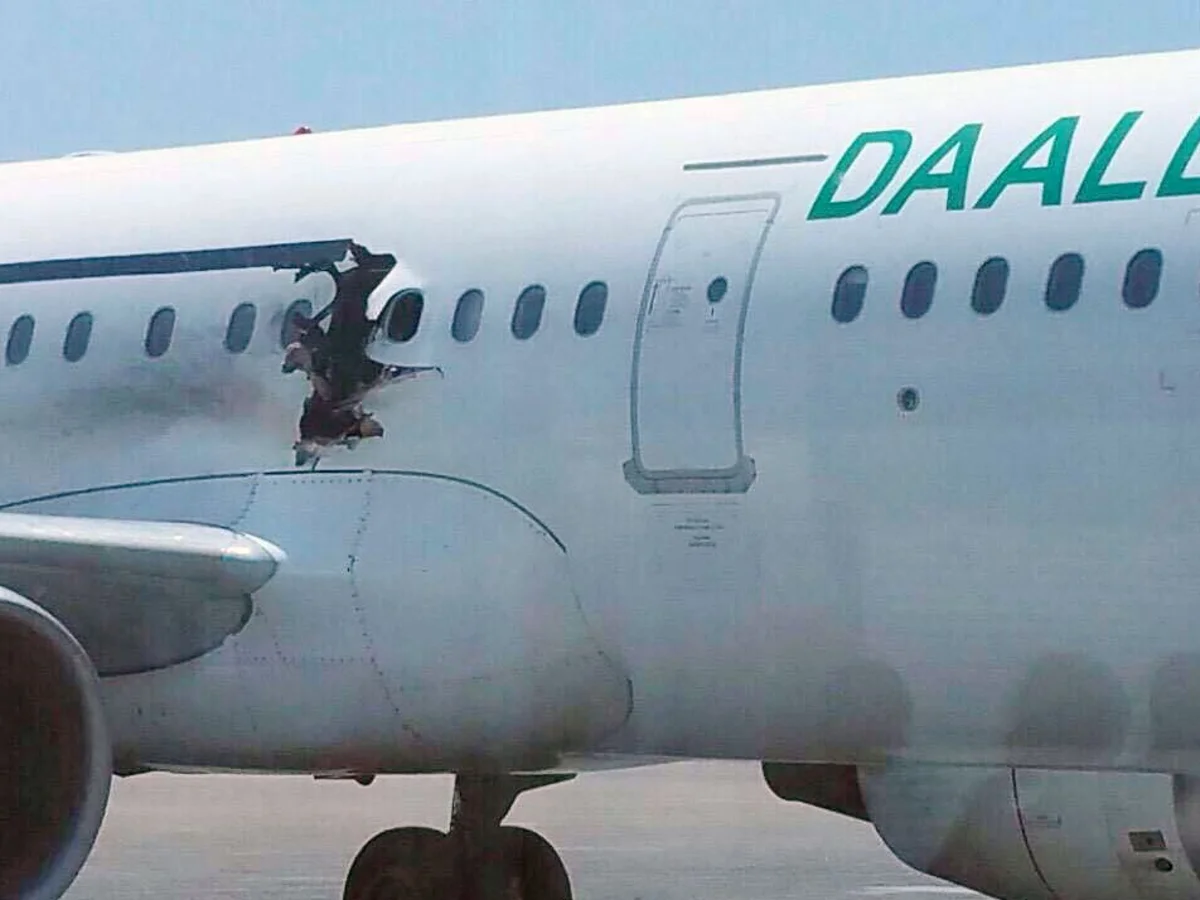
Approximately 20 minutes into the flight, while the aircraft was still climbing, an explosion occurred inside the cabin. The blast created a large hole in the side of the fuselage, leading to rapid decompression at high altitude.
Authorities later identified the individual responsible as Abdullahi Abdisalam Borleh. Investigators determined that the explosive device had been concealed within a laptop brought onto the aircraft.
Despite the severe damage, the flight crew managed to maintain control of the plane. Their response under pressure allowed them to turn the aircraft around and begin an emergency return to Mogadishu.
Passengers onboard experienced a terrifying situation as the aircraft stabilized. Several individuals sustained injuries due to the explosion and sudden decompression.
The plane successfully landed back at Mogadishu’s Aden Adde International Airport, preventing what could have been a far more devastating outcome.
Investigators later concluded that the device was likely intended to detonate at a higher altitude. The earlier timing of the explosion is believed to have significantly reduced the potential scale of the incident.
The image of the aircraft, showing a jagged hole in its side, has since become widely recognized. It stands as a powerful example of both the risks faced in aviation security and the skill of pilots in managing extreme emergencies.
Leave a Reply