
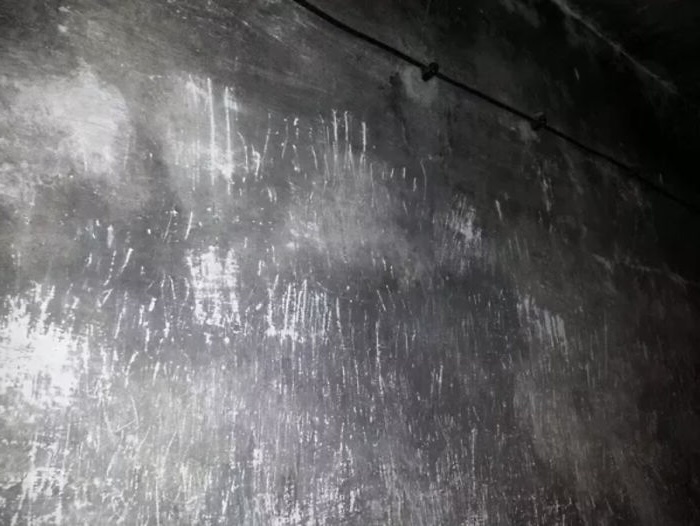
In 1945, as Allied forces liberated concentration camps across Europe, Auschwitz revealed some of the most haunting evidence of human suffering during World War II. Among these discoveries were rooms that appeared simple at first — concrete walls, sealed doors, and minimal light.
However, closer examination revealed something deeply disturbing. The walls inside certain chambers were marked with scratches, etched into the surface by human hands.
Historians and investigators have identified these marks as signs of desperation from individuals who were trapped inside. Many of those brought into these spaces did not fully understand what was about to happen until it was too late.
As the doors were sealed, people reportedly tried to escape, reaching for any possible way out. The marks left behind became a silent record of those final moments.
Survivor testimonies and historical research have confirmed the purpose of these chambers during the Holocaust. They were part of a system designed to carry out mass extermination on an unimaginable scale.
Today, Auschwitz stands as a memorial and museum. The preserved walls and markings serve as powerful historical evidence, allowing future generations to witness the reality of what occurred.
These marks are not just physical traces — they represent individual lives, each with a story that ended in tragedy.
Remembering them is essential, ensuring that such events are never forgotten and never repeated.
Leave a Reply