
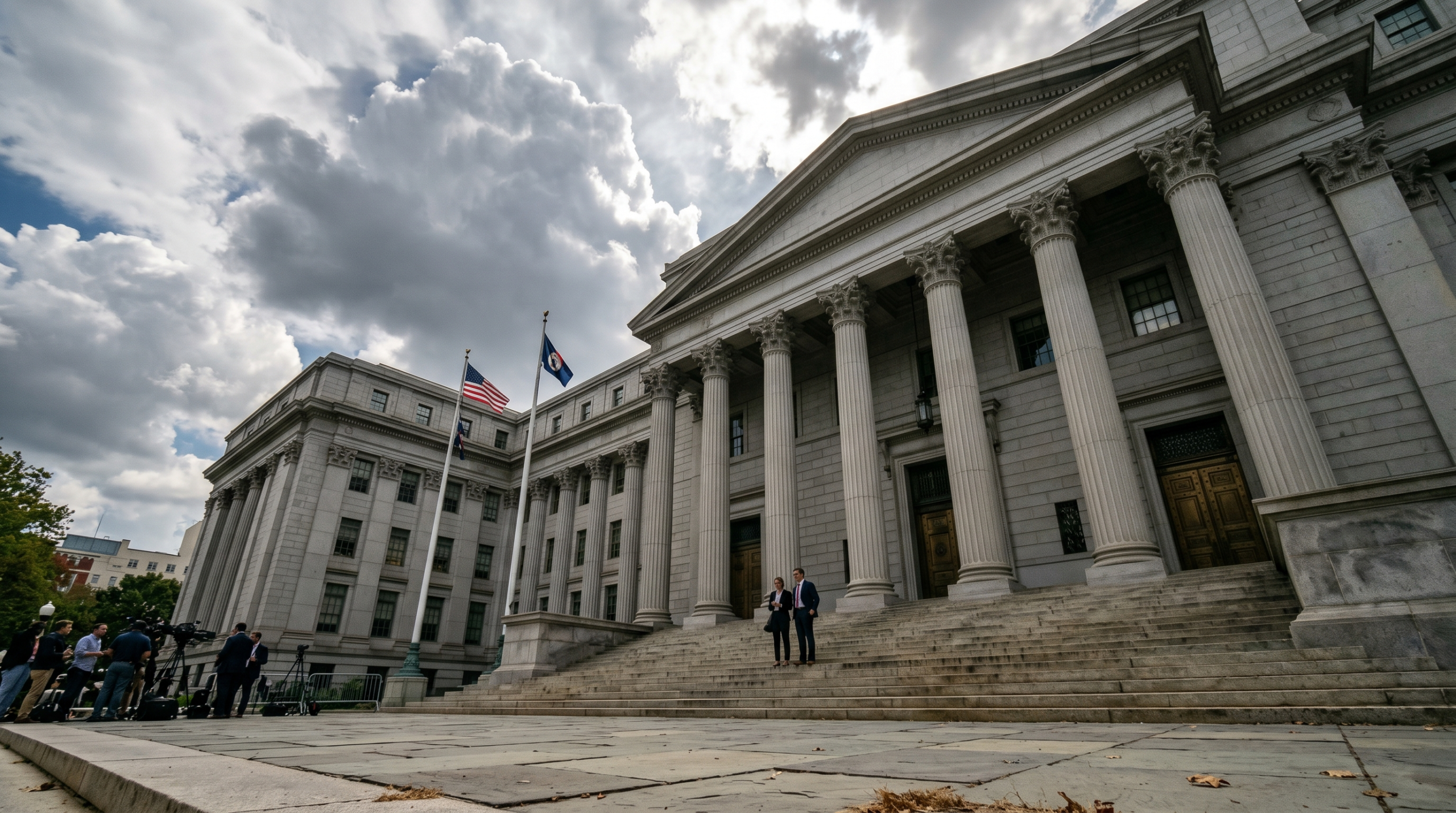
A federal appeals court issued a ruling on Friday that will significantly impact access to medication abortion throughout the United States by reinstating requirements for in-person dispensing of mifepristone, effectively blocking the drug from being prescribed online and distributed through mail services.
The three-judge panel from the Fifth Circuit Court of Appeals sided with Louisiana’s challenge to Food and Drug Administration regulations from 2023 that had permitted telehealth prescriptions and mail delivery of the abortion medication. The 18-page ruling, authored by Circuit Judge Kyle Duncan, determined that the FDA’s regulations violated the Administrative Procedure Act.
Louisiana, which maintains one of the most restrictive abortion bans in the nation, had argued that the federal regulations undermined state law declaring that human life begins at conception. The panel, which also included Circuit Judges Leslie Southwick and Kurt Engelhardt, dismissed concerns raised by a lower court about potential conflicts arising from multiple parallel lawsuits on the same issue.
The decision extends beyond Louisiana’s borders, affecting abortion access nationwide. The lower federal court had previously declined to block the 2023 regulations and had paused the case in April to allow the FDA to complete a scientific review of mifepristone’s safety. However, the appeals court found that the agency’s relaxation of safeguards for the medication lacked adequate scientific basis.
According to the ruling, the FDA acknowledged ‘procedural deficits’ and a ‘lack of adequate consideration’ in implementing the regulations. The court noted that the FDA could not provide a timeline for completing its ongoing review and admitted it was still collecting data.
Mifepristone, approved by the FDA more than two decades ago, is typically used in combination with misoprostol to terminate pregnancies. Data from the Guttmacher Institute indicates that 65 percent of abortions in the United States in 2023 were medication abortions, with approximately one-quarter provided through telehealth services.
Since the Supreme Court overturned federal abortion protections in 2022, telehealth has become a critical avenue for accessing abortion medication, particularly for residents in states where abortion access is restricted or banned. Research has shown that remote dispensing of medication abortion carries comparable safety profiles to in-clinic administration.
Louisiana Attorney General Liz Murrill expressed support for the ruling, stating that it ended what she characterized as illegal mail-order abortion pills. She indicated that her office, working with Alliance Defending Freedom, would continue pursuing the case.
Reproductive rights organizations strongly criticized the decision. Alexis McGill Johnson, president and CEO of the Planned Parenthood Action Fund, described the ruling as a politically motivated attack on abortion access that contradicts scientific evidence. Nancy Northup, President and CEO of the Center for Reproductive Rights, emphasized that telehealth has been essential for many seeking abortion care and characterized the ruling as an attempt to make abortion as difficult and inaccessible as possible.
The ruling is expected to face an appeal to the Supreme Court, which previously ruled in 2023 to preserve access to mifepristone despite having overturned federal abortion protections the previous year. The high court’s June 2025 decision on nationwide injunctions was cited in the appeals court’s reasoning, with Judge Duncan noting that the Supreme Court had addressed only equitable relief rather than remedies under the Administrative Procedure Act.
The decision represents a significant development in ongoing legal battles over abortion access following the elimination of federal constitutional protections for abortion rights.
Leave a Reply