
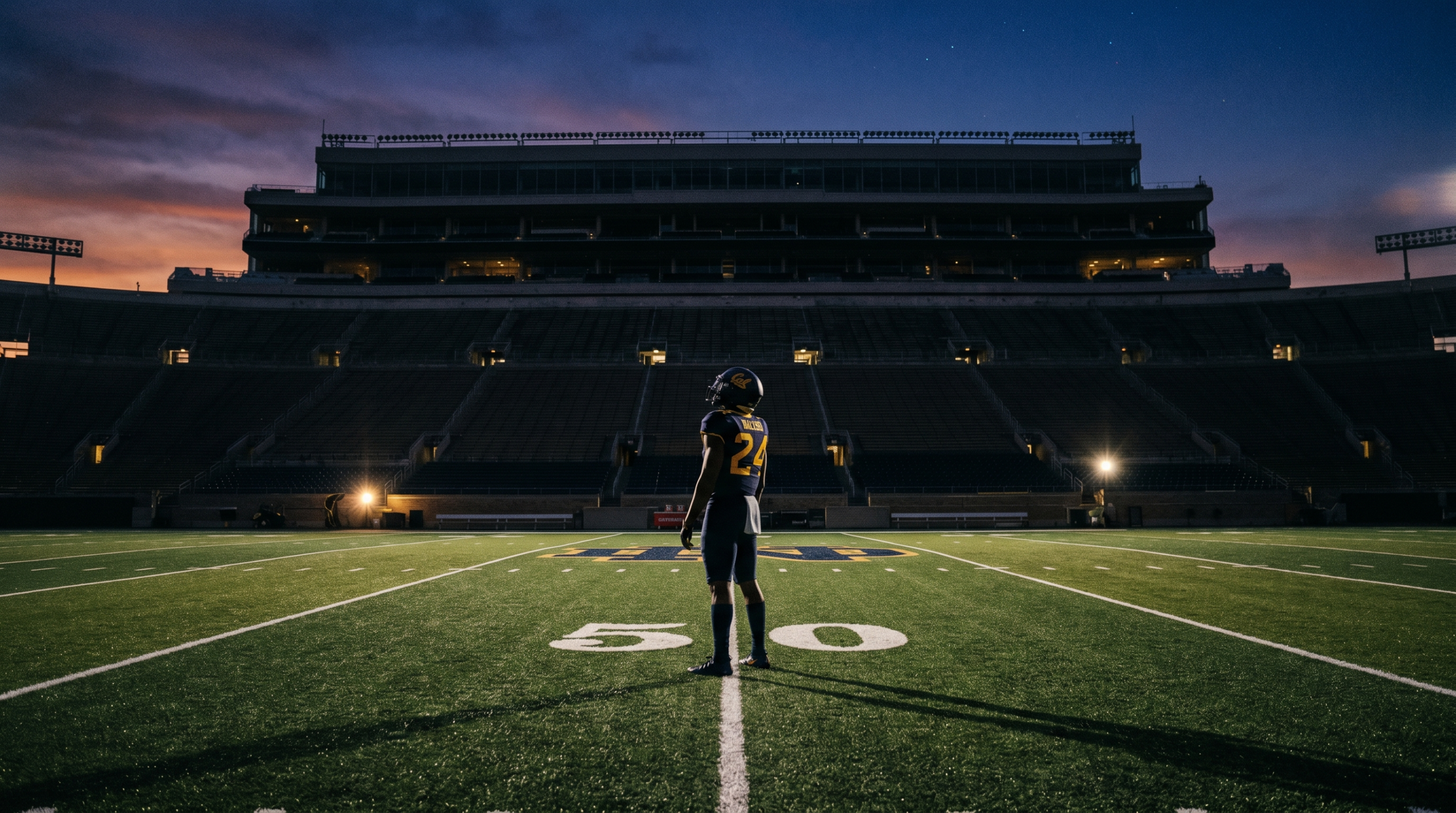
A federal district court in Colorado has dismissed a lawsuit filed by University of California Berkeley football player Aidan Keanaaina challenging the National Collegiate Athletic Association’s eligibility regulations that could effectively end his college football career.
U.S. District Judge Nina Wang ruled Monday that the Colorado court lacked proper jurisdiction to hear the case, writing in her 12-page decision that accepting the plaintiff’s jurisdictional arguments would subject the NCAA to litigation in every state across the country.
Keanaaina, a senior defensive player at UC Berkeley, filed the lawsuit in March after the NCAA denied his request for a medical waiver. The denial meant he would be unable to complete the requirements necessary to receive compensation for his athletic participation, including a reported one million dollar offer from UC Berkeley for the current season.
At the center of the dispute is the NCAA’s Five-Year Rule, which mandates that student-athletes complete no more than four competitive seasons within five calendar years from their initial college enrollment. Keanaaina argued this regulation unfairly restricts athletes’ opportunities and grants the NCAA monopolistic control over name, image, and likeness revenue possibilities.
The athlete’s college career began when he enrolled at Notre Dame in 2020, where he appeared in just one game during his freshman year. The NCAA granted blanket waivers to all players that season due to pandemic-related disruptions. During his sophomore campaign in 2021, Keanaaina participated in three games. However, a preseason anterior cruciate ligament injury sidelined him for the entire 2022 season.
After playing six games in 2023, Keanaaina transferred to UC Berkeley, where he competed in the 2024 season and hoped to continue playing through 2026. The medical waiver for his 2022 injury season would have extended his eligibility timeline, allowing him to fulfill the requirements for compensation under current rules.
Keanaaina’s legal team argued that recent developments in college athletics, particularly since the Supreme Court’s unanimous 2021 decision in Alston v. NCAA that rejected traditional concepts of amateurism, have transformed the landscape of college sports. The ruling opened the door for athletes to profit from their publicity rights, fundamentally changing the relationship between players and the governing body.
The plaintiff contended that the Five-Year Rule has become commercial in nature and should therefore be subject to antitrust scrutiny. His attorneys maintained that the regulation creates artificial restrictions on athletes’ earning potential during their prime competitive years.
However, Judge Wang’s ruling focused solely on jurisdictional grounds rather than addressing the substantive merits of these arguments. Despite Keanaaina being from Brighton, Colorado, and having graduated from J.K. Mullen High School in Denver before beginning his college football journey, the court found these connections insufficient to establish personal jurisdiction over the NCAA in Colorado.
The judge emphasized that the plaintiff failed to meet the legal burden required to demonstrate a reasonable probability that the Colorado court could properly exercise jurisdiction over the NCAA, which maintains its headquarters in Indianapolis, Indiana. Wang cautioned that accepting such broad jurisdictional claims would expose the NCAA to lawsuits in any state where a student-athlete maintains residency.
The dismissal represents a setback for Keanaaina’s efforts to extend his college football eligibility and secure the compensation opportunities that have become increasingly common in collegiate athletics. The case highlights ongoing tensions between traditional NCAA eligibility rules and the evolving landscape of college sports commercialization.
Leave a Reply