
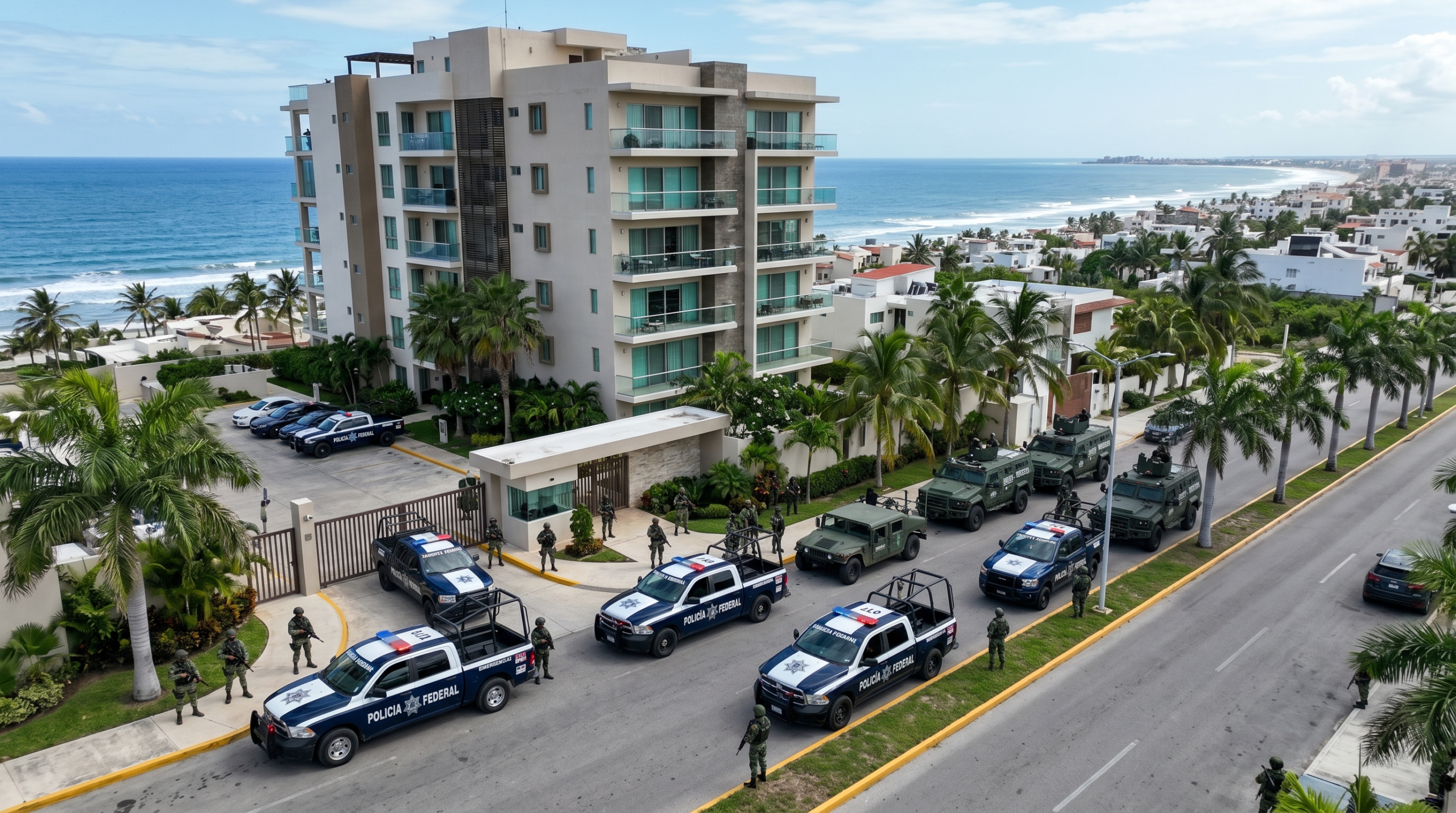
Mexican security forces have successfully apprehended Audias Flores Silva, known by the alias “El Jardinero,” in a peaceful operation in the Pacific coastal state of Nayarit on April 27. The arrest represents a significant development for law enforcement efforts against one of Mexico’s most powerful criminal organizations, the Jalisco Cartel New Generation.
The operation, conducted without any exchange of gunfire, was confirmed by Mexican security chief Omar García Harfuch. Silva had been the subject of an extensive manhunt, with United States authorities offering a five million dollar reward for information leading to his capture. His arrest comes approximately two months after the death of the cartel’s former leader, Nemesio Oseguera Cervantes, known as “El Mencho,” who was killed in Jalisco state in February 2026.
Authorities also arrested César Alejandro N, identified as “El Güero Conta,” one of Silva’s primary financial operators, on the same day in the Zapopan area of Guadalajara. The coordinated arrests demonstrate the ongoing pressure Mexican authorities are applying to the criminal organization’s leadership structure.
Silva’s criminal history extends over two decades, including a period of incarceration in the United States on drug trafficking charges in the early 2000s. After returning to Mexico, he steadily climbed the ranks within the criminal organization. He gained notoriety for his alleged involvement in a 2015 attack on a police convoy in Jalisco that resulted in the deaths of fifteen officers. Though arrested in connection with that incident, he was subsequently acquitted and released.
Operating primarily from Nayarit state, Silva reportedly managed drug trafficking operations across multiple Mexican states, including Jalisco, Zacatecas, Michoacán, Morelos, and Guerrero. Nayarit’s strategic importance stems from its extensive coastline, which facilitates the receipt of drug shipments from Central and South America, and its highway infrastructure connecting to the United States border.
In 2021, prosecutors in the District of Columbia filed an indictment against Silva on charges related to cocaine and heroin trafficking, along with weapons violations. The U.S. Treasury Department’s Office of Foreign Assets Control subsequently imposed sanctions on him, designating him as a significant foreign narcotics trafficker.
Silva allegedly supervised multiple synthetic drug laboratories in Jalisco and Zacatecas states and managed a network of small aircraft and clandestine airstrips used for transporting drug shipments. A previous attempt to capture him in 2023 at a luxury apartment in Zapopan, where he was reportedly living as a businessman and art collector, was unsuccessful.
Beyond drug trafficking, Silva’s criminal portfolio allegedly included overseeing fraudulent timeshare schemes in resort areas of Nayarit and Jalisco, including the popular tourist destination of Puerto Vallarta. These operations involved networks of fraudsters operating from multiple call centers.
Silva also reportedly played a crucial role in strategic criminal alliances. In 2025, he allegedly helped facilitate an agreement between his organization and a faction of the Sinaloa Cartel, providing ground support in territorial disputes. The impact of his arrest on these alliances remains uncertain, as other commanders continue to maintain these strategic relationships.
The capture of Silva represents a substantial disruption to the cartel’s operational capacity, particularly in synthetic drug production and distribution networks. His removal from the organization’s hierarchy creates a significant leadership vacuum that may lead to internal restructuring or power struggles within the criminal group.
Leave a Reply