
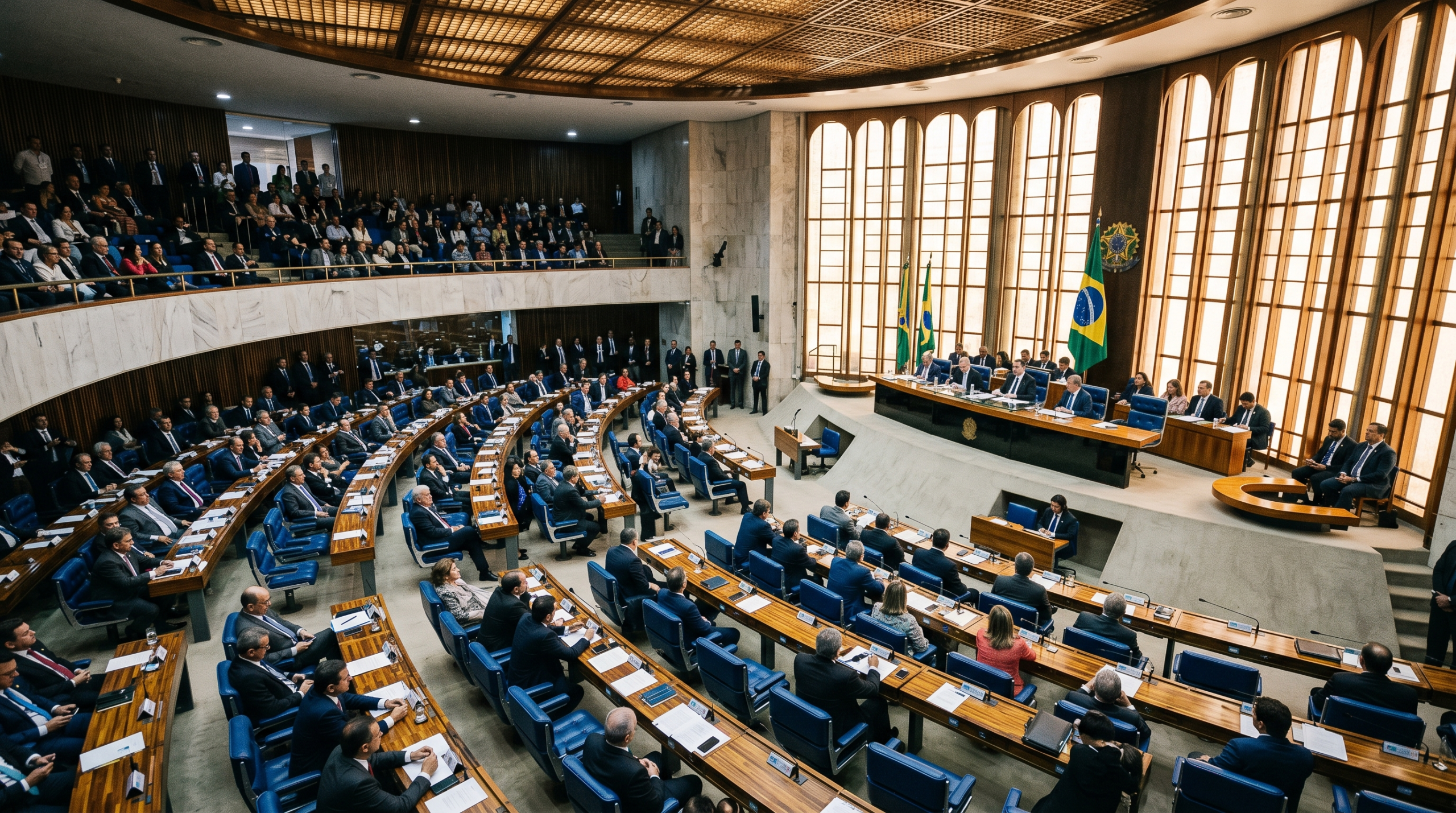
The Brazilian Senate delivered a significant political setback Wednesday, rejecting Jorge Messias as the country’s next Supreme Court justice in a 42-34 vote. The defeat represents the first time in 132 years that senators have blocked a presidential nomination to the nation’s highest court.
Messias, who currently serves as attorney general and maintains close ties to President Luiz Inácio Lula da Silva, failed to secure the required 41 votes from the 81-member Senate during the secret ballot. Only 34 senators supported his candidacy, despite earlier approval from the Constitution and Justice Committee by a 16-11 margin.
The rejection concluded a contentious five-month battle over the nomination. Lula first announced Messias as his choice in November but delayed formally submitting the nomination until April 1, amid reported resistance from Senate President Davi Alcolumbre, who reportedly favored former Senate President Rodrigo Pacheco for the vacant seat left by retiring Justice Luís Roberto Barroso.
During nearly eight hours of confirmation hearings, Messias attempted to address concerns from lawmakers about judicial overreach and the Supreme Court’s expanding political influence. He acknowledged the court as a central democratic institution while emphasizing the need for transparency, accountability, and institutional reform.
“Every branch of government must be subject to rules and restraints,” Messias stated during his testimony. He particularly addressed criticism about individual judicial actions, suggesting that increased individualization by justices diminishes the court’s institutional standing.
The hearing covered several contentious topics, including the legal aftermath of the January 8, 2023 attacks when supporters of former President Jair Bolsonaro vandalized government buildings in Brasilia. When questioned by Senator Flávio Bolsonaro, son of the former president, Messias indicated that Congress should determine whether to grant amnesty to those convicted in connection with the attacks.
Messias defended his role as attorney general during those events, clarifying that his office sought warrantless arrests for individuals caught committing crimes within government buildings, rather than pursuing pretrial detentions or criminal prosecutions.
On abortion rights, Messias, who identifies as evangelical, expressed personal opposition while acknowledging congressional authority to legislate on the matter. Current Brazilian law permits abortion in cases involving rape, maternal life risk, and fetal anencephaly.
The nominee attempted to navigate religious concerns by describing himself as a “servant of God” while maintaining that constitutional judges cannot prioritize personal religious beliefs over constitutional principles. “A judge who places his religious convictions above the constitution is not a judge,” he asserted.
Political analysts view the rejection as evidence of an increasingly assertive Senate willing to challenge both executive authority and judicial power. The 160-day interval between Lula’s initial announcement and the confirmation hearing represented the longest such process among current Supreme Court justices.
The nomination faced additional criticism from advocacy groups pushing for greater diversity on the Supreme Court. In its 134-year existence, the court has seated only three female justices and has never appointed a Black woman. His confirmation would have maintained the current composition of just one female justice among eleven members.
Messias built his career in Brasilia after being born in Recife, Pernambuco. His professional background includes positions as Central Bank attorney, federal tax attorney, and legal adviser to various government ministries. He also worked as an aide to Senator Jaques Wagner and served as deputy legal affairs chief during President Dilma Rousseff’s administration before becoming attorney general in 2023.
The historic rejection leaves President Lula facing the challenge of selecting a new candidate who can successfully navigate Senate approval in an increasingly polarized political environment.
Leave a Reply