
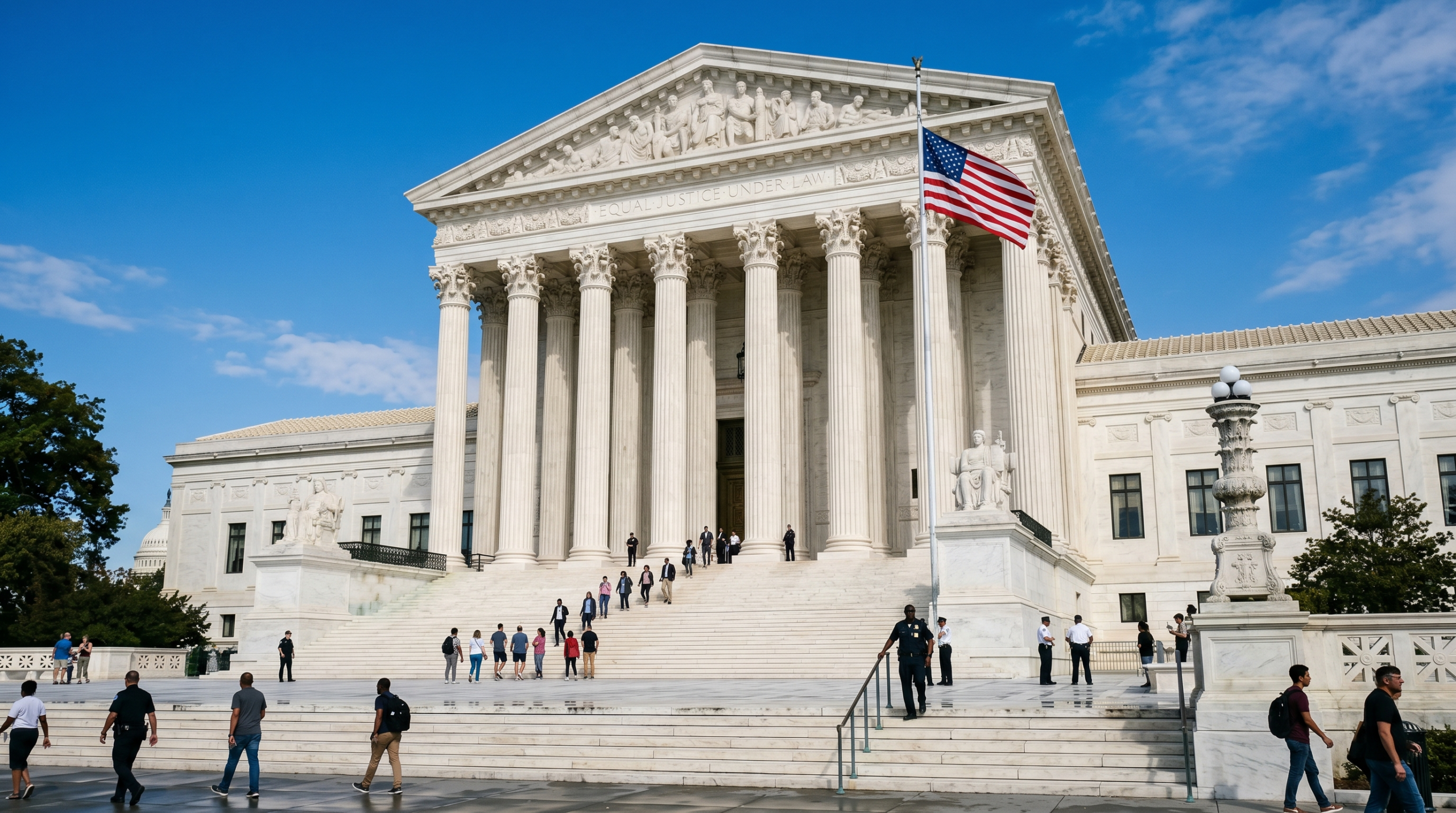
The United States Supreme Court delivered a watershed decision on Wednesday morning that fundamentally altered the landscape of voting rights protections in America. In a divided ruling in Louisiana v. Callais, the justices determined that Louisiana’s effort to establish a second majority-minority congressional district constituted an unconstitutional gerrymander, effectively limiting the scope of Section 2 of the Voting Rights Act.
Justice Samuel Alito, writing for the majority, spent less than ten minutes explaining the court’s rationale during the bench statement. According to Alito, while a lower court had directed Louisiana to redraw its congressional map to comply with Section 2 of the Voting Rights Act—which mandates that minority voters have equal opportunity to participate in elections—the state’s attempt to amplify Black voters’ electoral influence resulted in unconstitutional district boundaries.
The justice characterized the decision as a modernization rather than an overhaul of existing precedents, maintaining that the ruling aligned with contemporary constitutional interpretation. During his statement, Alito addressed criticism from the dissenting justices, describing their opposition as being fundamentally incompatible with established legal precedents.
Justice Elena Kagan delivered a powerful dissent from the bench, warning of severe implications for American democracy. Speaking for approximately fifteen minutes, she characterized the Voting Rights Act as one of the most significant pieces of federal legislation in the nation’s history, emphasizing its origins in the sacrifices of Union soldiers and civil rights activists.
Kagan argued that the ruling represented the culmination of a decade-long effort by the court’s conservative majority to systematically weaken voting rights protections. She warned that the decision would make successful vote dilution claims virtually impossible to pursue, effectively neutralizing what she called “this greatest of statutes” and undermining congressional authority.
The dissenting justice, joined by Justices Sonia Sotomayor and Ketanji Brown Jackson, predicted immediate consequences across southern states. She anticipated that jurisdictions would quickly begin dismantling majority-minority districts previously established under Section 2 requirements. Furthermore, Kagan suggested that states would be emboldened to employ partisan gerrymandering tactics, given the court’s previous reluctance to review such claims.
According to Kagan’s analysis, the ruling would provide Louisiana and other states with an automatic defense against future Voting Rights Act challenges while simultaneously depriving Black voters of equal electoral opportunities. She warned that districts created over the past fifty years to ensure meaningful political participation for Black citizens now existed precariously and would likely face elimination.
The atmosphere inside the Supreme Court chamber reflected the gravity of the moment. The justices, arranged by seniority along the mahogany bench with Chief Justice John Roberts at center, maintained stoic expressions throughout the proceedings. The seating arrangement placed Alito and Kagan side by side, highlighting the ideological divide as they presented their contrasting interpretations of voting rights law.
Kagan concluded her dissent with a direct condemnation of the majority’s decision, stating that Congress had chosen a different path and that the court had failed in its duty to faithfully implement congressional intent. She emphasized that the ruling would significantly impede progress toward racial equality in electoral participation.
The decision’s impact extends beyond Louisiana’s borders, potentially affecting redistricting efforts and minority representation nationwide. Legal experts anticipate that the ruling will prompt immediate challenges to existing majority-minority districts across multiple states, particularly in the South.
Following the opinion announcements, which concluded approximately thirty minutes after the justices took the bench, the court proceeded to hear oral arguments on an unrelated immigration case concerning temporary protected status for migrants facing humanitarian crises in their home countries.
Leave a Reply