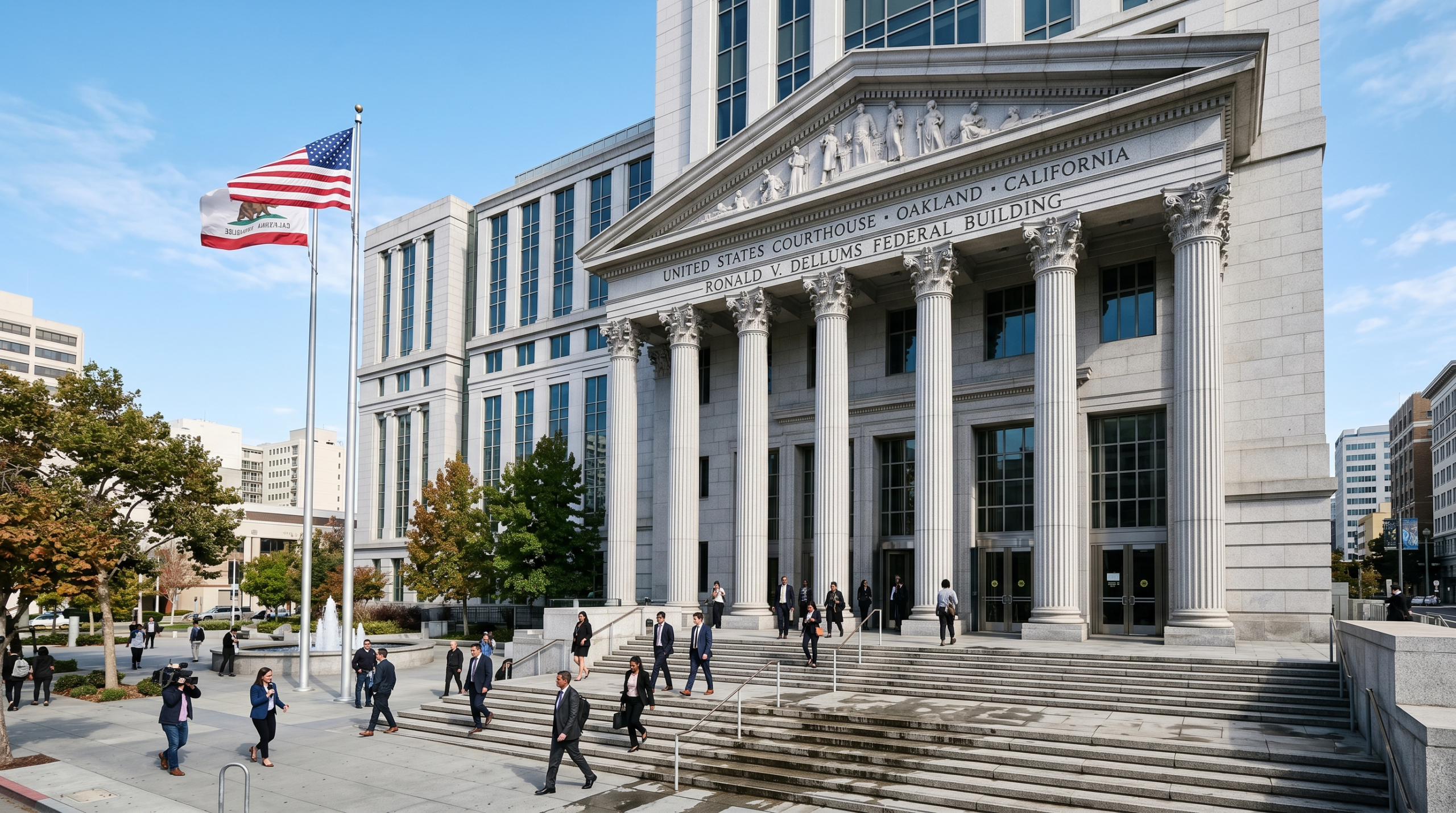
A former OpenAI board member who shares children with Elon Musk took the stand Wednesday in Oakland, California, providing testimony in the high-stakes trial concerning OpenAI’s transformation from nonprofit to for-profit entity.
Shivon Zilis, who served on OpenAI’s nonprofit board from 2017 to 2023, testified about her involvement in discussions regarding the artificial intelligence company’s structural evolution. She resigned from her position in 2023 when Musk established xAI, a competing artificial intelligence venture.
During her testimony, Zilis acknowledged that continuing her board service would have been inappropriate given the circumstances. In a text message to a friend about her resignation, she wrote that when the father of her children launches a competitive enterprise and begins recruiting from OpenAI, there was no alternative course of action.
Zilis, who is one of four mothers to Musk’s 14 children, maintained composure throughout most of her testimony. She briefly addressed her health concerns and Musk’s encouragement for her to have children, including his offer to serve as a sperm donor. While their relationship was initially platonic, she confirmed it has since become romantic.
Under cross-examination by OpenAI counsel Sarah Eddy, Zilis was questioned about whether Musk had imposed restrictions on donations to OpenAI’s nonprofit or if documentation existed requiring OpenAI to maintain its nonprofit status and open-source approach. Zilis responded that she did not recall such restrictions or documents.
The testimony revealed attempts to explore a potential merger between OpenAI and Tesla during the company’s early development phase. Zilis described a brief consideration of Tesla establishing an artificial intelligence research laboratory focused on developing artificial general intelligence, though the plan never materialized.
In December 2017 communications with a Tesla executive, Zilis noted that OpenAI co-founders Greg Brockman and Ilya Sutskever showed reluctance about joining forces with Tesla. She expressed skepticism about their motivations, suggesting they had not fully recognized the strategic benefits of integrating OpenAI’s technology with Tesla.
The nine-member jury also viewed video depositions from other key figures in the case. Mira Murati, who briefly served as interim CEO for three days following Sam Altman’s temporary removal by the board in 2023, testified about her role as the primary liaison between OpenAI and Microsoft. As chief technology officer, she led the company’s product commercialization efforts.
Murati indicated that while Altman was not consistently transparent about management decisions, she ultimately supported the employee petition for his reinstatement to stabilize the company.
Helen Toner, another former board member concerned with AI safety, provided testimony via video deposition about discrepancies in Altman’s communications to the board. She stated that while Altman claimed three ChatGPT variants had been submitted and approved by the deployment safety board, only one had actually undergone the process. Additionally, she noted that Microsoft’s release of an AI test version in India occurred without the board’s knowledge.
The trial centers on Musk’s breach of charitable trust and unjust enrichment claims against Altman and Brockman, with Musk seeking $150 billion in compensatory and punitive damages from OpenAI and Microsoft. Musk alleges that he was deceived about OpenAI’s transition from a nonprofit organization with a fiduciary duty to benefit humanity to a for-profit enterprise.
OpenAI, co-founded in 2015 by Musk, Altman, Brockman, and Sutskever, partnered with Microsoft in 2019 when the software giant invested $1 billion, followed by an additional $10 billion investment in the for-profit arm. The company is currently valued at over $850 billion, with Microsoft holding a 27% stake in the for-profit entity worth approximately $200 billion.
U.S. District Judge Yvonne Gonzalez Rogers declined a request from Musk’s attorneys to halt the audio livestream during Zilis’s testimony, citing insufficient evidence for special consideration despite safety concerns raised by the legal team.
Leave a Reply