
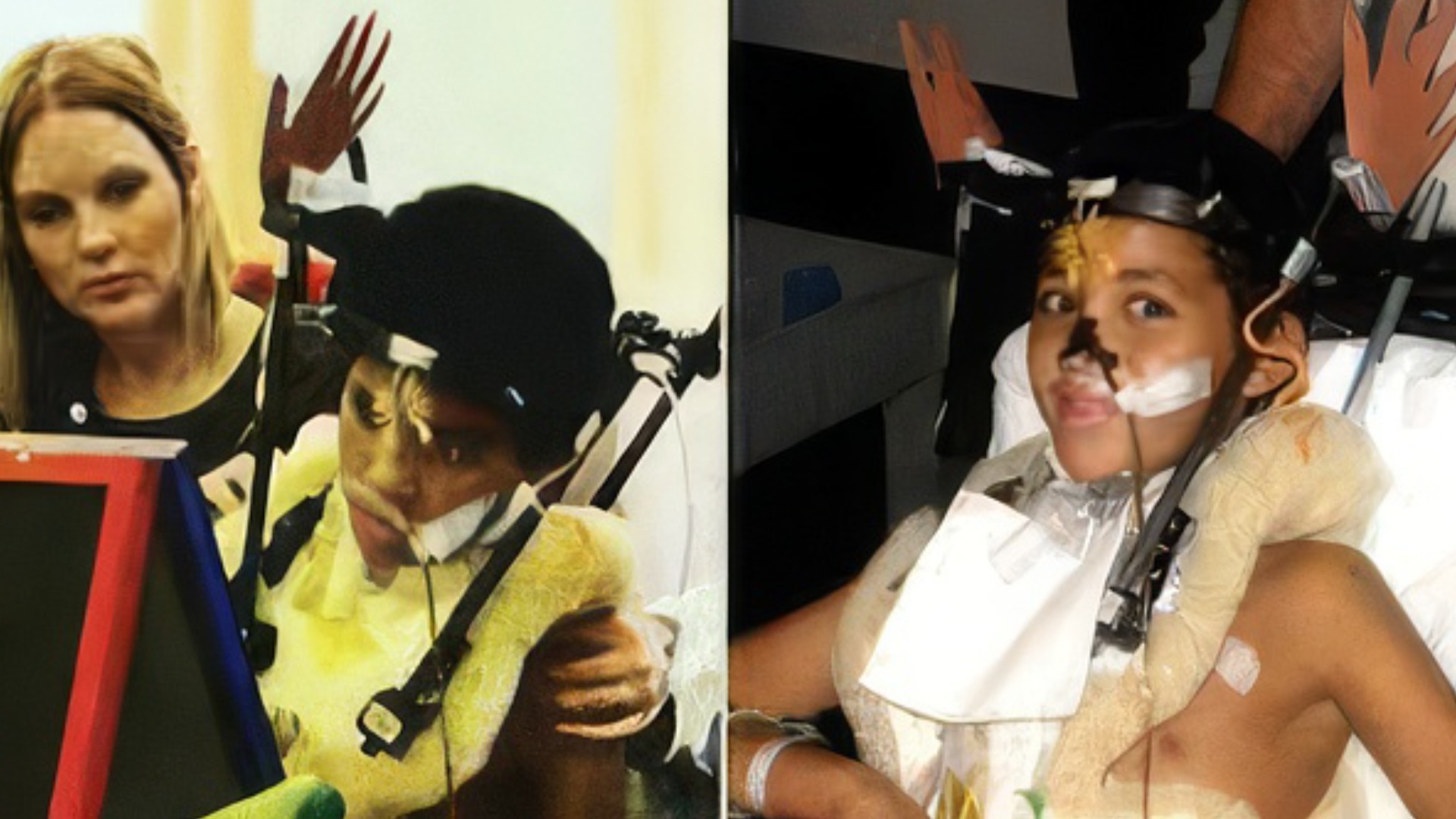
In 2008, nine-year-old Jordan Taylor experienced a traumatic car accident that resulted in one of the rarest and most severe types of spinal injuries.
The injury involved a separation between the skull and the spine at the base of the neck, a condition that is typically considered life-threatening and rarely survivable.
Despite the severity of the trauma, Jordan was transported to a medical facility where emergency intervention was immediately initiated.
Neurosurgeon Dr. Richard Roberts led a complex surgical procedure aimed at stabilizing the connection between the skull and spine. The operation required precise coordination and advanced techniques.
During the surgery, medical professionals carefully realigned the affected structures and secured them using specialized equipment, including a titanium plate, screws, and a stabilization device.
The procedure lasted several hours and was considered extremely high risk due to the nature of the injury.
Following surgery, Jordan underwent a period of recovery and monitoring to ensure stability and healing.
Against expectations, he made a full neurological recovery, regaining normal function over time.
He was discharged from the hospital less than three months after the incident, marking a remarkable outcome.
Today, Jordan Taylor’s case is often referenced as an extraordinary example of survival and the capabilities of modern medical care in treating severe trauma.
Leave a Reply