
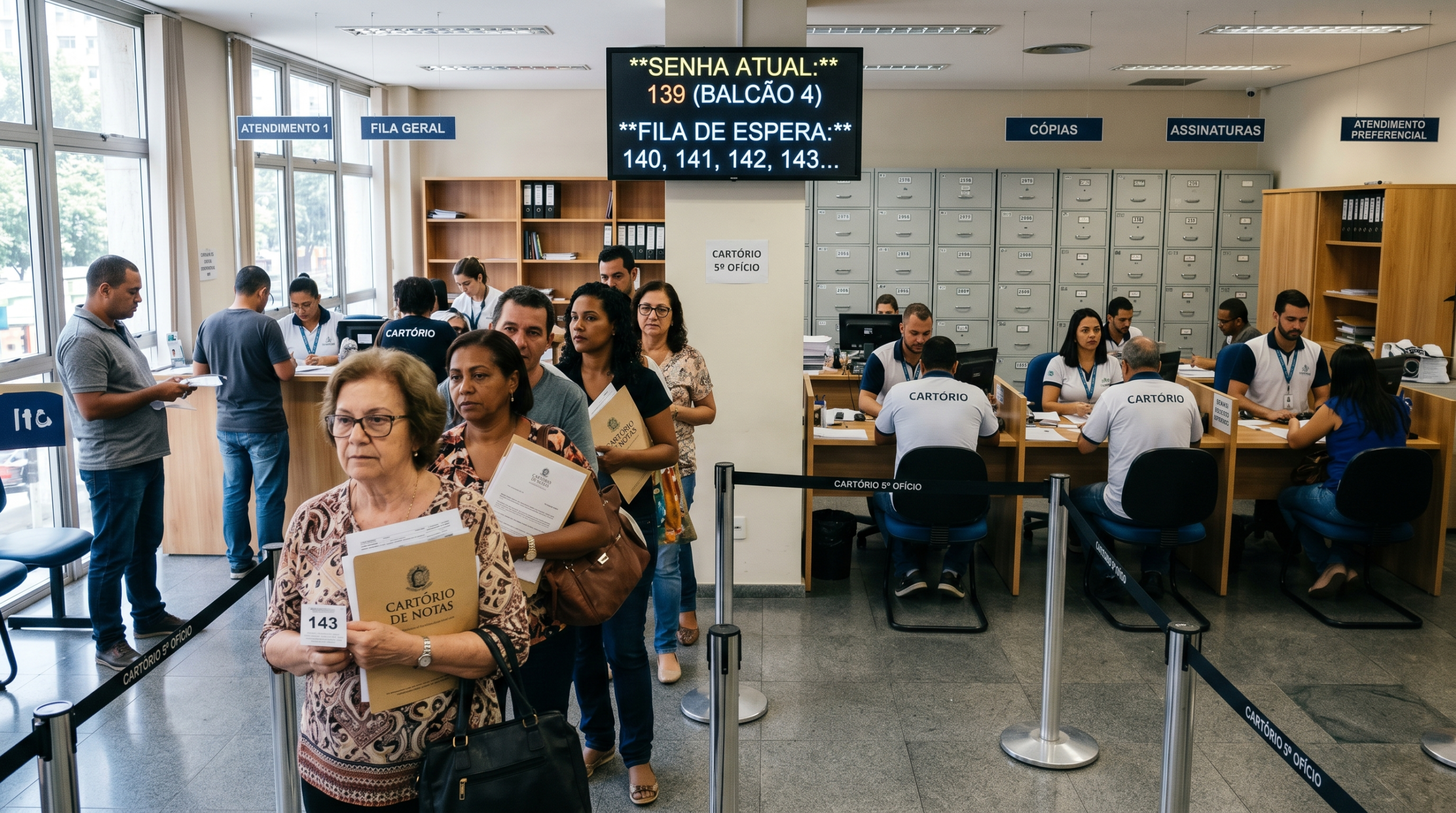
A 44-year-old merchant’s early morning journey across Rio de Janeiro state to validate a single signature highlights the persistent role of traditional notary offices in modern Brazil, even as the nation embraces digital financial systems.
Luís Eduardo da Silva departed his home in Rio das Ostras at 6 a.m. on Tuesday, traveling 87 miles to a specific notary office in Copacabana. His mission involved validating a bank manager’s signature for documents related to settling a home loan following his wife’s death. The signature could only be recognized at that particular office because that was where the bank manager had originally registered it.
This requirement stands in stark contrast to Brazil’s digital achievements. The country’s Pix instant payment system has processed over 313 million transactions in a single day, while a federal digital services platform serves more than 170 million users. Yet essential civil, property, and business transactions continue to flow through a network of extrajudicial offices called cartórios.
These institutions handle far more than simple document notarization. They record vital statistics, formalize legal powers of attorney, register real estate transactions, protest debts, and ensure private agreements become enforceable against third parties. The system’s framework was established in Brazil’s 1988 Constitution.
Cartórios operate under an unusual structure. While providing public services, they function as private entities managed by officeholders selected through public examinations. These officeholders work under state delegation and judicial oversight from the National Council of Justice, charging mandatory fees set by state legislation.
Brazil maintains more than 12,512 cartórios nationwide, according to sector representative Anoreg. The organization reported that moving certain court functions to these offices has generated significant public savings. Since 2007, consensual divorces processed through cartórios saved an estimated 2.8 billion reais, while estate proceedings saved approximately 6.3 billion reais. Between 2013 and 2024, cartórios recovered 20.8 billion reais through protests of federal active debt certificates.
Despite these claimed efficiencies, transparency remains limited. No centralized, accessible database exists for tracking total revenues, comparing fees across states, or verifying officeholder compensation.
A proposed administrative reform introduced in October 2025 seeks to address these issues. The package includes provisions to cap future officeholders’ net compensation at approximately 602,760 reais annually, equivalent to about 50,230 reais per month. The 11,989 cartórios with positive revenue in 2024 collected 32.3 billion reais, averaging 758,600 reais per office.
The reform also proposes standardizing cartório fees nationwide through Supreme Court-initiated legislation. Currently, fees vary significantly between states. In Rio de Janeiro, signature recognition costs 17.30 reais before municipal taxes. São Paulo charges between 8.94 and 13.67 reais for the same service.
Digital alternatives are gradually emerging. The e-Notariado platform, regulated in May 2020, enables certain notarial acts through video calls. The system has recorded over 1.8 million recognized digital signatures and 92,900 signature authentications.
Yet in-person requirements persist for many transactions. Systems analyst Douglas Machado, who needed to register his signature for a vehicle sale within an estate matter, expressed frustration with mandatory physical presence requirements despite preferring digital services.
Legal experts note that cartórios provide essential legal certainty under Brazil’s civil law system. Many rights only become effective after proper registration. The strict disciplinary regime governing officeholders incentivizes careful record-keeping and document handling.
As Brazil continues developing its digital infrastructure, the cartório system remains embedded in citizens’ most significant life events, from registrations of birth through property transfers to death certificates. The balance between maintaining legal certainty and adapting to digital expectations remains an ongoing challenge for policymakers seeking to modernize while preserving essential safeguards.
Leave a Reply