
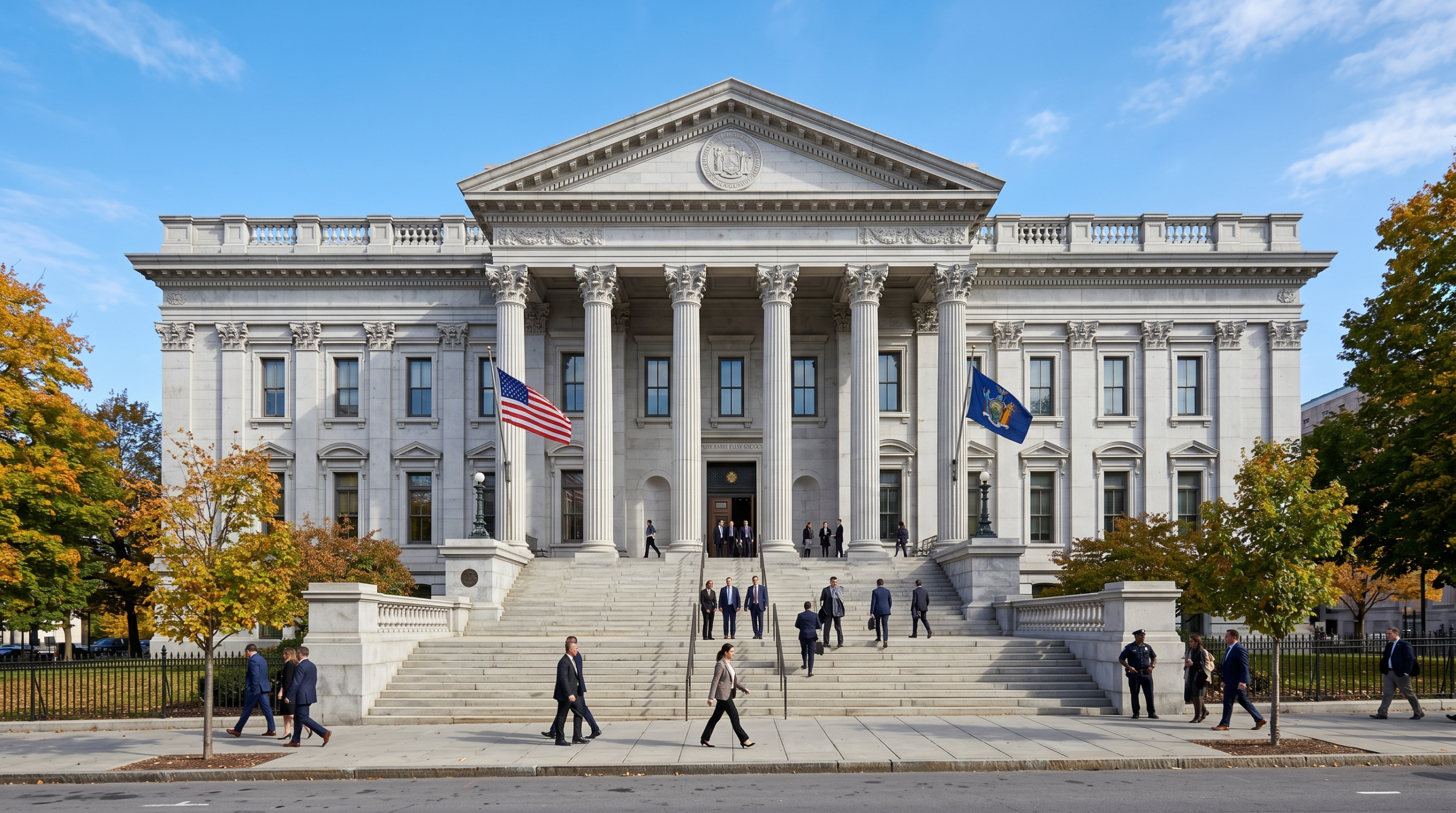
The New York State Court of Appeals heard arguments Wednesday in a case that could reshape the state’s judicial retirement system, as three veteran judges challenge the constitutionality of mandatory retirement requirements following a recent expansion of civil rights protections.
The case centers on whether New York’s 2024 Equal Rights Amendment, which added age as a protected category against discrimination, effectively nullifies existing judiciary laws requiring judges to retire at age 70. Under current rules, judges can seek re-certification for two-year terms until reaching 76, at which point retirement becomes absolute.
The three plaintiffs bringing the challenge include New York Supreme Court Justice Robert Miller, who turned 76 in 2025 and faces mandatory retirement at year’s end; Justice Orlando Marrazzo Jr., who reaches the age limit in August; and Justice Richard Montelione, currently 70 years old.
During nearly an hour of oral arguments, the seven-judge panel pressed attorney John Leventhal, representing the plaintiffs, on his interpretation of the constitutional amendment. Leventhal, himself a retired judge, maintained that the age restrictions constitute clear discrimination, arguing that the amendment’s language prohibits any form of age-based discrimination, regardless of whether such provisions exist in the Constitution itself.
Associate Judge Jenny Rivera challenged this reasoning, questioning how voters could have understood they were eliminating judicial age requirements when the amendment was placed in an entirely different constitutional section and the issue wasn’t explicitly presented during the ratification process. She characterized the argument as “astounding” given the lack of explicit language addressing judicial retirement.
The state’s position, presented by attorney Ester Murdukhayeva, maintained that serving as a judge does not constitute a civil right protected under the amendment. She distinguished between rights that belong to all citizens by virtue of their citizenship and the privilege of holding judicial office, citing established case law that defines civil rights as those appertaining to persons based on their status as citizens.
Associate Judge Anthony Cannataro questioned whether accepting the plaintiffs’ interpretation would mean all New Yorkers possess a constitutional right to serve as judges. In response, Leventhal drew parallels to jury service, referencing the precedent established in People v. Kern regarding civic participation rights.
Associate Judge Shirley Troutman directed questions toward the state’s attorney about why age-based restrictions for judges wouldn’t constitute discrimination against elderly jurists, probing the boundaries of what qualifies as protected civil rights versus professional qualifications.
The case arrives at the Court of Appeals following unsuccessful attempts in lower courts. In November 2025, New York Supreme Court Justice Lyle Frank denied the plaintiffs’ request for an injunction against the retirement law, ruling that judicial service doesn’t qualify as a civil right and noting that the Legislature hadn’t expressly repealed the retirement age through the Equal Rights Amendment. Despite expressing concerns about the policy implications of mandatory judicial retirement, Frank concluded he lacked authority to override state mandates. The Appellate Division, First Department, subsequently upheld this decision.
The retirement age debate isn’t new to New York’s judicial system. In 2013, state voters rejected a proposal to extend the mandatory retirement age for judges from 70 to 80 years old, demonstrating the politically sensitive nature of the issue.
The 77-year-old Leventhal concluded his arguments with a personal note, thanking the judges before adding, “I’m 77 years old and I’m still here,” underlining the practical implications of age-based employment restrictions.
The Court of Appeals reserved judgment following the hearing, leaving unresolved this fundamental question about the intersection of anti-discrimination protections and longstanding judicial retirement requirements.
Leave a Reply