
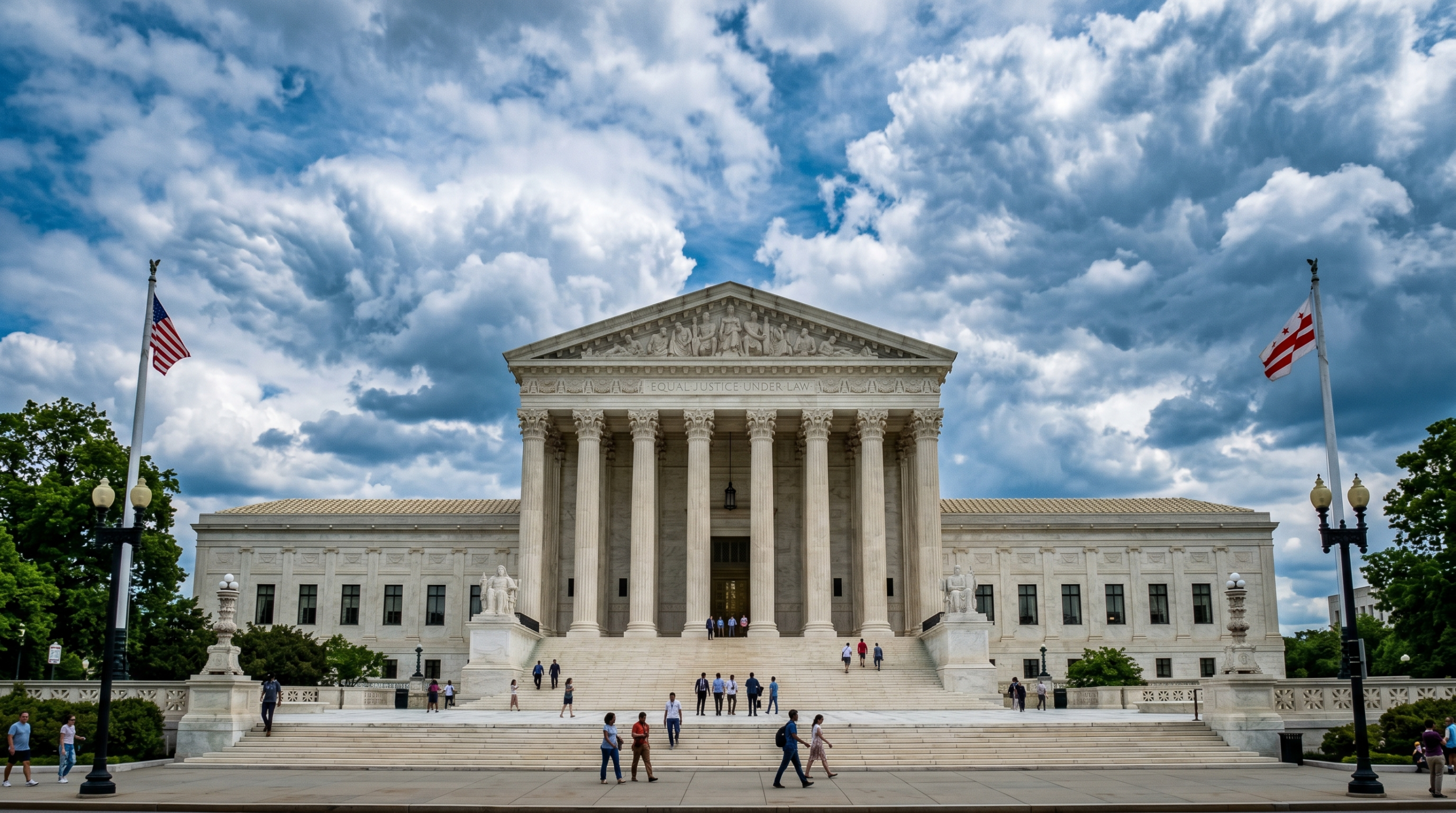
Congressional Democrats have introduced a legislative package designed to bring greater transparency to the Supreme Court’s handling of emergency orders, commonly referred to as the shadow docket. The three bills, introduced Thursday by Maryland Representative Jamie Raskin, would require justices to provide written explanations for their emergency rulings and restructure how cases are selected for Supreme Court review.
The proposed legislation comes amid growing concerns about the high court’s increased reliance on emergency orders to decide cases with significant national implications. During the current presidential administration, the Supreme Court has reviewed dozens of emergency appeals from the White House and has predominantly ruled in the administration’s favor through unsigned, unreasoned orders.
The centerpiece of the reform package is the Supreme Court Honesty and Disclosure Orders and Writs Act, abbreviated as the SHADOW Act. This legislation would mandate that justices issue public legal justifications for emergency orders within seven days of their issuance. Under the proposed requirements, the court would need to demonstrate that denying emergency relief would cause specific, concrete, and irreparable injury to the petitioner. Additionally, justices would be required to publicly state whether their emergency ruling affects other interested parties and whether the decision serves the public interest.
A second bill in the package proposes establishing a Supreme Court Certification Panel, which would fundamentally alter the process for selecting cases for Supreme Court review. This panel would consist of rotating federal appellate court judges who would determine which cases proceed to the Supreme Court. Similar to the current system, any petition for review would need to secure four votes from the panel members. Each decision to grant a petition would include a written statement explaining the reasoning and identifying the specific legal questions to be reviewed.
The third legislative proposal, the Federal Funding Protection Act, addresses jurisdictional issues raised in recent Supreme Court emergency rulings. This bill would affirm federal district courts’ authority to hear monetary claims against the government when such claims are part of broader cases already before a judge. The legislation responds to a recent shadow docket decision in National Institutes of Health v. American Public Health Association, where the justices ruled that the administration could cancel nearly $800 million in public health grants, determining that only the Court of Federal Claims had proper jurisdiction over such disputes.
Recent examples of significant shadow docket cases include challenges to the closure of the Department of Education and efforts to halt temporary legal status determinations for Haitian and Syrian migrants. Legal experts have expressed concern that while shadow docket rulings are intended as temporary measures during ongoing litigation, they can enable executive actions that become difficult to reverse even if courts later determine such actions were unlawful.
Raskin, who serves as ranking member on the House Judiciary Committee, emphasized that the proposed reforms aim to address what he characterized as procedural chaos in the shadow docket system. He argued that the Supreme Court’s practice of issuing emergency rulings with life-altering consequences without explanation undermines justice in a constitutional democracy.
The legislation faces an uncertain path forward in Congress. The bills have not yet been assigned to a committee, though they are expected to be referred to the House Judiciary panel. Congressional Republicans have historically opposed efforts to reform Supreme Court procedures, and some justices have also expressed resistance to legislative changes affecting court operations.
Notably, while the proposed legislation seeks to increase transparency in shadow docket proceedings, it does not impose new restrictions on the types of cases the Supreme Court can address through emergency orders. The traditional use of the shadow docket for genuinely urgent matters, such as execution stays, has expanded in recent years to encompass cases with broader policy implications and lasting effects.
Leave a Reply