
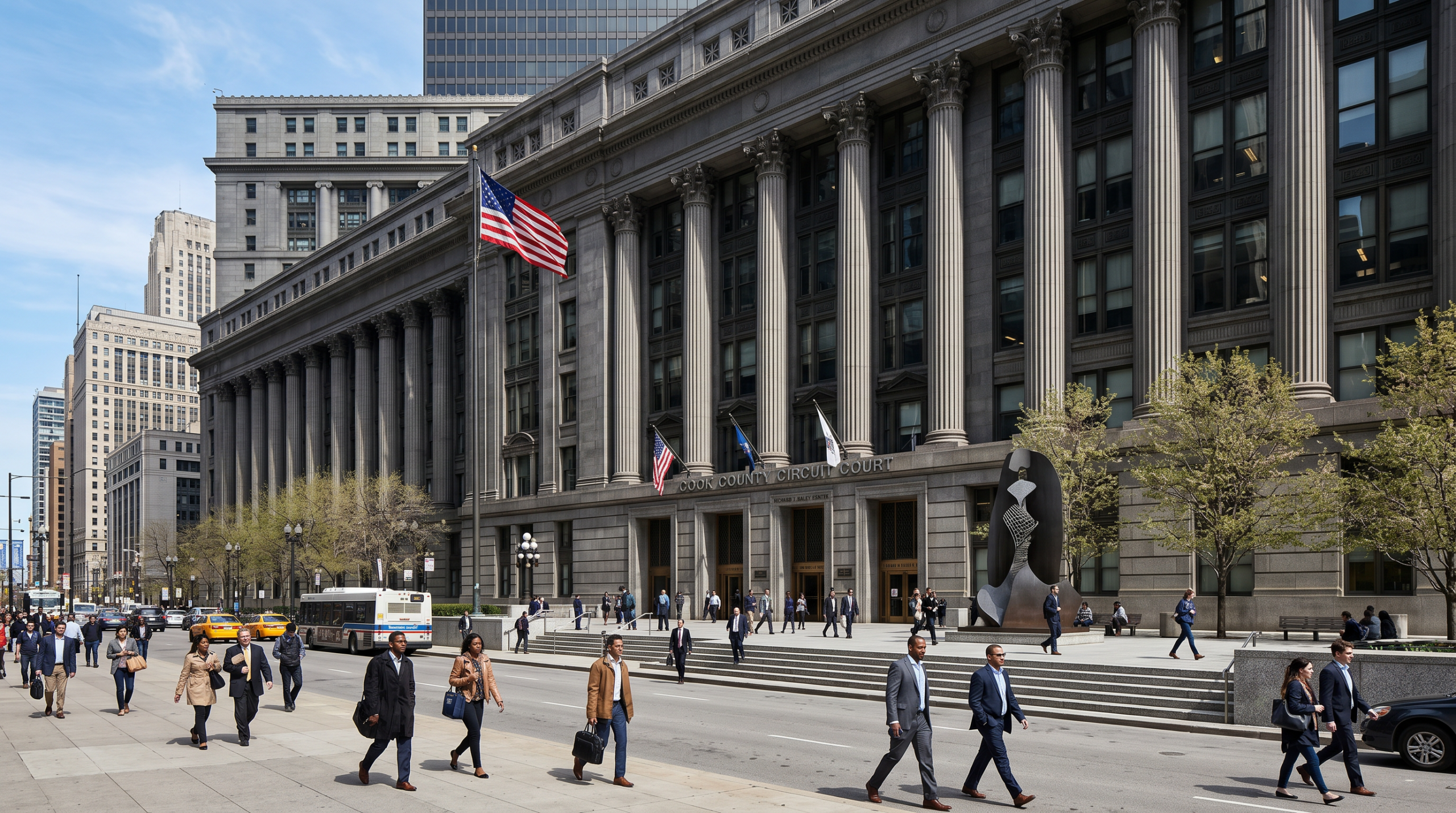
A Cook County Circuit Court judge has denied a petition seeking the appointment of a special prosecutor to investigate potential criminal conduct by federal immigration officers during Operation Midway Blitz, a major immigration enforcement action that took place last year.
Judge Erica Reddick, who presides over the criminal division of the Cook County Circuit Court, ruled on Thursday that the petitioners had not demonstrated that State’s Attorney Eileen O’Neill Burke had abandoned her prosecutorial duties by declining to pursue criminal charges against federal agents.
The petition, filed by attorneys from the Chicago-based law firm Loevy & Loevy, garnered support from more than 400 signatories, including elected officials, community organizations, activists, religious leaders, and journalists. The petitioners argued that Burke’s office had refused to investigate or prosecute federal agents who allegedly violated the law during immigration enforcement operations in the summer of 2025.
Central to the petition were two shooting incidents: the fatal shooting of Silverio Villegas Gonzalez and the non-fatal shooting of Marimar Martinez. The petitioners contended these incidents warranted criminal investigation and potential prosecution of the federal officers involved.
In Illinois, special prosecutors are typically appointed when there exists a conflict of interest between the prosecutor’s office and a potential defendant, such as business connections or political affiliations. The petitioners argued that Burke’s office had demonstrated such a conflict through its communications and actions.
The petition highlighted an email from Matt McGrath, a spokesperson for the state’s attorney’s office, responding to a request for Burke to sign a letter criticizing the Trump administration’s immigration enforcement efforts in August 2025. McGrath wrote that while the office shared concerns about the administration’s actions and rhetoric, maintaining working relationships with federal partners, including the Bureau of Alcohol, Tobacco, Firearms and Explosives, remained a priority for combating illegal guns.
Judge Reddick addressed these communications in her ruling, stating that regular cooperation between a state’s attorney’s office and law enforcement agencies alone does not establish an actual conflict of interest. She found that the office’s policy decisions, protocols, and internal communications were insufficient to demonstrate such a conflict under the law.
Assistant State’s Attorney Yvette Loizon had previously argued in court that fear of political retaliation does not constitute an actual conflict of interest. She emphasized that the state’s attorney’s office does not actively search for crimes to investigate through media reports or civil testimony, but rather responds to investigations initiated by law enforcement.
Reddick’s ruling referenced the 2017 Illinois Supreme Court case People v. Ringland, which established that state’s attorneys lack the authority to initiate and conduct wide-scale criminal investigations without law enforcement involvement. The judge concluded that since the state’s attorney does not have the authority to independently launch such investigations, the petitioners could not demonstrate that Burke had abandoned her prosecutorial duties.
Locke Bowman, representing the petitioners, expressed strong disagreement with the court’s decision following Thursday’s hearing. He argued that crimes had occurred in the presence of the Chicago Police Department, with officers serving as both victims and witnesses to alleged criminal conduct. Bowman contended that thousands of people had approached police seeking intervention during the immigration enforcement operations.
The ruling effectively ends the effort to appoint an independent prosecutor to investigate the federal immigration officers’ conduct during Operation Midway Blitz, leaving questions about accountability for the shooting incidents unresolved through this particular legal avenue.
Leave a Reply