
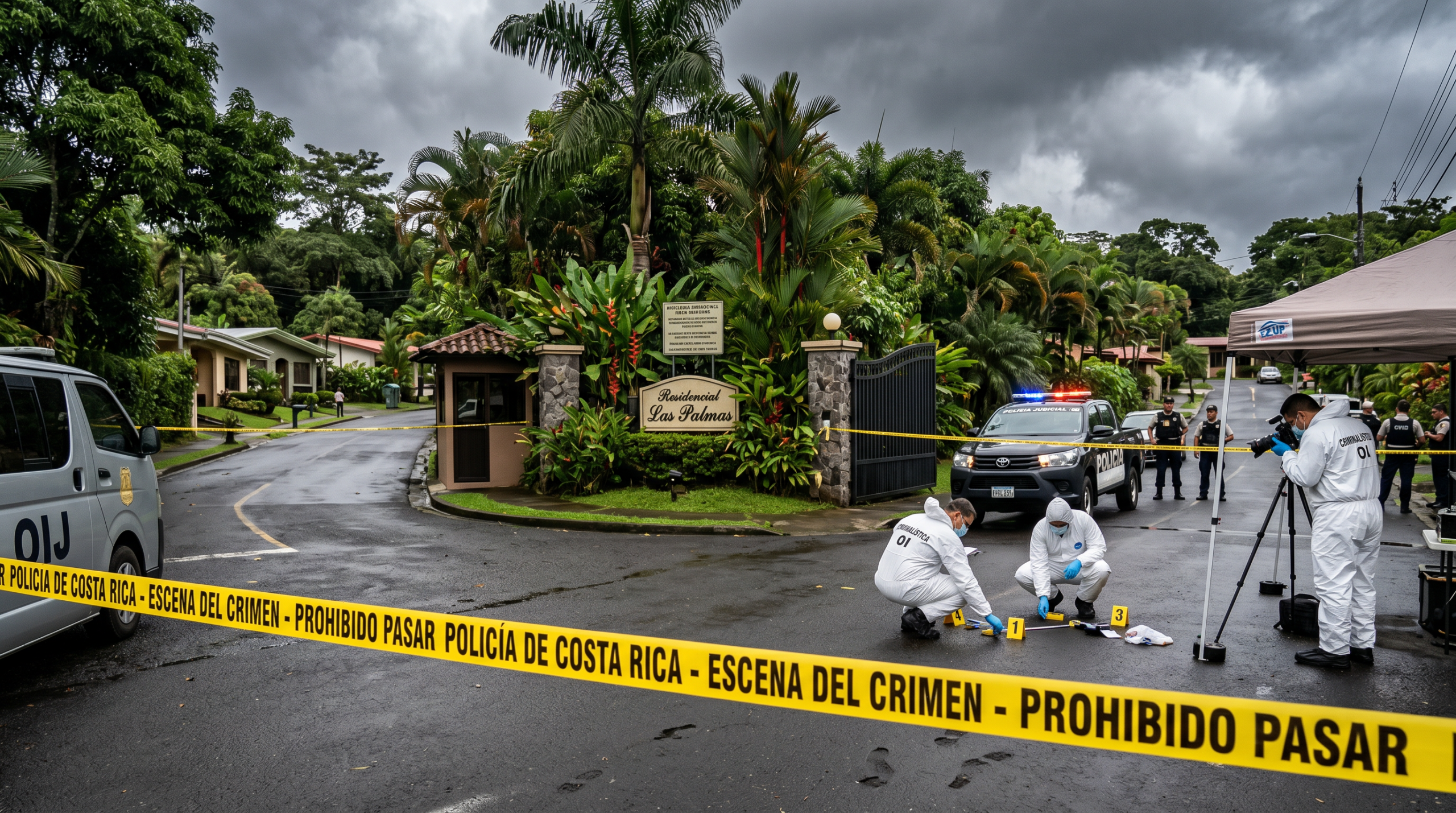
A Costa Rican investigation into the assassination of Roberto Samcam, a former Nicaraguan military commander turned government critic, has revealed extensive evidence of transnational persecution operations targeting political dissidents living in exile.
Samcam, who once served as a Sandinista rebel commander before becoming a high-ranking military officer, was killed on June 19, 2025, when an assassin posing as a delivery driver shot him eight times at his gated community residence in Costa Rica. The 62-year-old was pronounced dead at the scene.
The investigation documents, obtained through Costa Rican media outlets, detail how Samcam transformed from government insider to fierce critic following Nicaragua’s violent suppression of protests in 2018. During that period, between 40 and 330 civilians died in confrontations with security forces, according to varying international assessments.
After fleeing to Costa Rica, Samcam became increasingly vocal in his opposition, writing columns, giving interviews, and authoring a book critical of the Nicaraguan government. Investigators believe he may have provided information to United Nations experts who documented systematic repression of Nicaraguan citizens both domestically and abroad.
Costa Rican authorities have identified a complex assassination network allegedly linking Nicaragua’s military intelligence agency, the Information Defense Services (DID), to the killing. According to investigators, the DID reportedly contacted paramilitary groups in Carazo, a region southwest of Managua where both Samcam and another targeted dissident, Joao Ismael Maldonado Bermúdez, had participated in 2018 protests.
The investigation points to Keny Navarrete, a Nicaraguan national currently imprisoned in Alajuela, Costa Rica, as the alleged organizer who coordinated the assassins from behind bars. Authorities cite unusual phone activity patterns around the time of the murder and connections between Navarrete and one of the suspected shooters.
Maldonado, who helped establish United Nicaraguans in Exile, survived two separate assassination attempts. In the first incident, he was shot four times the day before organizing an anti-regime march. A second attack in 2024 left him with nine gunshot wounds and his wife tetraplegic. Costa Rican authorities documented two additional cases of suspicious attacks against prominent dissidents, both resulting in deaths.
The investigation uncovered multiple potential motives for Samcam’s assassination. He had drafted a document proposing a Transitional Government Assembly, which was prematurely leaked and raised concerns among fellow dissidents about his safety. Additionally, materials found on his computer included a hand-drawn map allegedly showing clandestine runways used by drug cartels and implicating military officials in criminal activities.
Elvira Cuadra, director of the Center of Transdisciplinary Studies on Central America, stated that Samcam’s murder demonstrates the existence of a deliberate transnational persecution policy involving planning, organization, and dedicated resources.
Since 2018, asylum applications from Nicaraguans have surged from 2,722 in 2017 to 356,201 by the end of 2024, according to United Nations data. Many fled to Spain to escape government reach, while others settled in neighboring Costa Rica despite continued security risks.
Both Samcam and Maldonado reported receiving regular threatening phone calls from individuals they believed were connected to Nicaraguan intelligence services. They filed multiple complaints with Costa Rican authorities about harassment and the expanding reach of persecution operations.
The Nicaraguan government has not issued any official statements regarding Samcam’s murder or the subsequent investigation findings. The case highlights the challenges faced by political dissidents who flee authoritarian regimes, only to find that geographic distance provides limited protection from targeted violence.
Leave a Reply