
A Los Angeles Superior Court judge has indicated strong doubts about Southern California Edison’s legal attempt to shift responsibility for the devastating Eaton Fire onto Los Angeles County and other government entities. The utility company filed a cross-complaint in January claiming that local authorities contributed to the fire’s severity through inadequate brush management and delayed evacuation orders.
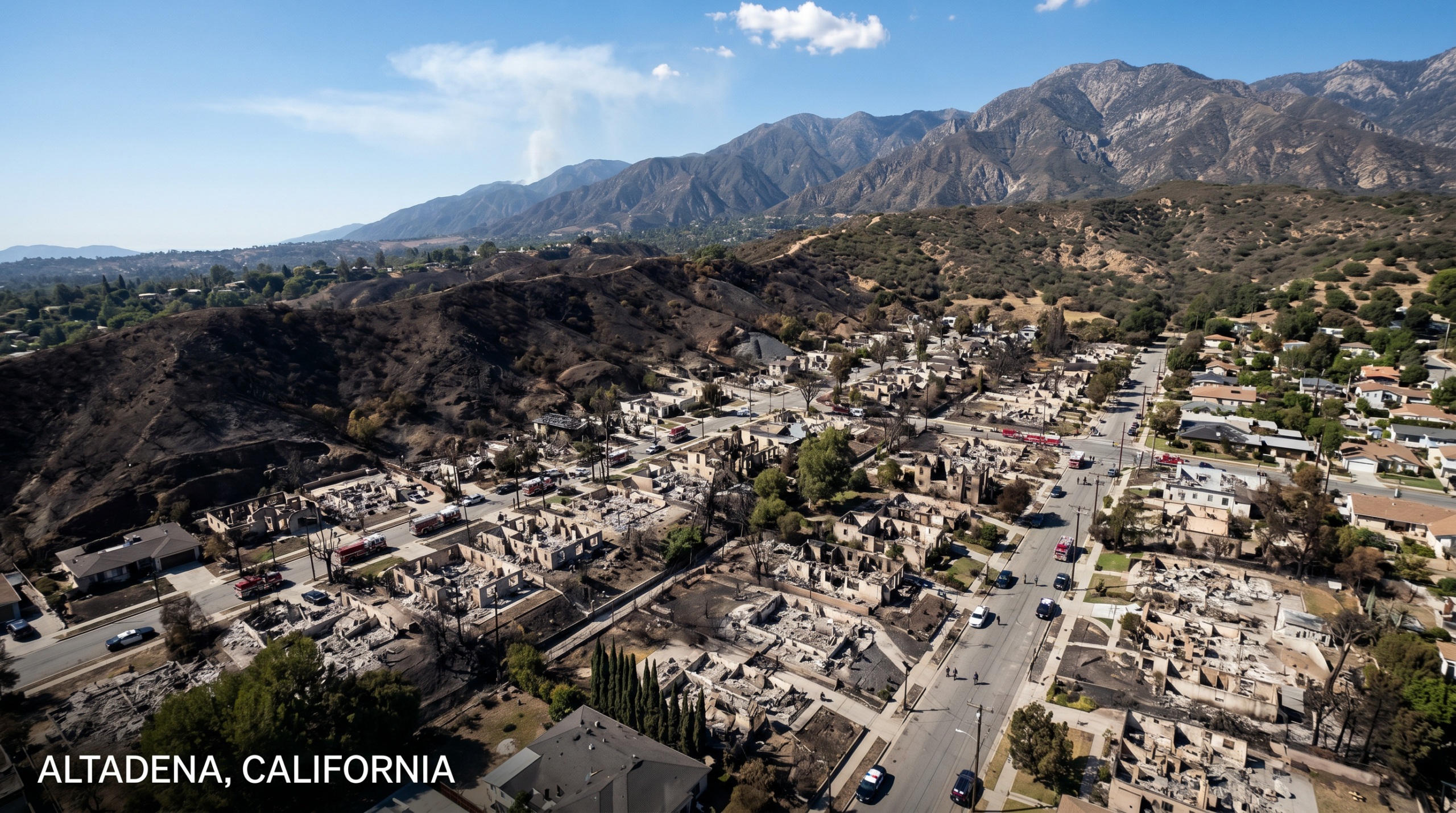
The 2025 Eaton Fire resulted in at least 19 deaths and destroyed more than 9,000 buildings, essentially leveling most of the Altadena neighborhood. The disaster has spawned extensive litigation, with more than 10,000 plaintiffs suing Edison in a consolidated mass tort proceeding. The company’s power lines have been widely identified as the fire’s cause, though Edison maintains it bears no liability.
During Thursday’s hearing, Superior Court Judge Laura Seigle challenged Edison’s legal arguments, particularly the company’s assertion that the county failed in its duty to clear vegetation in Eaton Canyon, a popular hiking area within the Angeles National Forest. The judge noted that accepting such an argument would create an impossible standard requiring authorities to clear brush throughout California.
“That would mean that all throughout California, there would be a duty to go clear the brush,” Judge Seigle stated during the proceedings. “That is impossible. I just don’t see how there could be such a duty, at all. And it would have all sorts of implications for nature and for wildlife. There’s a reason to have nature be nature and not have it all cut down.”
Edison’s cross-complaint targets multiple entities including the sheriff’s department, fire department, the cities of Pasadena and Sierra Madre, and several water companies. The utility claims these organizations failed to issue timely evacuation alerts, properly manage overgrown vegetation on public land, and adequately allocate firefighting resources.
A key component of Edison’s argument centers on the timing of evacuation orders for western Altadena. The company points out that authorities didn’t issue evacuation orders for the area’s western section until 3:25 a.m., approximately nine hours after ordering evacuations for the eastern portion. Edison notes that nearly all reported fire deaths occurred within a 1.25-square-mile area west of Lake Avenue.
However, Judge Seigle questioned the scope and applicability of this claim, observing that delayed evacuation orders would only affect those who were injured or died due to insufficient warning time, not property damage. She also noted that Edison’s complaint fails to specify which individuals were owed this duty.
The county’s legal team has strongly criticized Edison’s approach. Attorney Mira Hashmall, representing LA County, characterized the cross-complaint as an attempt to deflect responsibility onto first responders who risked their lives during the crisis. The county’s demurrer expressed dismay that Edison would seek to blame those who fought to save the community.
Hashmall also highlighted an apparent contradiction in Edison’s position, pointing out that the utility company had not cleared brush on its own property near its electrical equipment. She described Edison’s request for discovery as an “improper fishing expedition.”
The judge cited California government code 850, which provides broad immunity to public entities and employees from liability for injuries occurring during firefighting activities. This legal protection could prove significant in determining whether Edison’s claims against the government entities can proceed.
The litigation surrounding the Eaton Fire extends beyond Edison’s cross-complaint. The U.S. Justice Department has filed a federal lawsuit against the utility company, while hundreds of plaintiffs have also sued State Farm insurance, alleging underpayment of claims related to the fire.
Judge Seigle indicated she would likely sustain the county’s demurrer but will not issue a final ruling until July. Meanwhile, the case will continue through the discovery phase, with 75 cases selected as bellwether trials to proceed first. A motion for summary judgment is scheduled for July 1.
Leave a Reply