
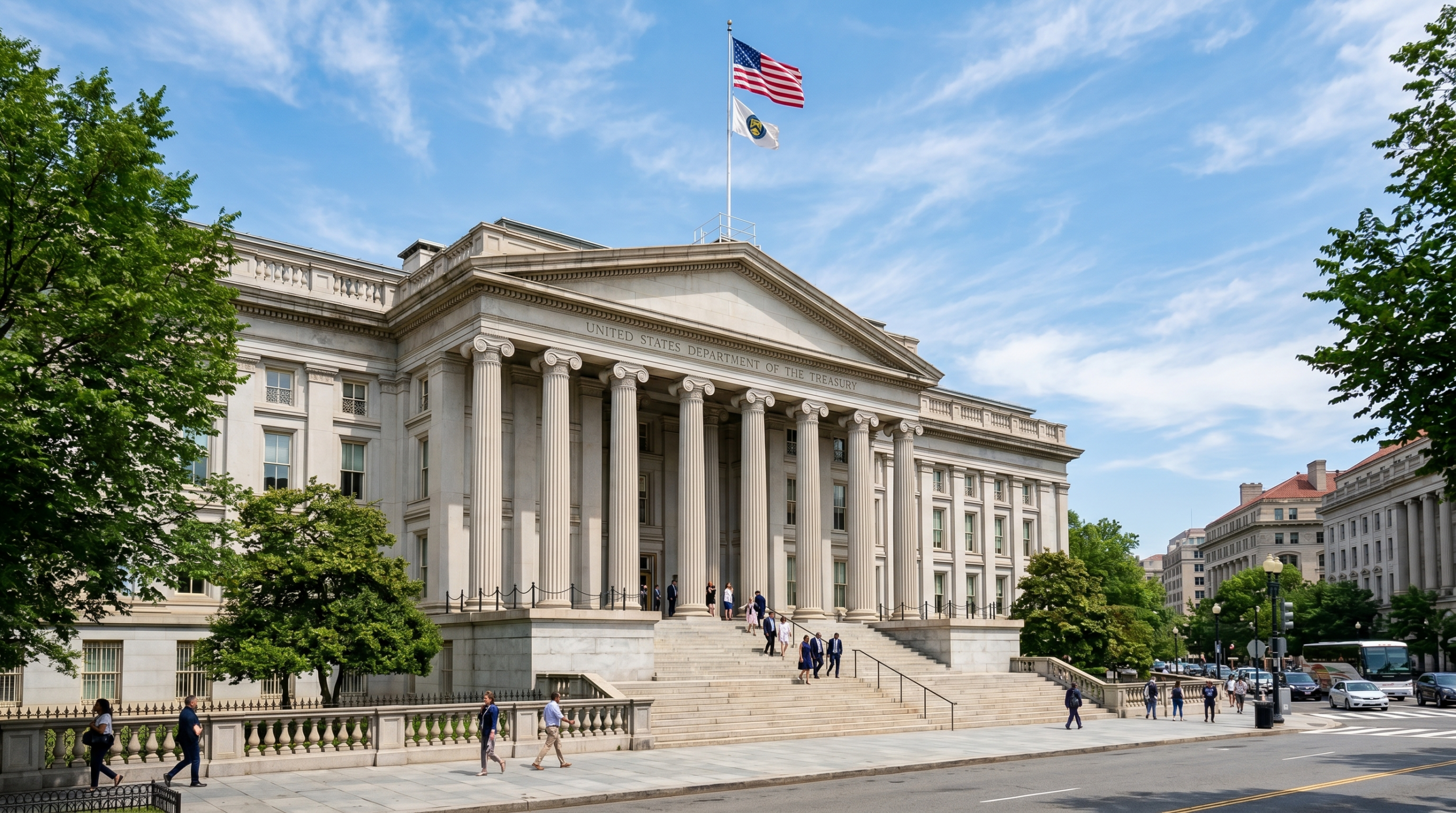
Treasury Secretary Scott Bessent addressed questions Thursday regarding reports that his department has developed preliminary designs for a $250 banknote featuring President Donald Trump’s image, emphasizing that any such currency would require congressional authorization to proceed.
The proposed currency design, which would include Bessent’s signature, has reportedly been under development by Treasury Department officials for several months. The initiative appears connected to celebrations marking America’s 250th anniversary this year, with officials at the Bureau of Engraving and Printing reportedly tasked with creating template designs.
During a Thursday press conference, Bessent acknowledged the legal constraints surrounding the proposal. Federal law has prohibited depicting living individuals on United States currency for more than 150 years, a restriction that dates back to 1866.
“As treasury secretary, I have two mandates for U.S. currency,” Bessent stated. “At present, no living person can be on U.S. currency, and the currency must say ‘in God we trust.'”
The secretary pointed to pending legislation that could potentially change this longstanding prohibition. The “Donald J. Trump $250 Bill Act,” introduced in early 2025 by South Carolina Representative Joe Wilson, seeks to create an exception to current law. The proposed legislation would permit living individuals to appear on currency if they are serving or have served as president. The bill would also mandate the Treasury Department to produce the new denomination within one year of passage.
Wilson characterized his legislation as recognition of Trump’s economic policies, stating the measure commemorates efforts to “fight inflation and help American families.” He described the proposal as “The most valuable bill for the most valuable president.” The legislation has remained inactive since February 2025 and currently sits before the House Financial Services Committee.
Bessent repeatedly emphasized that authority for such a change rests with Congress rather than the executive branch. When questioned about his support for the proposal, he responded, “The president doesn’t do it, the House and Senate do it. It’s all up at Capitol Hill.”
The Treasury Secretary defended his department’s preparatory work on the design, characterizing it as standard procedure when anticipating potential legislative action. “We prepare for everything if it gets passed… we have to prepare in advance. You can’t draw something up the day before,” he explained.
Bessent compared public reaction to the proposed currency to responses regarding the broader 250th anniversary celebrations scheduled for Washington this summer. He stated he saw nothing inappropriate about featuring a sitting president on commemorative currency marking the nation’s semiquincentennial.
The secretary declined to express personal views on the project, though his signature would appear on the bills if they were produced. The prospect of congressional approval remains uncertain.
Historical precedent shows limited exceptions to the prohibition on living figures appearing on currency. In 2005, Congress authorized a limited production of one-dollar coins featuring presidential portraits but specifically excluded sitting presidents and those who had died within the previous two years. The original 1866 law emerged following an incident where a Treasury Department official placed his own likeness on five-cent notes.
The proposal represents an unprecedented attempt to feature a living president on paper currency, a practice that has not occurred in the United States for over a century and a half.
Leave a Reply