
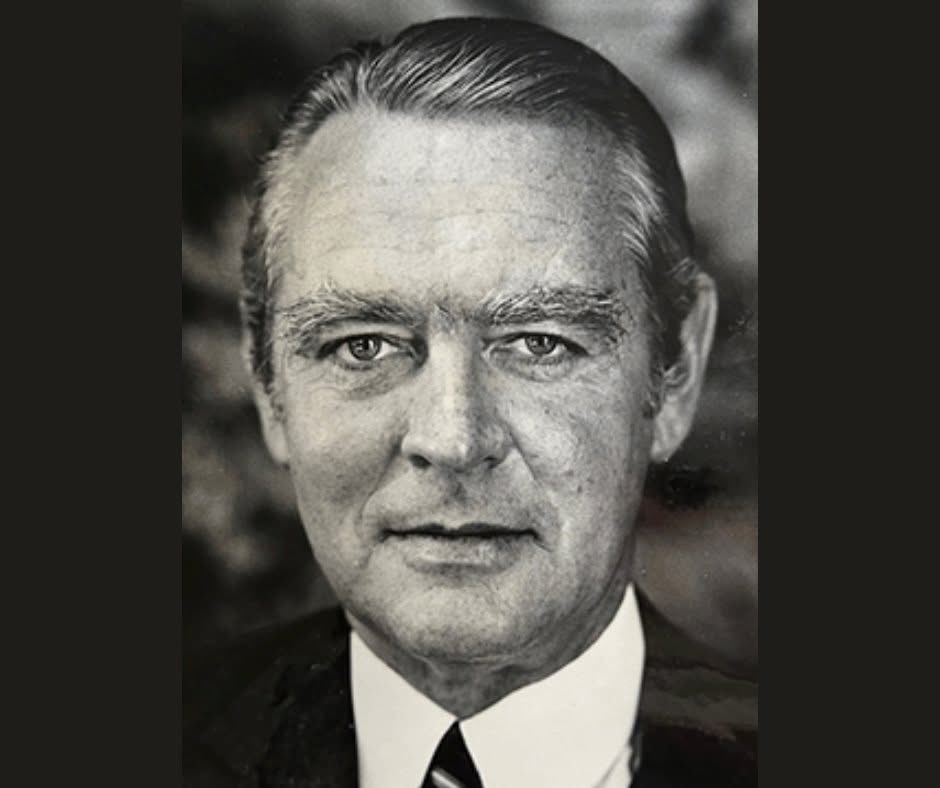
He stood outside a building and watched something no one should ever see.
And instead of looking away, he chose to act.
In 1942, Berthold Beitz, a German businessman working in Nazi-occupied Poland, witnessed unimaginable brutality carried out against innocent families. That moment became a turning point in his life.
At the time, Beitz was not part of any resistance group. He held a stable position in the oil industry, lived with his wife Else, and had every reason to remain silent like so many others.
But he didn’t.
After returning home, he made a decision with his wife that would change hundreds of lives.
They would help.
Using his position, Beitz realized that certain workers considered “essential” to oil production could be temporarily protected from deportation. He began using that system to his advantage, expanding it far beyond its intended purpose.
People were given new identities on paper, assigned roles that would keep them alive, at least for a time.
When transports arrived, Beitz sometimes intervened directly, claiming individuals were necessary for critical work. Against all odds, it often worked.
At the same time, Else Beitz took risks of her own.
Their home became a place of refuge. Children were hidden. Families placed their trust in her during moments of unimaginable fear.
Every decision carried enormous risk.
Discovery would have meant certain death.
But they continued.
By the end of the war, hundreds of people were alive because the Beitz family refused to accept what was happening around them.
After the war, Berthold Beitz returned to civilian life and became a leading figure in German industry. Despite his influence and success, he rarely spoke about what he had done during those years.
When recognized for his actions, he resisted being called a hero.
He saw his choices differently.
In 1973, Berthold and Else Beitz were honored as “Righteous Among the Nations,” a recognition given to those who risked everything to save others during one of history’s darkest periods.
Their legacy is not just in what they achieved, but in what they chose.
In a time when many remained silent, they acted.
And because of that, generations exist today who otherwise would not.
Leave a Reply