
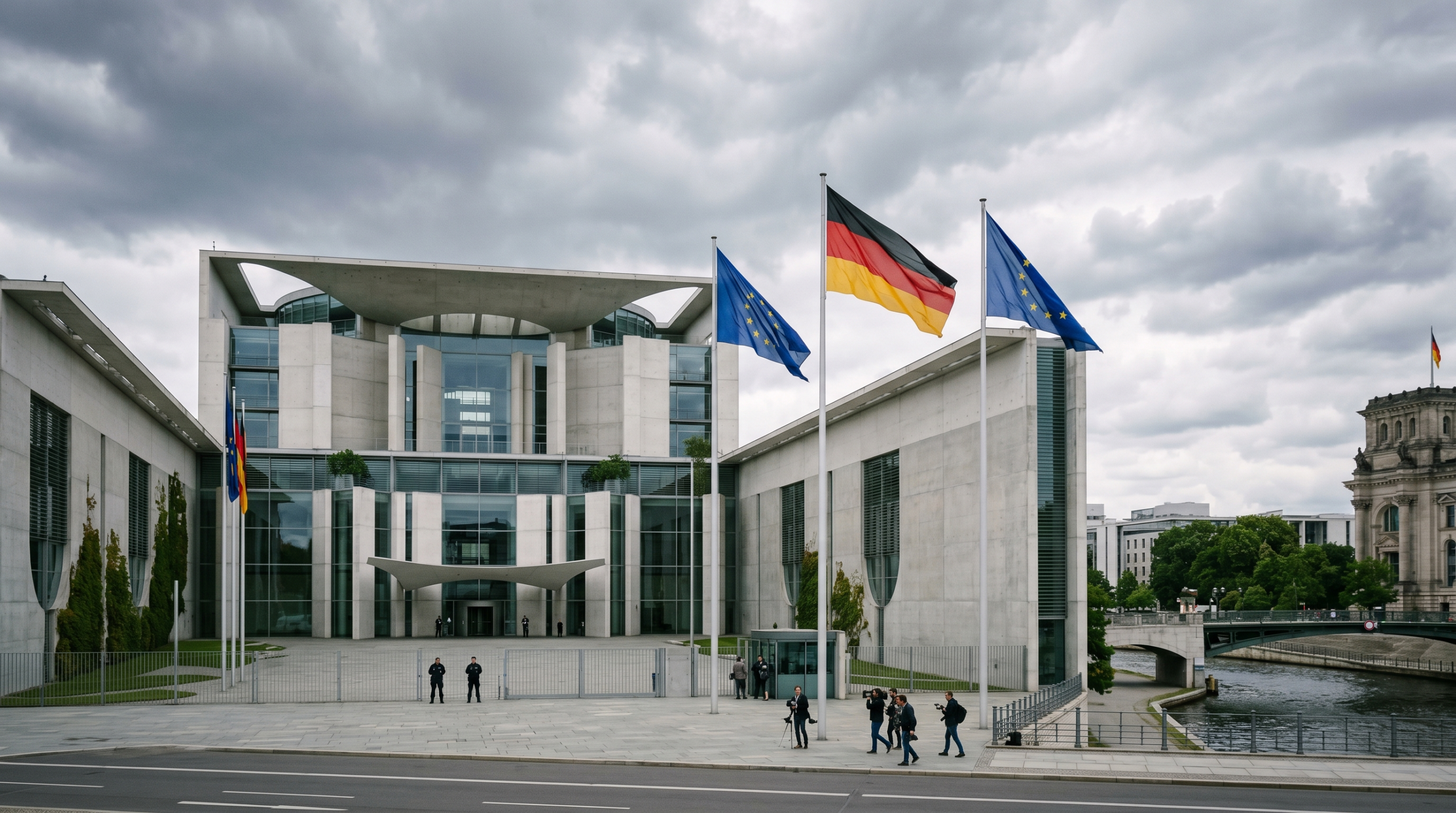
The German government has moved to quash mounting speculation that Chancellor Friedrich Merz could face removal from office as his approval ratings hit historic lows and key policy initiatives remain stalled.
The center-right CDU party leader, who has held office for just over a year, is facing unprecedented challenges to his leadership. Recent polling data from Forsa reveals that only 14 percent of Germans express satisfaction with Merz’s performance, while 84 percent report dissatisfaction with the 70-year-old chancellor.
German media outlets have dubbed the current political drama the “chancellor swap” debate, with reports suggesting that Hendrik Wuest, the 50-year-old state premier of North Rhine-Westphalia, has emerged as a potential replacement. Wuest represents the more centrist wing of the CDU party and has historical ties to former Chancellor Angela Merkel’s faction.
During a regular press conference in Berlin on Friday, government spokesman Stefan Kornelius declined to address the speculation directly. He characterized the reports as rumors and maintained that the atmosphere within the chancellery remains positive and constructive. Government sources have been more forceful in their dismissals, describing the speculation as dangerous and potentially destabilizing for Germany.
The leadership questions come as Merz’s government struggles to deliver on multiple fronts. A promised economic stimulus package aimed at revitalizing Germany’s struggling economy has progressed slowly through the legislative process. Additionally, critical reforms to the healthcare and pension systems have encountered significant obstacles as the CDU navigates disagreements with its coalition partner, the center-left SPD.
Political scientist Aiko Wagner from the Freie Universitaet Berlin noted that despite having more than a year in office, the government has made limited progress on major policy areas. This lack of advancement has contributed to growing frustration among the German electorate.
Merz also faces the challenge of the far-right Alternative for Germany party, which continues to lead opinion polls ahead of his conservative CDU/CSU bloc. The chancellor has struggled to develop an effective strategy to counter the AfD’s growing influence in German politics.
Wuest has maintained an ambiguous stance regarding the leadership speculation. When questioned about potentially replacing Merz, he offered only an oblique response about not being a skilled football player, stopping short of issuing a categorical denial. The state premier has recently taken steps to raise his national profile, including organizing an official visit to Poland and inviting Berlin-based political journalists to accompany him.
While the German constitution allows for a chancellor to leave office before completing their term through resignation or a vote of no confidence, political analysts consider such scenarios unlikely in the immediate future. Peter Matuschek, a political analyst with Forsa, pointed out that Wuest’s limited experience in federal politics could pose challenges for any potential leadership bid.
The pressure on Merz is expected to intensify in September when key state elections are scheduled in eastern regions where the AfD maintains strong support. Poor results in Saxony-Anhalt and Mecklenburg-Western Pomerania could further weaken the chancellor’s position within his party.
The current political instability represents a significant shift in German politics, coming less than two years after former Chancellor Olaf Scholz’s coalition government collapsed, triggering early elections that brought Merz to power.
Leave a Reply