
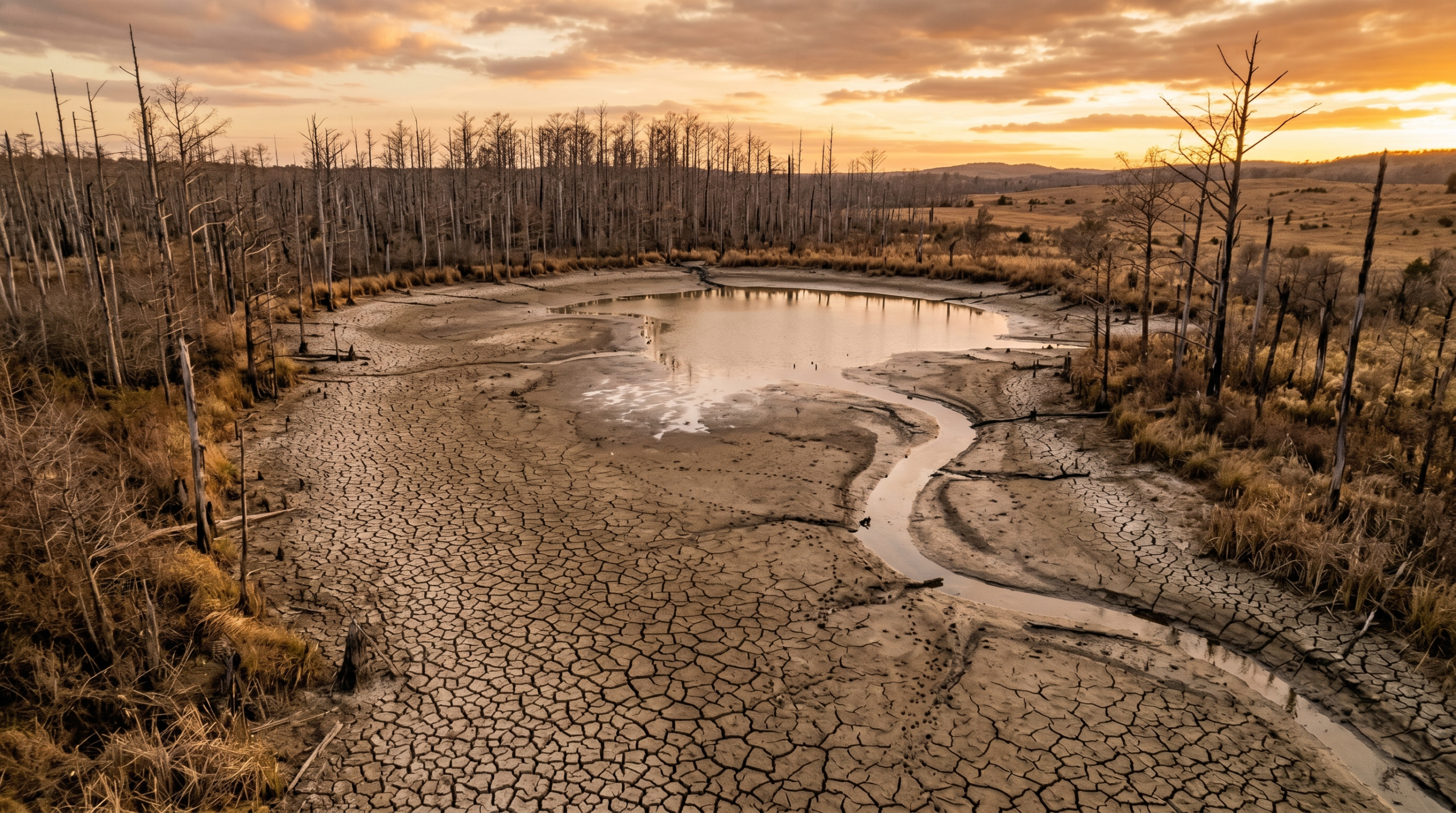
Georgia is experiencing one of the most severe droughts in its recorded history, with devastating consequences for the state’s wildlife populations and natural ecosystems. The state recorded its second driest January through April period since 1895, receiving just over 9 inches of total precipitation during what should be the crucial spring growing season.
Currently, more than half of Georgia remains in extreme or exceptional drought conditions, while the remainder faces moderate to severe drought levels. The unprecedented dry spell has created cascading effects throughout the state’s ecosystems, threatening both immediate wildlife survival and long-term population sustainability.
Todd Schneider, a wildlife biologist with the Georgia Department of Natural Resources’ Wildlife Resources Division, explained that while the effects may not be immediately visible, the drought’s impact on wildlife reproduction rates could have lasting consequences. Unlike dramatic scenarios where animals perish en masse, the reality is more subtle but equally concerning.
The drought has severely reduced food availability for wildlife across the state. Plants are producing fewer fruits and berries, vegetation is withering during critical breeding seasons, and insect populations have plummeted. Many animals depend on their food sources for moisture intake, making this scarcity particularly threatening. Birds face exceptional challenges, with some species choosing not to lay eggs at all when food becomes too scarce.
Wetland habitats, which support Georgia’s exceptionally high biodiversity, face particular danger. These critical ecosystems provide essential habitat for aquatic organisms, alligators, amphibians, and numerous marsh bird species. Extended drought periods shrink these areas dramatically, eliminating crucial breeding and feeding grounds.
The drought’s agricultural impact has been equally severe. Farmers across the state have reported major losses, with ponds and water sources for livestock completely drying up. In April, when drought conditions peaked, two massive wildfires swept through southeastern Georgia, burning more than 50,000 acres and destroying over 120 homes. Public water systems implemented conservation campaigns at the direction of the Georgia Environmental Protection Division.
When rainfall finally arrived on May 20, the metropolitan Atlanta region received three inches of rain in just one hour. This sudden deluge created new problems, as massive stormwater flows carried polluted runoff from Atlanta’s combined sewer system directly into the Chattahoochee River, Georgia’s most heavily utilized water resource. With the river at near-historic low levels due to the drought, the influx of pollutants created deadly conditions that killed thousands of fish.
The Chattahoochee Riverkeeper reported that the combination of prolonged rain and ongoing drought conditions contributed to dangerous spikes in bacteria levels, with elevated E. coli creating unsafe water conditions throughout the river system.
While single drought events must be extensive and long-term to cause permanent wildlife population declines, climate projections suggest the Southeast will experience increasingly frequent dry springs as air temperatures rise. Schneider noted that these extreme weather patterns are becoming more common, presenting ongoing challenges for wildlife management.
Beyond drought, Georgia’s wildlife faces additional human-induced threats. Rapid suburban and industrial expansion continues to destroy natural habitats, while rising sea levels erode nesting grounds for the state’s endangered sea turtle populations. These combined pressures create unprecedented challenges for conservation efforts across the state.
Leave a Reply