
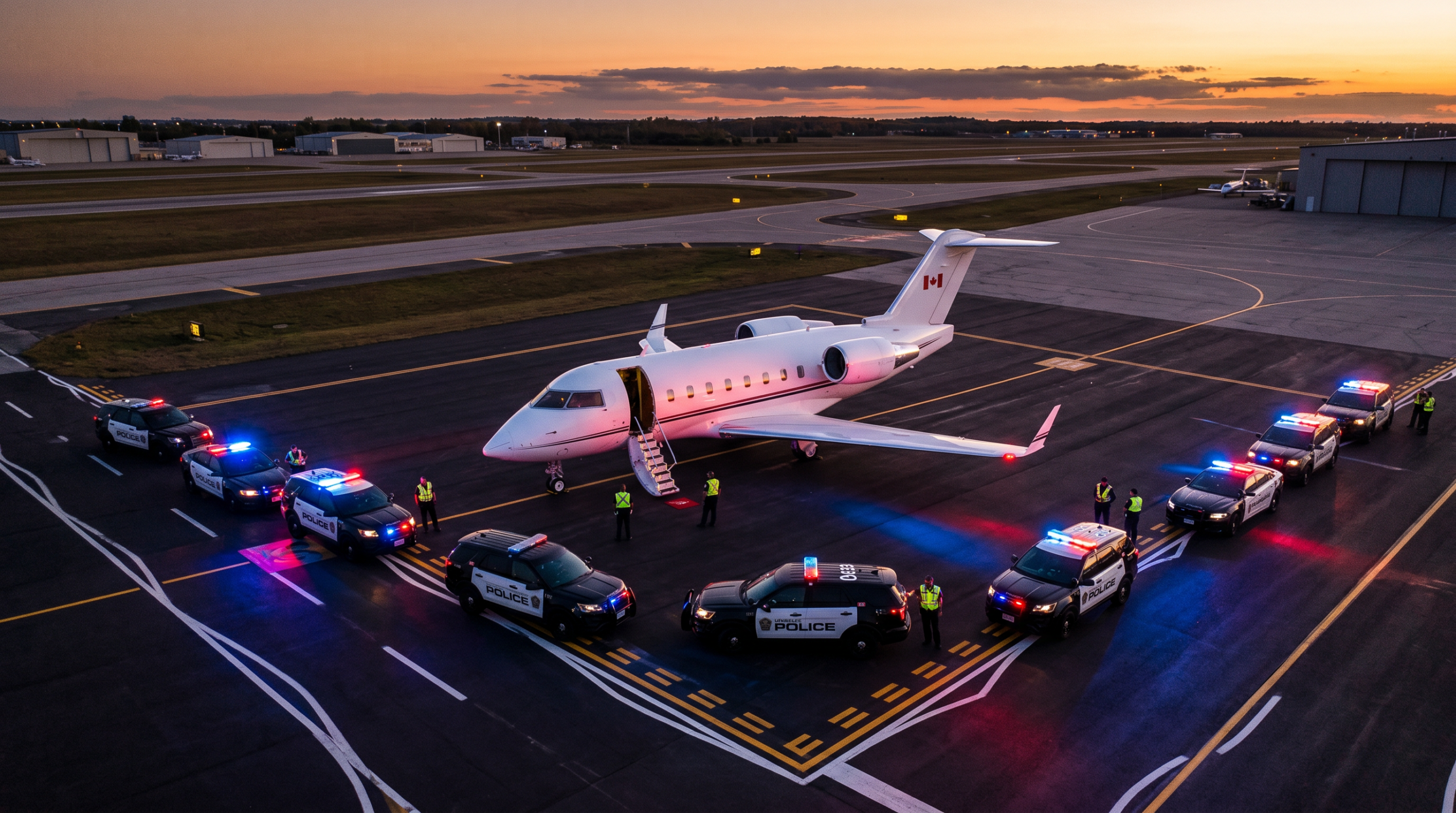
A private jet carrying more than 260 kilograms of high-grade marijuana was seized by Paraguayan authorities at Silvio Pettirossi International Airport in Asunción on May 29, revealing a significant shift in regional drug trafficking patterns.
The aircraft, a Bombardier Challenger 604, contained 261.6 kilograms of high-THC cannabis with an estimated street value of $3.6 million. Among those detained was 20-year-old social media influencer Jabari Stephen Brown, who served as co-pilot on the flight. Brown, known online as “Captain Treezy,” had gained fame after winning a $2 million private jet in a YouTube challenge hosted by popular content creator MrBeast in late 2025.
The seized aircraft had departed from Miami and made a stop in Panama before arriving in Paraguay. Investigators believe the marijuana shipment was destined for Brazil, where demand for premium imported cannabis has steadily increased, overshadowing the traditional low-cost compressed marijuana known as prensado that Paraguay has historically supplied to regional markets.
Prosecutor Ingrid Cubilla stated that each kilogram of the seized marijuana could fetch approximately $14,000 on Brazil’s illicit market, driving its substantial total value. The high price reflects growing Brazilian consumer preference for potent, high-quality cannabis over traditional local products.
Authorities identified the aircraft’s registered owner and second pilot as Keith Siilats, an Estonian citizen and co-founder of the defunct American micromobility company Bolt Mobility. An international arrest warrant has been issued for Siilats on charges of drug trafficking and unauthorized possession of narcotics. Three additional American passengers who were aboard the jet remain in Paraguayan custody.
Brown was initially detained but released on May 31 after investigators found no evidence he had knowledge of the drugs on board, according to Paraguay’s drug enforcement agency. The aircraft involved in the seizure was not the Hawker 400XP that Brown had won in the YouTube challenge, despite initial confusion on social media platforms.
This incident highlights a notable reversal in hemispheric drug trafficking patterns. The expansion of legal cannabis markets in the United States has created significant domestic cultivation capacity, leading to oversupply and dramatic price drops. The US Cannabis Spot Index recorded prices at $1,056 per pound in May 2026, following years of steep declines caused by production exceeding demand.
Excess production from states with large cannabis markets, particularly California and Florida, has increasingly been diverted to illicit international markets across South America, Central America, Mexico, and the Caribbean. Paraguay, traditionally South America’s leading marijuana exporter, has primarily dealt in low-potency compressed cannabis selling for approximately $150 per kilogram wholesale. The premium American product commands prices nearly 100 times higher.
Paraguayan authorities have reported multiple seizures of high-THC cannabis arriving from the United States, including a significant interception in December 2025. A Paraguay SENAD officer noted that while this trafficking method was historically uncommon, recent years have seen increased cases involving high-potency marijuana varieties from the United States. The use of a large executive aircraft represents an unusual method among recorded seizures in the country.
The trafficking pattern typically involves aircraft departing from Florida logistics hubs, landing either at Asunción’s international airport or clandestine airstrips in border departments like Amambay and Canindeyú. The cannabis then moves overland through porous border crossings near Ciudad del Este and Pedro Juan Caballero into southern Brazilian consumer markets.
This evolving trade may create new opportunities for major Brazilian criminal organizations, including the First Capital Command (PCC) and Red Command (CV), both recently designated as Foreign Terrorist Organizations by the United States. These groups have historically controlled significant portions of the Paraguayan marijuana trade and may be positioning themselves to broker imported American products.
Similar seizures of American-grown cannabis have been recorded in Bolivia, Mexico, the Dominican Republic, and other Caribbean locations. Panamanian authorities have initiated their own investigation into the aircraft’s stopover in their country. While this reversal of traditional South-North drug flow remains in early stages, with relatively modest quantities involved, the trend represents a significant shift in regional trafficking dynamics.
Leave a Reply