
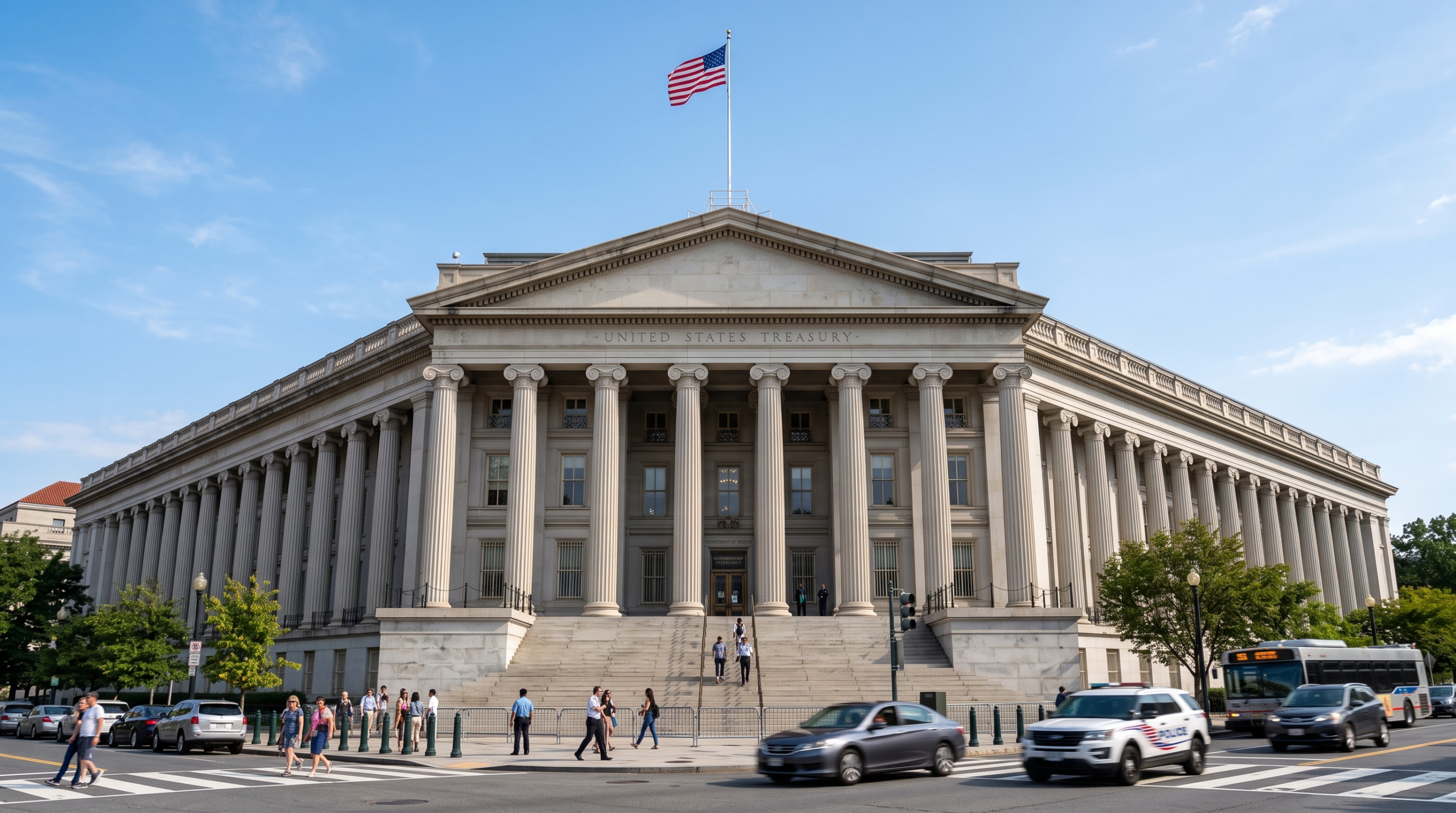
The United States Treasury Department has imposed sanctions on two Brazilian nationals and four companies allegedly involved in a sophisticated money laundering operation connected to Primeiro Comando da Capital (PCC), considered one of Brazil’s most prominent criminal organizations.
The sanctioned individuals are Victor Henrique de Oliveira Shimada and Stella Stefanie Nunes Henrique de Oliveira. Three Brazilian companies – Victory Trading Intermediação de Negócios Cobranças e Tecnologia, Pixwave Soluções de Pagamento, and Wave Construções Inteligentes – along with Portuguese firm Avenidas Flutuantes Unipessoal, were also added to the sanctions list.
According to Treasury officials, the network operated between Florida and São Paulo, laundering proceeds from drug trafficking and transferring funds to PCC operations in Brazil. The department stated that Shimada’s organization laundered more than $30 million generated in various US cities, utilizing cryptocurrency to transfer the funds internationally.
Shimada’s involvement in financial crimes has previously attracted attention from Brazilian authorities. In 2024, São Paulo prosecutors charged him in connection with an investigation into alleged fund diversion from a sponsorship agreement between a soccer club and a betting company, though that case did not directly link him to PCC membership.
Nunes Henrique de Oliveira, identified as Shimada’s relative and close associate, allegedly served as his secretary and coordinated bulk cash collections while providing logistical support for the money laundering operations.
The sanctions freeze all property and assets belonging to the targeted individuals and companies within US jurisdiction or under American control. US entities are also prohibited from conducting business with the sanctioned parties.
Legal experts note that while these sanctions have immediate effect in the United States, they do not automatically translate to legal consequences in Brazil. Diego Nunes, a criminal law professor at the Federal University of Santa Catarina, explained that the sanctions represent a unilateral US action rather than the result of bilateral cooperation between the two nations.
Fabrício Polido, an associate professor of international law at the Federal University of Minas Gerais, emphasized that any criminal prosecution in Brazil would require Brazilian authorities to conduct independent investigations under domestic law. However, he noted that the financial impact could be more immediate, as banks and companies conducting dollar transactions or maintaining ties to US institutions may treat the sanctioned parties as high-risk clients.
The sanctions follow an investigation led by a Homeland Security task force, with participation from the FBI’s Miami field office and the US Justice Department. In January, six individuals connected to the network’s Florida operations were arrested and indicted on money laundering charges in federal court.
This represents the Treasury Department’s third enforcement action against PCC. The organization was first sanctioned in 2021 for international drug trafficking involvement, and in 2024, the Treasury sanctioned Diego Macedo Gonçalves do Carmo, described as a financial operator for the group.
Brazil’s Justice Ministry has expressed concern about unilateral sanctions imposed outside international legal cooperation channels, warning that such actions could potentially weaken collaborative efforts against organized crime. The ministry emphasized that Brazil possesses the legal framework and institutional capacity to combat organized crime, citing recent legislation targeting the territorial and economic control of criminal organizations.
Dennis Pacheco, a researcher at the National Institute on Violence, Power and Public Security, noted that money laundering has become increasingly central to PCC’s operations as the organization has expanded its activities across borders. He cautioned that broad definitions of links to organized crime groups could inadvertently affect legitimate institutions or companies with no direct connection to PCC.
Leave a Reply