
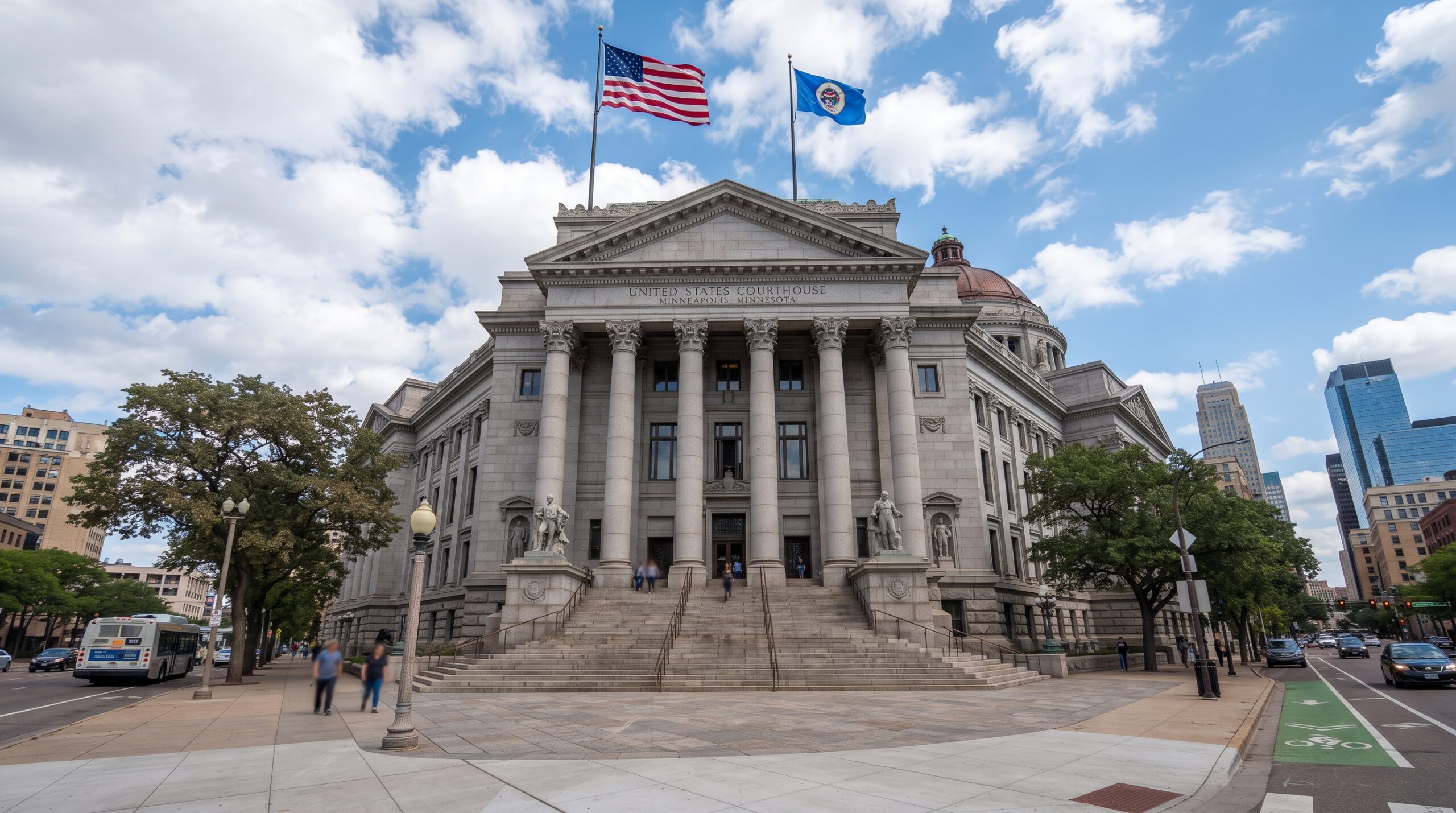
A federal judge in Minneapolis heard arguments Thursday as major prediction market platforms seek to halt Minnesota’s pioneering law that would make operating such platforms a felony offense within the state. The legislation, set to take effect in August, represents the nation’s first comprehensive ban on prediction market operations.
The case centers on whether Minnesota has the authority to regulate platforms that allow users to trade on the outcomes of future events, ranging from political elections to entertainment industry developments. The platforms involved in the litigation argue that federal law gives exclusive regulatory authority over these markets to federal agencies, making state intervention unconstitutional.
During the hearing, attorneys representing the federal Commodity Futures Trading Commission argued that Minnesota’s statute directly conflicts with federal jurisdiction established under the Commodity Exchange Act. They characterized the state law as an unprecedented attempt to regulate an area expressly reserved for federal oversight.
The platforms’ legal teams emphasized that their operations constitute regulated financial contracts rather than traditional gambling. They argued that forcing compliance with Minnesota’s ban while maintaining federally mandated nationwide access would create an impossible legal situation. The companies maintain that their products qualify as event contracts and swaps under federal law, placing them squarely within federal regulatory territory.
Minnesota officials defended the law as a legitimate exercise of state police powers aimed at protecting residents from what they view as harmful gambling activities. The state’s legal representatives argued that the statute aligns with existing prohibitions on unlicensed wagering and sports betting.
District Judge Katherine Menendez extensively questioned both sides about the distinction between prediction market trades and traditional gambling. She expressed skepticism about claims that all prediction market contracts serve legitimate economic purposes, noting that users can place trades on outcomes ranging from presidential elections to celebrity wedding details.
The judge appeared particularly interested in the recent expansion of prediction markets into sports-related events, questioning how these differ from traditional sports betting that states have historically regulated. She observed that from a user’s perspective, particularly young adults risking their savings, the distinction between prediction markets and sports gambling may be minimal.
First Amendment concerns also featured prominently in the arguments. The platforms’ attorneys warned that Minnesota’s law could criminalize news organizations and data providers that supply information to prediction markets, potentially chilling protected commercial speech. They argued the statute threatens felony prosecutions for entities merely sharing truthful information about market activities.
Minnesota Attorney General Keith Ellison has publicly defended the law, stating that prediction markets constitute gambling that requires state regulation to protect consumers from addiction and financial harm. The state maintains that new technology doesn’t change the fundamental nature of wagering activities.
The litigation unfolds against a backdrop of nationwide legal battles over prediction market regulation. Federal authorities have initiated similar lawsuits against multiple states, while some jurisdictions have successfully defended their authority to restrict these platforms within their borders. A recent federal appeals court ruling found that sports event contracts on regulated exchanges qualify as swaps under federal law, bolstering the platforms’ position.
The Minnesota statute specifically exempts traditional agricultural hedging transactions used by farmers to manage weather-related risks, as well as standard securities and commodities trading. However, it would criminalize creating, operating, managing, or controlling prediction market platforms within state boundaries.
Judge Menendez concluded the hearing without issuing an immediate ruling, taking the matter under advisement. The decision could set an important precedent for how states can regulate emerging financial technologies that blur the lines between investment, information markets, and gambling.
Leave a Reply