
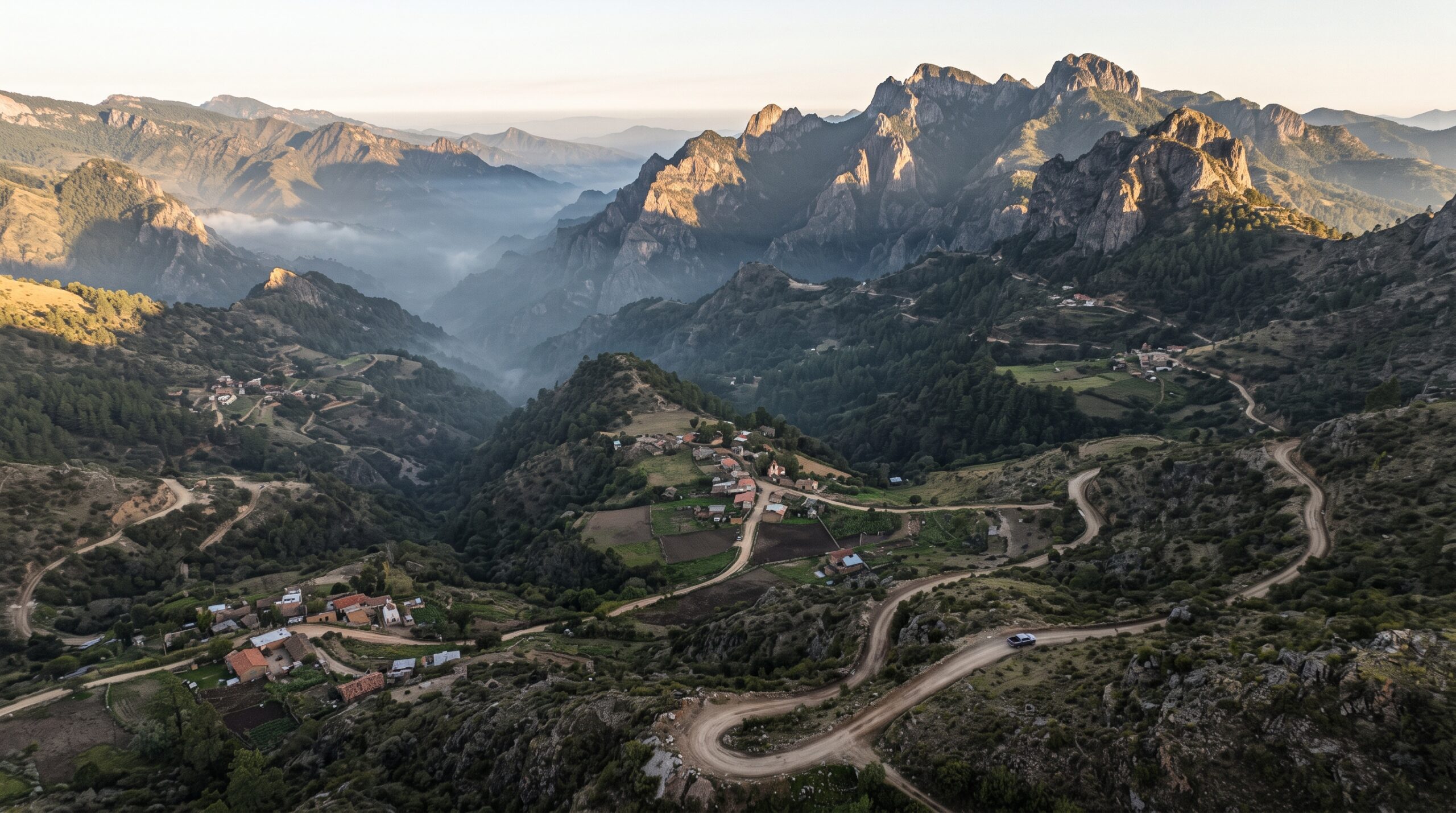
A powerful criminal organization known as the Ardillos has established extensive control over the mountainous regions of Guerrero state in Mexico, engaging in heroin production, illegal mining operations, and systematic extortion of Indigenous communities and legitimate businesses.
The group, which emerged in the early 2000s, was founded by Celso Ortega Rosas, a former rural police officer from Quechultenango, Guerrero. Known by the alias “La Ardilla,” Ortega Rosas built the organization from the remnants of larger cartels that had fragmented in the region.
The Ardillos arose during a period of significant criminal reorganization in Guerrero. The state’s strategic importance as a hub for opium poppy cultivation and cocaine trafficking had attracted major criminal organizations including the Gulf Cartel and the Beltrán Leyva Organization. When these larger groups weakened following leadership losses in 2009, local factions like the Ardillos seized the opportunity to establish independent operations.
Currently, the organization operates across at least ten municipalities in Guerrero where opium poppy cultivation is concentrated. These include Quechultenango, Mochitlán, Tixtla, Chilpancingo, Juan R. Escudero, Chilapa, Zitlala, Atlixtac, Ahuacotzingo, and Acatepec. Quechultenango serves as one of their principal operational centers.
Following Celso Ortega Rosas’s death in 2011, allegedly at the hands of rival groups, leadership passed to his sons. Three of his seven children now control the organization’s operations. Celso Ortega Jiménez, known as “La Vela” or “El Ardillo Mayor,” serves as the current leader. Jorge Iván Ortega Sánchez, alias “El Barco,” manages financial operations as second-in-command, while Antonio Ortega Jiménez, alias “La Parota,” oversees operations alongside Celso.
The group has demonstrated extreme violence in maintaining territorial control. In May 2026, the Ardillos conducted multiple attacks against rival groups and community police forces, employing tactics including burning homes, armed assaults, and deploying explosives from drones. These attacks forced between 800 and 1,000 people to flee Indigenous communities in Chilapa, Tula, and Xicotlán municipalities.
Previous incidents highlight the group’s brutal methods. In November 2014, they left human remains of 11 people alongside threatening messages for rival groups. In May 2015, approximately 300 Ardillos members seized control of Chilapa, detained 11 public officials, and were linked to 16 disappearances. The 2020 murder of 10 musicians from the Indigenous Náhua community of Alcozacán drew national attention and prompted local self-defense groups to train children as young as six in weapons use for protection.
The organization has also targeted political figures to undermine governmental authority. They were linked to the May 2015 murder of Ulises Fabián Quiroz, a mayoral candidate in Chilapa, and the 2024 decapitation of Chilpancingo Mayor Alejandro Arcos Catalán.
The Ardillos’ main rivals include the Rojos, once the dominant criminal group in Guerrero, and the Tlacos, which originally formed as a self-defense organization. Territorial disputes, particularly over Petaquillas—an important poultry production center and drug trafficking transit point—have resulted in food shortages and numerous casualties.
The organization has cultivated political connections to ensure protection. Bernardo Ortega Jiménez, brother of current leaders Celso and Antonio, served multiple terms in public office, including as a legislator in Guerrero from 2005 to 2008 and 2012 to 2015, and as municipal president of Quechultenango from 2002 to 2005. Additional political ties include Mercedes Carballo Chino, municipal president of Chilapa for the 2024-2027 term, who is the sister-in-law of Celso Ortega Jiménez.
As the heroin economy has weakened, the Ardillos have diversified their criminal portfolio while upgrading their arsenal with high-caliber weapons and weaponized drones. Their continued survival depends heavily on protection from local authorities and the limited state presence in their operational territories.
Leave a Reply