
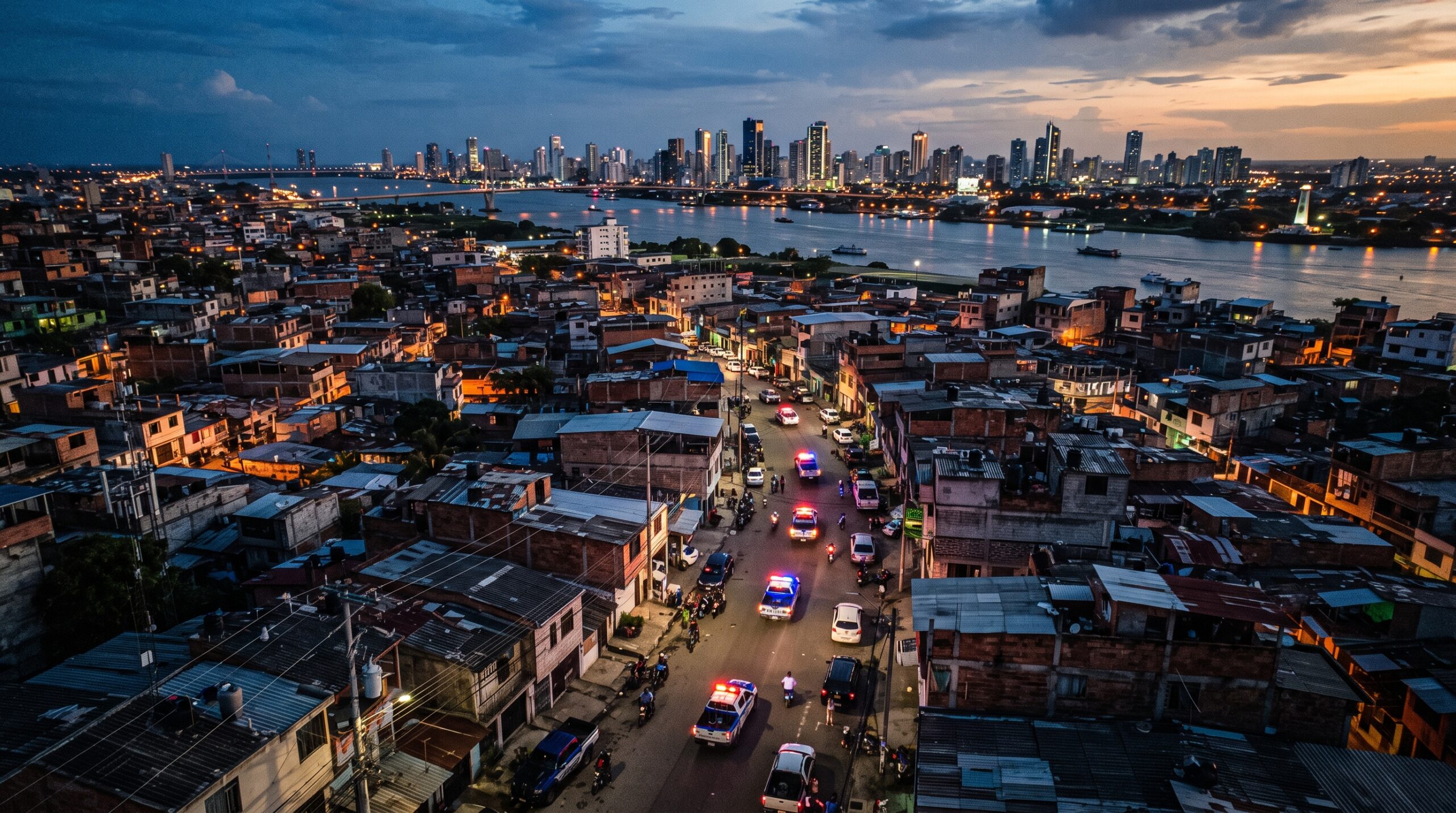
The United States State Department has officially designated Ecuador’s Chone Killers as a foreign terrorist organization, expanding its list of Latin American criminal groups under this classification. The designation represents the 18th such addition from the region since February, highlighting Washington’s intensified focus on organized crime in Latin America.
The Chone Killers have been accused of conducting multiple violent attacks against civilians, law enforcement personnel, and government officials, including several high-profile assassinations of public figures. However, the current reality of the organization presents a complex picture that differs from traditional terrorist group structures.
The group’s origins trace back to their emergence as a splinter faction from the Choneros criminal organization in 2020. The Choneros, themselves designated as a terrorist organization by the United States last year, began as a coastal criminal group in the late 1990s before evolving into one of Ecuador’s most powerful criminal networks through involvement in international drug trafficking.
Under the leadership of Jorge Luis Zambrano, known as Rasquiña, the Choneros operated as a confederation of various gangs rather than a monolithic organization. Zambrano’s strategic approach involved incorporating existing criminal groups under the Choneros umbrella, creating a nationwide network. His assassination in 2020 triggered the fragmentation of this structure, leading to the independence of several factions including the Chone Killers, Tiguerones, and Lobos.
The Chone Killers’ history predates their association with the Choneros. Originally operating as a faction of the Netas, a transnational prison gang with roots in Puerto Rico that was established in Ecuador through deportees from the United States, the group was initially a low-level street gang based in Durán, a suburb of Guayaquil. They primarily engaged in local drug dealing before their leaders formed an alliance with Rasquiña while in prison, adopting the Chone name despite having no actual connection to the city of Chone.
Currently, the organization faces significant internal challenges. Key leadership figures have been eliminated or captured, including Ben Diez, who was killed in Colombia in 2024, while his brother Trampudo remains at large. Other prominent leaders including Negro Tulio, Bob Marley, and Gato Selly are imprisoned, leaving the group without centralized command.
This leadership vacuum has resulted in severe fragmentation. Law enforcement officials in Durán report that at least five separate factions claiming the Chone Killers name are now operating independently, frequently engaging in violent conflicts with each other over territorial control. Police attribute a substantial portion of murders in the Durán area to these inter-factional disputes.
The fragmented nature of the Chone Killers raises questions about the practical implications of the terrorist designation. The lack of unified command structure and the group’s focus on local territorial disputes rather than coordinated international operations distinguish them from traditional terrorist organizations.
Security experts note that other criminal organizations in Ecuador, such as the Latin Kings and Tiguerones, maintain more cohesive structures and greater involvement in international drug trafficking networks. The Tiguerones, in particular, have been linked to more traditionally defined terrorist actions, including the violent takeover of a television station during a live broadcast.
The designation carries significant legal and financial implications, enabling US authorities to freeze assets, prohibit material support, and pursue criminal charges against individuals providing assistance to the group. However, the fractured state of the Chone Killers complicates enforcement efforts and raises challenges in determining which factions and individuals fall under the designation.
Leave a Reply